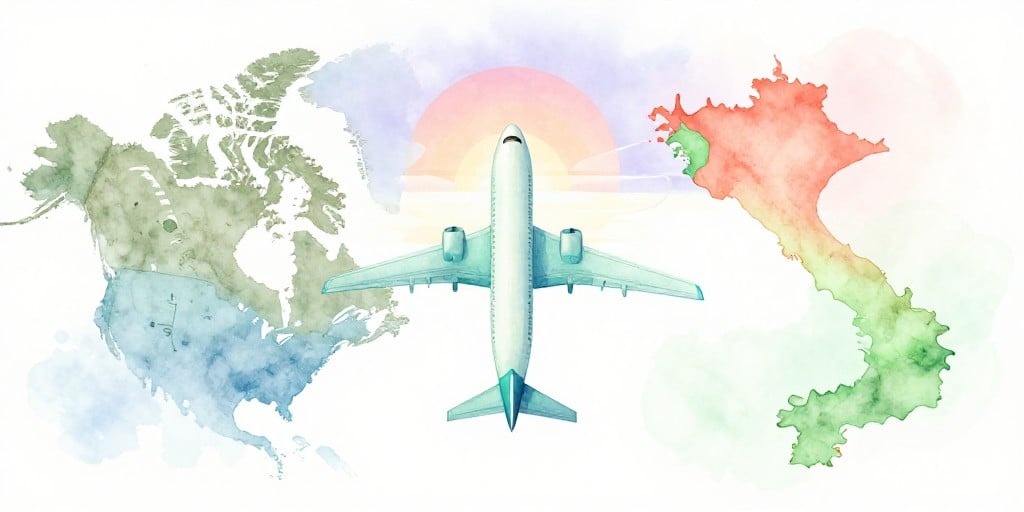
Air Canada’s Strategic Pivot Amid Rising Fuel Costs and Expanding Vietnamese Ties
Air Canada has re‑enacted its longest scheduled flight after nearly three years, a move that signals the carrier’s intent to strengthen its international footprint despite the relentless pressure from volatile fuel prices. The decision to resume service to the remote destination—previously suspended due to economic constraints—demonstrates a willingness to absorb short‑term financial strain in pursuit of long‑term route viability.
Vietnam Partnership Fuels Growth Ambitions
The company’s latest public statements and multiple media reports underline a concerted effort to deepen relations with Vietnam. On September 24, Air Canada celebrated the signing of an expanded air‑transport agreement with the Vietnamese government, a development that is expected to open new market corridors, notably the Ho Chi Minh City corridor. This alignment with a rapidly developing economy not only diversifies Air Canada’s route network but also positions the airline to capitalize on the burgeoning travel demand between Canada and Southeast Asia.
While the Vietnamese partnership presents a lucrative opportunity, it also carries operational risks. Air Canada will need to invest in appropriate aircraft and crew training to meet the stringent regulatory requirements of the Vietnamese aviation authorities. However, the company’s existing infrastructure and proven ability to negotiate bilateral agreements suggest that it can navigate these complexities efficiently.
Fuel Cost Pressures and Investor Confidence
During the recent investor conference, Air Canada’s management highlighted the dual challenge of rising fuel costs and a robust growth strategy. The company’s current market cap of CAD 5.7 billion and a price‑to‑earnings ratio of 19.32 place it among the more resilient players in the passenger‑airline sector. Nevertheless, the near‑term impact of fuel price inflation is undeniable. The leadership’s candid acknowledgment of this pressure—alongside a clear commitment to cost‑control measures—provides investors with a realistic appraisal of the company’s risk profile.
The recent decision to resume the long‑haul flight can be viewed as a hedge against fuel volatility: by increasing seat‑load factors on high‑yield routes, Air Canada aims to offset fuel expense swings. Moreover, the company’s entry into the Tel Aviv market—announced on September 22—further diversifies its revenue streams, mitigating the risk of a single market’s downturn affecting overall profitability.
Labor Relations: A Potential Flashpoint
The Canadian government’s proposed amendments to Section 107 of the Labour Code have stirred concern among labor unions. These changes would ostensibly empower ministers to intervene in strikes, a move that could directly affect Air Canada’s workforce. While the airline has not yet publicly responded, the potential for labor disruptions must be factored into any comprehensive risk assessment.
The unions’ stance—characterizing the bill as an infringement on workers’ rights—could catalyze industrial action if perceived as a threat to collective bargaining. Air Canada’s management, therefore, faces the dual task of maintaining operational efficiency while navigating an increasingly contentious labor landscape.
Conclusion
Air Canada’s current trajectory reflects a bold strategy: expanding into high‑growth markets, especially Vietnam, while managing fuel cost pressures and labor relations. The company’s ability to balance these competing demands will be decisive in determining whether its market value—currently trading near a 52‑week high of CAD 31.45—continues to rally or faces stagnation. Investors and industry observers alike will watch closely as Air Canada executes its expansion plans and confronts the evolving regulatory and economic environment.