
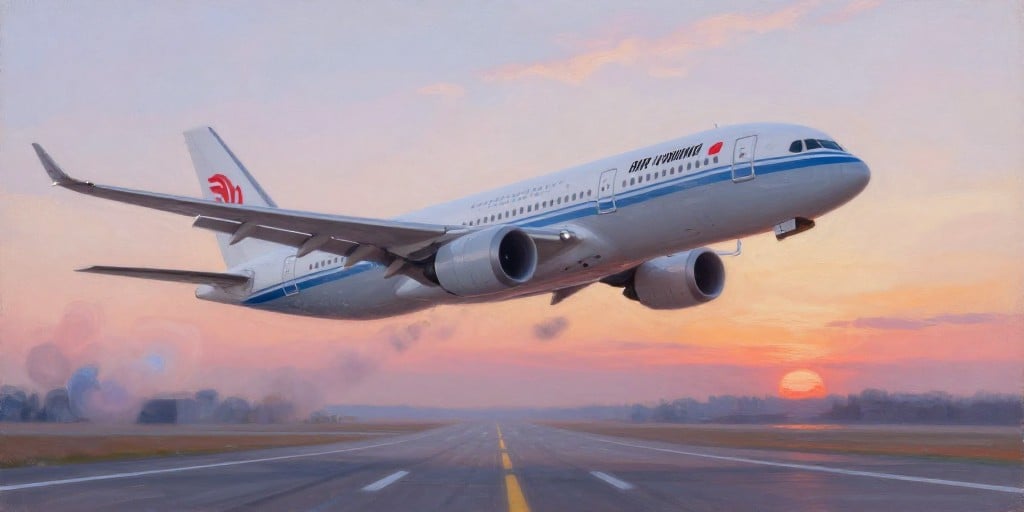
Air China Ltd. Faces a Challenging First Half of 2026
Air China Ltd. (ticker: AIR CHINA LIMITED‑H) is a flagship carrier headquartered in Beijing that operates both passenger and cargo services worldwide. As of the close on July 22, 2026, the share price stood at HK$4.16, a decline from the 52‑week high of HK$7.77 recorded on February 8, 2026, and above the 52‑week low of HK$3.89 reached on July 13, 2026. With a market capitalization of approximately HK$119 billion, the airline remains a significant component of the Hong Kong Stock Exchange’s industrial and passenger‑airlines sectors.
1. 2026 First‑Half Performance Outlook
On July 21, 2026, Air China announced its provisional earnings forecast for the first half of the year. Management projected a net loss attributable to shareholders between HK$21 billion and HK$26 billion (USD ≈ $2.7 billion to $3.4 billion). When excluding non‑recurring items, the loss is expected to widen further, ranging from HK$23 billion to HK$31 billion. This forecast represents an expansion of the loss relative to the same period in 2025, when the company posted a net loss of HK$18.06 billion (excluding non‑recurring items).
The airline attributes the deterioration to a combination of global macro‑economic pressures and sector‑specific challenges:
| Factor | Impact | Management Response |
|---|---|---|
| Fuel price volatility | Elevated jet‑fuel costs compress margins, especially in long‑haul and inter‑continental routes. | Air China is actively hedging fuel exposure and pursuing fuel‑efficient aircraft upgrades. |
| Geopolitical tensions | Middle‑East conflicts have increased operational risk and fuel procurement costs. | The carrier is diversifying its fuel supply chain and reviewing route profitability. |
| Competitive landscape | Air China faces stiff competition from low‑cost carriers in China and from regional players in Southeast Asia. | Management is investing in service quality and digital transformation to differentiate the brand. |
| Economic outlook | Global economic growth remains modest, dampening discretionary travel demand. | Air China is focusing on cost control, optimizing capacity, and enhancing ancillary revenue streams. |
Despite the projected loss, the company noted that the first quarter of 2026 delivered a significant profit, underscoring the resilience of its core operations. Air China’s strategy is to maintain a “dynamic production organization” that allows rapid scaling of capacity in response to demand fluctuations while keeping costs under tight control.
2. Strategic Initiatives Amid Cost Pressures
In light of the forecasted losses, Air China has outlined a multi‑pronged approach to improve profitability:
- Safety and Operational Excellence
- Continuous training for crew and maintenance teams to reduce incidents and downtime.
- Implementation of predictive maintenance analytics to pre‑empt failures.
- Cost Management
- Review of fleet mix to retire older, fuel‑inefficient aircraft.
- Negotiation of better terms with suppliers, particularly for fuel and aviation‑ground‑services contracts.
- Digital and Service Transformation
- Investment in a unified customer‑experience platform to streamline booking, check‑in, and post‑flight services.
- Expansion of ancillary revenue through premium seating, lounge access, and targeted marketing campaigns.
- Capacity Optimization
- Dynamic adjustment of flight frequencies based on real‑time demand analytics.
- Strategic partnerships with low‑cost carriers to share feeder traffic and broaden network reach.
3. Market Context and Investor Sentiment
Air China’s financial outlook is set against a broader backdrop of renewed commercial aviation demand in Asia, as highlighted by recent commentary from CITIC Securities. The analyst noted that Airbus secured substantial orders from China’s flag carriers, underscoring the sector’s need for fleet renewal. However, the sector is also experiencing a “security‑plus‑growth” dynamic, driven by heightened defence budgets and rapid commercial‑space technology development, as reported in the Daily Economic News coverage of the “力箭一号” rocket program.
Investor sentiment has been mixed. While the airline’s share price has slipped from its February peak, the 52‑week low of HK$3.89 suggests that the market still values the company’s long‑term positioning. Analysts expect the share price to reflect the company’s loss forecast in the near term, but a sustained turnaround in earnings could support a rebound once cost‑control measures and fleet optimisation take effect.
4. Outlook for the Remaining Year
Air China’s management remains cautious yet optimistic. The company plans to:
- Continue monitoring fuel‑price trends and adjust hedging strategies accordingly.
- Leverage its loyalty program to retain high‑yield passengers during the recovery phase.
- Accelerate the rollout of digital tools to reduce operating expenses and improve customer satisfaction.
Given the current macro‑economic environment and the airline’s robust operational base, the company’s near‑term prospects hinge on effective cost management and the ability to capture a share of the projected rebound in international air travel. Investors will likely keep a close eye on the company’s subsequent quarterly filings for updates on revenue streams, fuel hedging performance, and the progress of its digital transformation initiatives.