
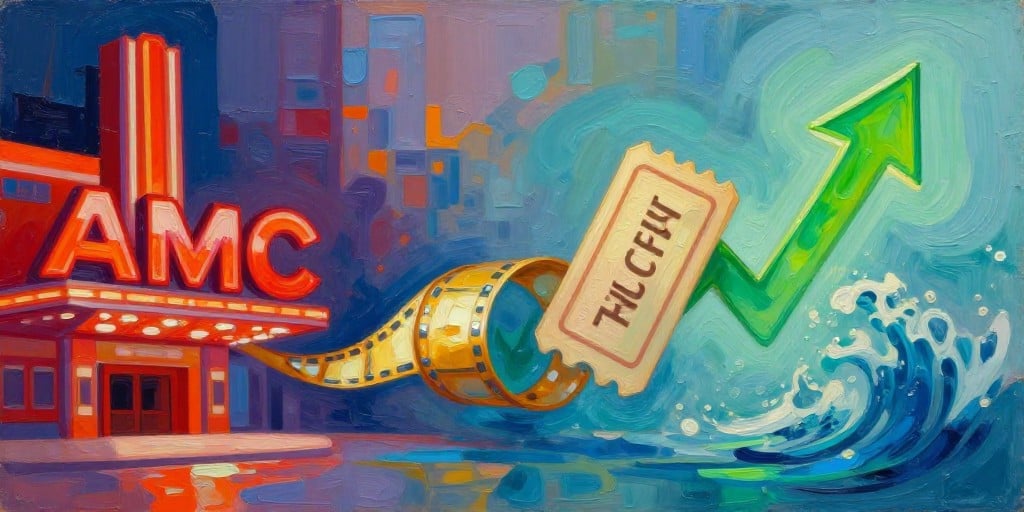
AMC Entertainment Holdings Inc. Faces a Pivotal Crossroads
The latest strategic maneuver by Paramount Skydance, committing to deliver 30 new films annually to AMC and Regal under a three‑year contract, signals a dramatic shift in the theatrical distribution landscape. This pledge, announced on August 9, 2026, comes at a time when AMC’s stock sits at $2.59—a steep decline from its 52‑week high of $3.26 and a market cap of roughly $2.3 billion. The company’s price‑to‑earnings ratio remains negative at –2.33, underscoring its struggle to translate theatrical revenues into shareholder value.
The Deal’s Immediate Implications
Guaranteed Content Pipeline Paramount’s agreement ensures a steady flow of new releases, directly addressing AMC’s long‑term content scarcity. By securing 30 films per year, AMC can lock in audience traffic, stabilize ticket sales, and mitigate the risk of box‑office slumps that have plagued the industry since the pandemic.
Competitive Edge Over Rivals While AMC stands as the world’s second‑largest theater chain, it still trails Regal in market share. The new contract levels the playing field, allowing AMC to negotiate better concessions with exhibitors and attract higher‑profile franchises that might otherwise favor Regal.
Financial Leverage in a Challenging Market With a 52‑week low at $0.93, AMC’s valuation is highly volatile. The influx of predictable revenue streams could justify a higher valuation multiple, potentially reversing the negative earnings trend that has stifled investor confidence.
Broader Industry Context
The entertainment sector is undergoing a tectonic shift. Streaming giants have eroded theatrical attendance, while the pandemic accelerated a move toward digital consumption. AMC’s survival now hinges on its ability to maintain relevance in a market where consumers demand premium experiences—virtual reality, 4D screens, and curated dining—paired with high‑quality content.
Paramount’s commitment is therefore not merely a contractual win; it is a strategic validation that AMC can still command the distribution channel. This partnership could also set a precedent for other studios, compelling them to secure similar agreements to safeguard their theatrical revenues.
Risks and Caveats
Execution Risk Paramount’s obligation is contingent on its acquisition of Warner Bros. Discovery. Should the deal falter, the 30‑film pledge may dissolve, leaving AMC exposed to the very volatility that the contract sought to eliminate.
Market Saturation An influx of new releases could saturate the market, diluting individual film performance. AMC will need to manage scheduling and marketing meticulously to prevent cannibalization of ticket sales.
Consumer Behaviour Uncertainty Even with a robust content pipeline, consumer preferences may continue shifting toward at‑home viewing. AMC must innovate beyond film distribution to maintain relevance.
Bottom Line
AMC Entertainment’s fortunes are poised to be reshaped by Paramount’s pledge. If the partnership delivers on its promises, the company could see a renaissance in ticket sales, a strengthening of its balance sheet, and a renewed investor appetite. Conversely, failure to navigate the inherent risks could cement AMC’s position as a casualty of the changing entertainment paradigm. The market will be watching closely as these dynamics unfold, and AMC’s next moves will be decisive in determining whether it can reclaim its standing in the global theater arena.