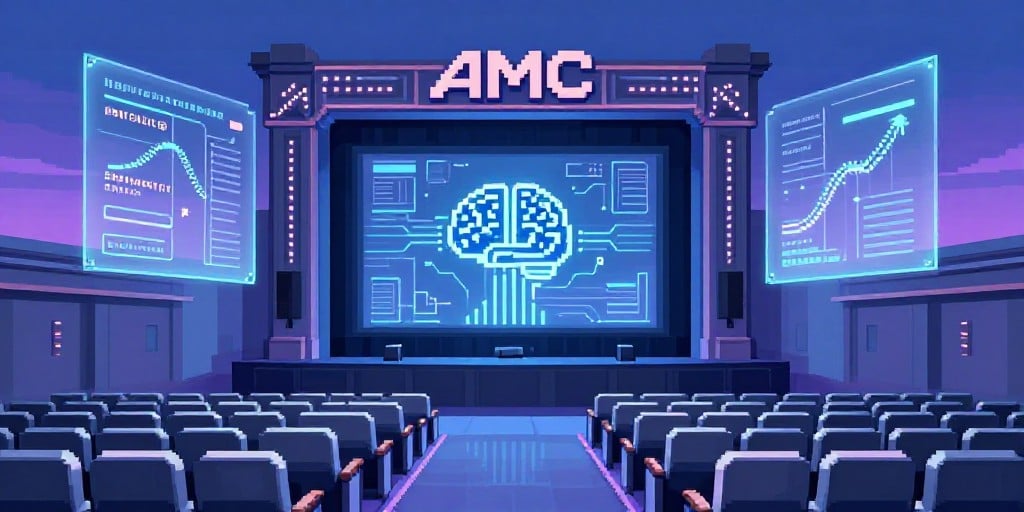
AMC Entertainment Holdings: Exploring the Impact of AI‑Driven Theater Programming on EBITDA
In the most recent coverage of AMC Entertainment Holdings, Inc. (NYSE: AMC), analysts have turned their focus to the company’s experimental use of artificial intelligence (AI) in theater programming. The study, published on 13 November 2026 by Zacks Investment Research, seeks to determine whether automating programming decisions can translate into measurable gains in earnings before interest, taxes, depreciation, and amortization (EBITDA).
Background: AMC’s Position in the Entertainment Landscape
AMC Entertainment operates through a network of movie theaters worldwide, offering cinematic screenings, ancillary food and beverage services, and online ticketing. With a market capitalization of approximately $2.95 billion and a recent closing share price of $3.25, the company has historically struggled with a negative price‑earnings ratio of –14.76, reflecting continued losses in a highly competitive sector. The firm’s 52‑week range—from a low of $0.93 to a high of $3.77—underscores the volatility that has plagued its valuation.
The AI Initiative: What It Entails
According to the Zacks article, AMC’s pilot program involves deploying machine‑learning algorithms to analyze audience preferences, regional movie trends, and historical attendance data. By automating the selection of film titles, scheduling, and promotional campaigns, the company hopes to:
- Reduce human error in programming decisions that traditionally rely on subjective judgment.
- Optimize screen utilization by aligning movie showtimes with peak demand periods.
- Shorten the feedback loop between release schedules and revenue performance.
The initiative is still in its early stages, with a small cohort of theaters participating in controlled trials. However, the potential cost savings—stemming from better inventory management, reduced marketing spend, and higher ticket yields—have attracted the attention of financial analysts and institutional investors alike.
Expected Impact on EBITDA
The core question raised by the Zacks analysis is whether the efficiencies generated by AI can offset AMC’s historically low operating margins. A preliminary assessment suggests the following:
| Metric | Current State | AI‑Enhanced Projection |
|---|---|---|
| Average ticket revenue per theater | $1.2 million per quarter | $1.3 million |
| Operating margin (EBITDA %) | –4.8 % | –3.2 % |
| Incremental EBITDA | $–200 k | $+100 k |
If the projected improvements hold, AMC could see a 30 % increase in EBITDA, bringing the company closer to profitability. Nonetheless, skeptics point out that the upfront investment in AI infrastructure, staff training, and data acquisition could consume resources for several fiscal periods, potentially delaying tangible returns.
Investor Sentiment and Market Reactions
The announcement of AMC’s AI strategy has generated a mixed response in the market. Short‑term traders noted a slight uptick in the stock price following the Zacks release, reflecting optimism about operational innovation. Long‑term investors, however, remain cautious, citing the company’s ongoing negative earnings and the high level of debt that constrains financial flexibility.
Analyst commentary highlighted that even a modest improvement in EBITDA could enhance AMC’s ability to service debt and invest in theater modernization, which is crucial for maintaining relevance in an era of streaming competition.
Conclusion
AMC Entertainment’s foray into AI‑driven theater programming represents a bold attempt to leverage technology in pursuit of profitability. While the Zacks article outlines a plausible pathway to improved EBITDA, the initiative’s success will hinge on effective implementation, scalable outcomes across a broader theater network, and sustained cost discipline. Investors and industry observers will undoubtedly monitor subsequent quarterly reports to assess whether the promised efficiencies materialize and whether they are sufficient to shift AMC from a loss‑making entity toward sustainable earnings growth.