
Archer Aviation’s Bold Pivot from Air‑Taxis to Autonomous Warfare
Archer Aviation, long known for its electric vertical‑takeoff‑and‑landing (eVTOL) air‑taxis, has shattered the public’s perception of its business model overnight. In a single trading session, the company’s shares surged 11 % to $4.94, a dramatic increase from the $4.44 close the day before, as investors rushed to claim a piece of a new, defense‑oriented revenue stream.
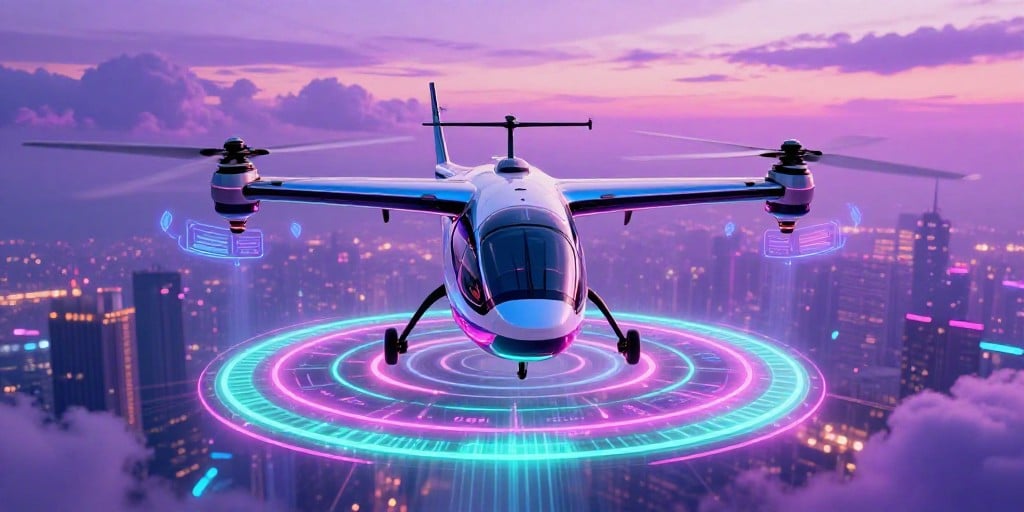
The catalyst is the partnership with Anduril Industries, a U.S. defense contractor that has brought its autonomous systems expertise to the fore. On 20 July 2026, Archer unveiled Thunder, a Group 5 autonomous attack rotorcraft that can operate alongside current and next‑generation crewed military aircraft. Anduril’s presentation emphasized that Thunder is a hybrid‑electric platform with the speed, range, payload, and operating cost required by modern air forces. The announcement was not a speculative bet; it was a clear, tangible product that expands Archer’s reach beyond the congested skies of urban air‑taxi corridors.
Why the Market Reacts
Diversified Revenue Streams: Archer’s core air‑taxi business is still in a nascent stage, with no proven commercial contracts. By entering the defense market, Archer taps into government budgets that are considerably larger and more stable than the private sector’s willingness to pay for on‑demand air‑taxis. Defense contracts often span years and involve multi‑million‑dollar procurement, offering Archer a pathway to profitability that would otherwise be years away.
Strategic Partnerships: The collaboration with Anduril, backed by its own track record in autonomous technology, signals to investors that Archer possesses the technical capability to produce a product that meets rigorous military standards. The partnership also mitigates the risk of intellectual‑property theft and production delays, as Anduril supplies critical subsystems.
Market Timing: Geopolitical tensions have been rising, and the United States is keen to modernize its aerial warfare capabilities. A defense‑ready eVTOL platform that can be deployed rapidly provides a competitive edge in a market that has been historically dominated by propeller‑powered and jet aircraft.
The Bigger Picture: Infrastructure and AI
Earlier in the month, Archer announced a second growth initiative: a joint effort with BETA Technologies and Macquarie Capital to build an electric‑skyway charging network under the umbrella of America’s Consortium for Electric Skyways (ACES). By 2030, the company aims to deploy charging stations at up to 250 U.S. sites, covering major metro areas across California, Texas, Florida, and New York. This move underlines Archer’s commitment to creating an end‑to‑end ecosystem that will support both its air‑taxi and defense operations.
At the same time, Archer has been working on AI‑driven flight management systems that will allow its aircraft to operate autonomously without a pilot. By integrating advanced AI with the Thunder platform, Archer is positioning itself at the intersection of autonomous warfare and commercial aviation—a dual‑use approach that could attract both defense and commercial customers.
Financial Reality Check
Despite the optimistic headlines, Archer’s financial fundamentals remain precarious. The company’s price‑to‑earnings ratio sits at –4.14, reflecting a history of operating losses and a lack of sustainable cash flow. The stock’s 52‑week low of $4.30 and close at $4.44 illustrate the volatility that investors face. Market capitalization of $3.4 billion is modest compared to industry giants, and the company’s valuation is heavily dependent on future contracts that may never materialize.
The recent 11 % jump is therefore not an indication of intrinsic value but a speculative reaction to a narrative shift. Investors must recognize that Archer’s defense contract prospects are still unproven. The company has yet to secure any binding orders, and the production timeline for Thunder remains uncertain.
Conclusion
Archer Aviation’s announcement of a joint‑developed autonomous VTOL platform with Anduril marks a decisive pivot from a niche urban air‑taxi provider to a contender in the high‑stakes defense market. The company’s strategic moves—building a charging network and integrating AI—demonstrate a clear vision to capture both civilian and military skies. Yet, the financial data tells a sober story: without profitable contracts and a stable cash flow, Archer’s ambitious plans rest on a fragile foundation.
For the market, the 11 % surge is a cautionary tale: enthusiasm can outpace reality when a company bets on the next frontier of aviation. Investors should weigh the potential upside of Archer’s defense ambitions against the stark financial constraints that define the company’s current trajectory.