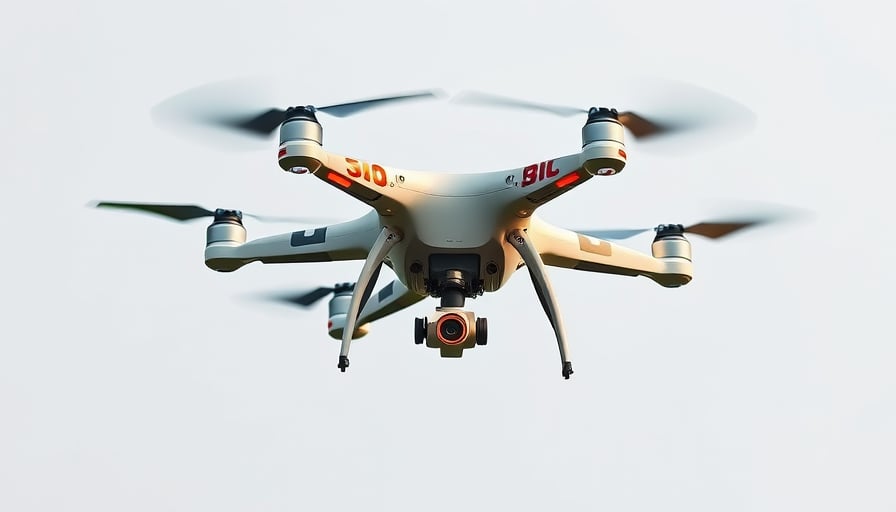
AeroVironment’s Unmanned‑Aviation Surge: A New Era for Defense Tech
The U.S. Army’s recent announcement of a $117 million contract for AeroVironment’s unmanned aerial vehicles (UAVs) marks a pivotal moment for the company and the broader drone sector. The deal follows an earlier $97 million award, underscoring the Army’s confidence in AeroVironment’s technology and the growing demand for “Physical AI” solutions in modern warfare.
1. A Contract that Signals Strategic Validation
The Army’s procurement of 30–40 UAVs under the $117 million contract—an increase of over 20 % from the prior award—confirms that AeroVironment’s small‑unmanned aircraft are not only viable but also competitive against larger, well‑established defense contractors. The contract’s timing aligns with a broader trend: defense budgets increasingly prioritize modular, network‑centric platforms that can be rapidly fielded. AeroVironment’s expertise in designing lightweight, high‑performance drones makes it an attractive partner for military planners seeking agility on the battlefield.
2. Market Dynamics: The Unmanned Systems “Supercycle”
Analysts from Barclays and other research houses project the global unmanned‑systems market to grow from $40 billion in 2025 to $250 billion by 2035. This surge—often described as a “Physical AI” revolution—reflects the convergence of autonomous systems, edge computing, and advanced sensors. In this context, AeroVironment is positioned to capture a significant share, especially as the company is highlighted among the top six drone stocks in several analyst reports, including those from CoinCentral and BitcoinEthereumNews.
3. Competitive Landscape: AeroVironment vs. Kratos and Beyond
A recent Zacks article pitting AeroVironment against Kratos Defense highlights the intensifying competition for drone contracts. While Kratos benefits from a broader portfolio that includes missile defense systems, AeroVironment’s niche focus on small UAVs and fast‑charge electric battery systems gives it a distinct edge in cost‑effective, rapid deployment scenarios. Moreover, the company’s ability to produce drones that can be integrated into existing military networks—without the heavy footprint of larger platforms—positions it favorably for future procurement cycles.
4. Forward‑Deploying Directed Energy
Beyond UAVs, AeroVironment is advancing its LOCUST X3 laser weapon, a directed‑energy system expected to be forward‑deployed within the next few months, as reported by Defense Daily. The LOCUST X3’s compact design and high‑energy output make it suitable for vehicle‑borne or ship‑borne applications, extending the company’s reach beyond aerial platforms. This diversification into directed‑energy weapons signals a strategic pivot toward multi‑domain warfare solutions, aligning with defense agencies’ shift toward “Physical AI” capabilities.
5. Investor Implications and Valuation
The company’s market capitalization—nearly $9.9 billion—combined with a negative P/E ratio of -42.53, indicates that investors currently discount AeroVironment’s earnings potential. Yet, the firm’s recent contracts and analyst endorsements suggest a turnaround opportunity. The price volatility is underscored by a 52‑week high of $417.86 and a low of $102.25, reflecting market uncertainty about the timing of revenue recognition from upcoming contracts.
Given the projected growth of the drone market, the company’s strategic contracts, and its expansion into directed‑energy weapons, AeroVironment presents a compelling case for investors willing to tolerate short‑term volatility in pursuit of long‑term upside.
6. Conclusion
AeroVironment is not merely a supplier of small UAVs; it is rapidly becoming a cornerstone of the defense industry’s “Physical AI” transformation. The Army’s $117 million contract, combined with analyst praise and strategic diversification, signals a clear trajectory toward becoming a dominant player in the unmanned systems arena. For stakeholders—whether investors or defense planners—the company’s trajectory warrants close attention as the next decade reshapes the battlefield through autonomous, AI‑enabled platforms.