ASML Holding NV: Navigating Record Earnings Amidst AI‑Driven Demand and Geopolitical Constraints
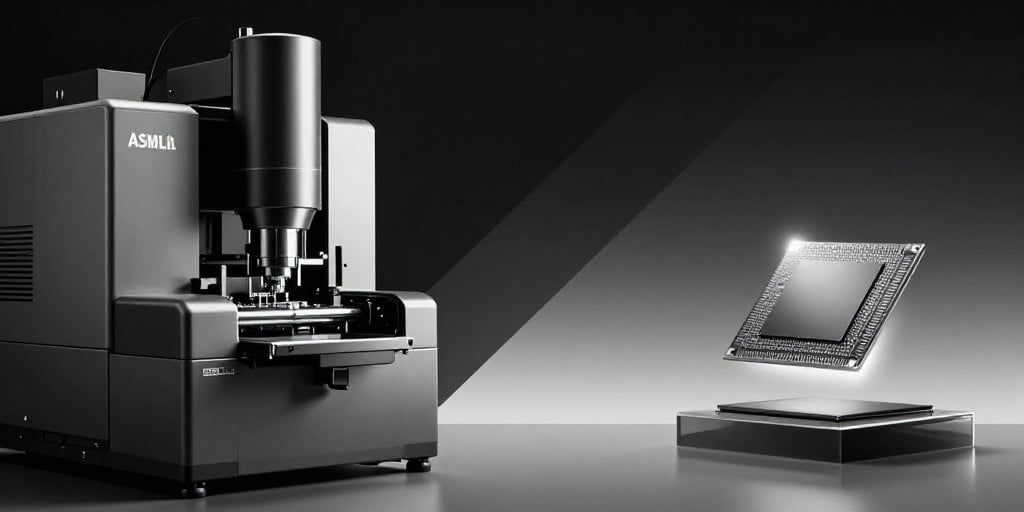
ASML Holding NV delivered a third‑quarter 2026 performance that shattered its own revenue records, reporting $13 billion in sales and reaffirming its capacity‑expansion strategy. The Dutch semiconductor‑equipment maker, listed on NYSE Euronext Amsterdam and valued at €569.5 billion, reiterated that lithography equipment sales continue to outpace demand, driven largely by the exponential growth of artificial‑intelligence (AI) workloads.
1. Record Results and Forward‑looking Capacity Plans
On 15 October, ASML announced a 12 % increase in operating margin relative to the previous year, underscoring its ability to convert rising demand into profitability. The company’s revenue climbed 28 % year‑over‑year, buoyed by robust orders for its Extreme Ultraviolet (EUV) lithography machines— the most advanced tools in the industry. In line with its long‑term growth thesis, ASML pledged to expand production capacity, investing in new cleanroom facilities in Veldhoven and a state‑of‑the‑art EUV assembly line. The expansion is projected to add 25 % to EUV output over the next two years, a move that positions ASML to service the projected AI‑driven semiconductor surge.
2. AI Demand Outpaces Supply, Yet the Company Remains Cautious
While the AI boom has created a surge in orders for ASML’s lithography systems, analysts note that the firm has not yet fully saturated the market. “ASML can’t keep up with AI demand, which is a good thing,” wrote a recent note on MarketBeat, highlighting that the current shortfall signals strong future growth potential. However, the company’s management cautions that capital expenditure and supply‑chain bottlenecks—particularly in critical optics components—may delay full fulfillment of the backlog.
The company’s earnings beat analysts’ expectations, but the stock slipped 4.2 % in early trading on 17 October, reflecting investor concern that the high price‑to‑earnings ratio of 42.39 may overstate near‑term growth prospects. Despite the decline, the share price remains within the 52‑week high range, signalling resilience in a volatile market.
3. Geopolitical Challenges: China’s EUV Efforts and Supply‑Chain Risks
China’s recent unveiling of a domestic EUV light‑source prototype at the Shanghai Industrial Expo has intensified scrutiny of ASML’s competitive moat. The prototype, featuring 90 % domestic component utilisation, is still years away from commercial viability, reinforcing ASML’s leadership in full‑system integration. Nevertheless, European regulators’ ongoing sanctions on key Chinese suppliers create a complex environment for ASML’s supply chain, particularly in the acquisition of rare‑earth materials essential for EUV optics.
An EU‑China negotiation on a “sanction swap” is under discussion to safeguard supply lines for critical components. The outcome of this diplomatic effort could affect ASML’s procurement strategy, especially if alternative sources of rare‑earth elements become available or if current suppliers face further restrictions.
4. Market Sentiment and Strategic Outlook
Investor sentiment remains mixed. While the company’s record earnings and capacity plans are positive, short‑term concerns loom:
- Capital Expenditure vs. Cash Flow: ASML’s expansion plans require significant upfront investment, potentially impacting liquidity in the short term.
- Demand‑Supply Mismatch: Even with record orders, the backlog indicates a mismatch that could pressure margins if cost structures rise.
- Geopolitical Risk: Sanctions and supply‑chain disruptions could increase operational costs or delay shipments.
Despite these challenges, ASML’s core technology—its EUV lithography systems—continues to command a near‑unrivaled market share. The company’s continued investment in R&D, combined with a disciplined approach to scaling production, suggests a robust trajectory aligned with the AI‑driven semiconductor boom.
In conclusion, ASML Holding NV’s recent quarter underscores its pivotal role in the semiconductor ecosystem. The company’s record earnings, aggressive capacity expansion, and strategic navigation of geopolitical risks position it well to capture the growing AI and chip‑making markets, while maintaining a cautious stance on short‑term market volatility.