
ASML’s Next‑Generation Lithography Drives a Renewed Rally Amid AI‑Driven Demand
The Dutch semiconductor‑equipment manufacturer ASML Holding NV has once again captured the attention of investors and analysts with the launch of its latest lithography technology, a development that appears poised to reshape the industry’s capacity to meet the surging demand for artificial‑intelligence (AI) chips. The announcement was followed by a wave of positive commentary from UBS and other market observers, who have lifted their price targets and positioned ASML as a top pick within the European semiconductor sector.
Launch of the Highest‑Price Chip‑Production System
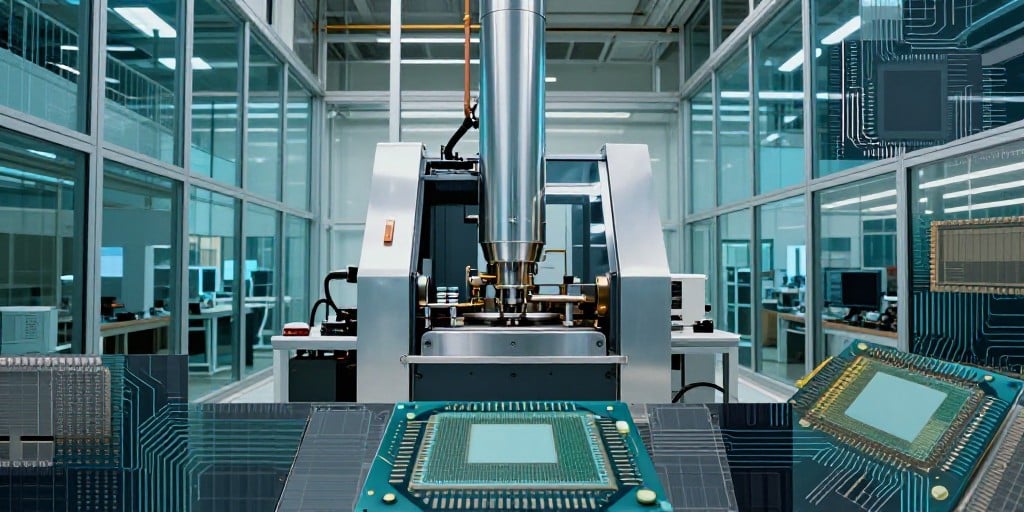
On 21 May 2026, ASML unveiled its most expensive and arguably most critical lithography platform yet. The new system, designed to enable the manufacture of smaller, higher‑yielding transistors, represents a significant step forward for the company’s flagship EUV (extreme ultraviolet) technology. The launch comes at a time when global semiconductor demand remains elevated, driven largely by the rapid expansion of AI workloads. Despite a cautious stance from some customers, UBS noted that the new platform could unlock substantial growth for ASML and its clients.
UBS Ups Targets and Reinstates ASML as a “Top Pick”
Earlier on 20 May, UBS analysts raised their target price for ASML from €1 600 to €1 900, a 50 % upside over the next twelve months. The rating upgrade was accompanied by a “top pick” endorsement, underscoring confidence in the company’s ability to capitalize on the AI boom. UBS’s research highlighted that ASML’s technology is essential for advancing chip densities, thereby addressing the ongoing supply constraints in the semiconductor market.
CEO Christophe Fouquet Warns of Persistent Chip Shortages
The same day, ASML’s CEO Christophe Fouquet cautioned that the chip market would remain tight for the foreseeable future. He attributed the sustained scarcity to the accelerating AI demand and the complex supply chain that supports advanced lithography equipment. Fouquet emphasized that while the company is scaling production, it must navigate a challenging landscape that includes high capital expenditures and extended lead times for its machines.
Market Reaction and Stock Performance
The market responded promptly to the news. ASML’s shares surged on the green markets, contributing to a 1.5 % gain in the Stoxx 600 index. The stock’s close on 19 May reached €1 333, comfortably above the 52‑week low of €587.8 recorded in August 2025, yet still shy of the 52‑week high of €1 371.6 set earlier this month. The price‑earnings ratio of 50.01 reflects investor expectations of robust earnings growth in the near term.
Analysts at Reuters and other outlets noted that although the Q2 outlook appeared slightly softer, the broader AI narrative remained a compelling driver for ASML’s future earnings. Investor sentiment was further bolstered by the recognition that the company’s lithography equipment is indispensable for any manufacturer looking to keep pace with AI’s computational demands.
Broader Context
The semiconductor industry continues to grapple with supply‑chain bottlenecks, a reality that ASML’s CEO explicitly acknowledged. However, the company’s strategic focus on next‑generation lithography and its ability to secure long‑term contracts with key chipmakers position it favorably to ride the AI‑induced wave. As markets adjust to the implications of high‑frequency trading, currency‑hedged ETFs, and the broader macroeconomic backdrop, ASML’s role as a pivotal enabler of advanced chip production remains central to the narrative of technology growth.
In summary, ASML’s recent technological milestone, coupled with optimistic forecasts from leading financial institutions and the company’s own candid assessment of supply constraints, has reignited enthusiasm among investors. The firm’s trajectory, underpinned by its pivotal position in the semiconductor supply chain and the relentless momentum of AI development, suggests a continued upward trajectory for both its stock and its impact on the global technology ecosystem.