
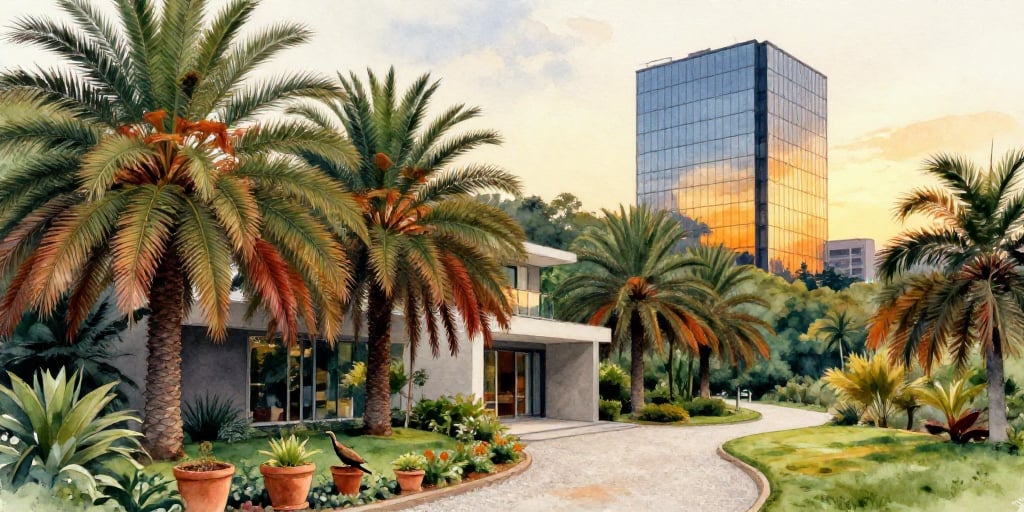
In the ever-evolving landscape of the Malaysian real estate sector, BCB BHD stands as a testament to the dynamic interplay between traditional industries and modern market demands. Incorporated in 1983 and headquartered in Kuala Lumpur, BCB BHD has carved a niche for itself, not merely as a participant but as a formidable force in the production of palm oil and its by-products. With a sprawling operational footprint encompassing approximately 25,000 hectares of plantations across Malaysia, the company’s strategic positioning is both a reflection of its historical roots and a beacon of its future aspirations.
As of May 11, 2026, BCB BHD’s financial metrics paint a picture of a company navigating the turbulent waters of the global market with a degree of resilience. The close price of 0.24 MYR, juxtaposed against a 52-week high of 0.31 MYR and a low of 0.22 MYR, underscores the volatility inherent in the sector. Yet, it is within this volatility that BCB BHD’s strategic acumen is most evident. With a market capitalization of 96,870,000 MYR and a price-earnings ratio of 5.48, the company’s financial health, while reflective of broader market trends, also hints at underlying strengths and potential for growth.
The real estate sector, traditionally seen as a bastion of stability, has been anything but in recent years. BCB BHD’s foray into this domain, underpinned by its primary focus on palm oil production, is a bold move that challenges conventional wisdom. The company’s commitment to meeting the growing demand for palm oil and its derivatives, while simultaneously ensuring sustainable practices and maintaining high-quality standards, is not just commendable but necessary. In an era where environmental concerns and sustainability are not just buzzwords but imperatives, BCB BHD’s approach is both a strategic advantage and a moral obligation.
However, the path forward is fraught with challenges. The global palm oil industry is under intense scrutiny, with environmental and ethical considerations at the forefront of the discourse. BCB BHD’s ability to navigate these challenges, to balance the demands of production with the imperatives of sustainability, will be a litmus test for its long-term viability. The company’s strategic investments in sustainable practices and high-quality standards are not just a response to external pressures but a recognition of the intrinsic value of sustainability in ensuring the longevity of the palm oil industry.
In conclusion, BCB BHD’s journey is emblematic of the broader challenges and opportunities facing the Malaysian real estate and palm oil sectors. As the company continues to expand its operational footprint and refine its strategic focus, its ability to adapt to the changing landscape will be critical. The balance between growth and sustainability, between tradition and innovation, will define not just BCB BHD’s future but the future of the industry at large. In this context, BCB BHD is not just a company but a harbinger of change, a testament to the resilience and adaptability required to thrive in the modern market.