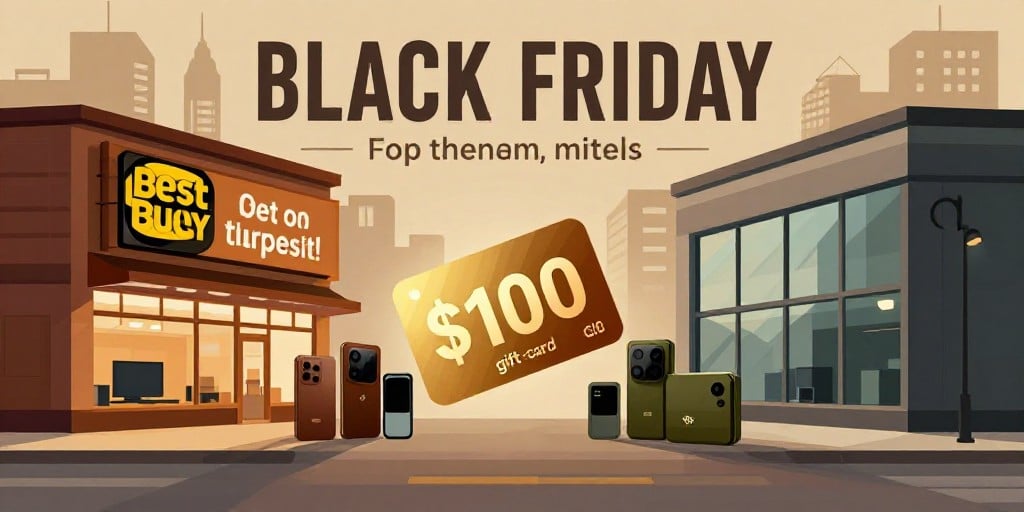
Best Buy Co., Inc. is once again attempting to capture the holiday zeitgeist with its 2026 Black Friday promotion, a ten-day blitz of discounts scheduled to commence on November 19. While the retailer promises a sweeping array of deals on laptops, smartphones, televisions, and headphones, one must question whether these aggressive promotional tactics are sufficient to bolster a stock that has struggled to maintain its momentum.
The company’s strategy relies heavily on a mix of digital and physical engagement. Beyond the standard technological discounts, Best Buy is leaning into its loyalty program, offering enhanced rewards to members and a highly specific in-store promotion on November 27, where members can acquire a $100 gift card for a mere $60. This maneuver, coupled with a Thanksgiving Day flash sale and a Cyber Week extension into early December, suggests a desperate push to drive foot traffic and web engagement during the most volatile period of the retail calendar.
However, the market’s reaction to this announcement has been telling. Despite the fanfare of these upcoming sales, Best Buy’s shares experienced a modest decline in early trading, ultimately closing lower for the day. With a market capitalization of $21.68 billion and a price-to-earnings ratio of 17.19, the company sits at a critical juncture. While the stock has climbed significantly from its 52-week low of $55.10, it remains notably distanced from its recent 52-week high of $106.83.
As the retail sector faces increasing scrutiny, the question remains: can these short-term promotional gimmicks translate into sustained value, or is Best Buy merely chasing seasonal spikes to mask underlying stagnation? The upcoming ten-day window will serve as a definitive litmus test for the company’s ability to convert holiday hype into actual fiscal strength.