
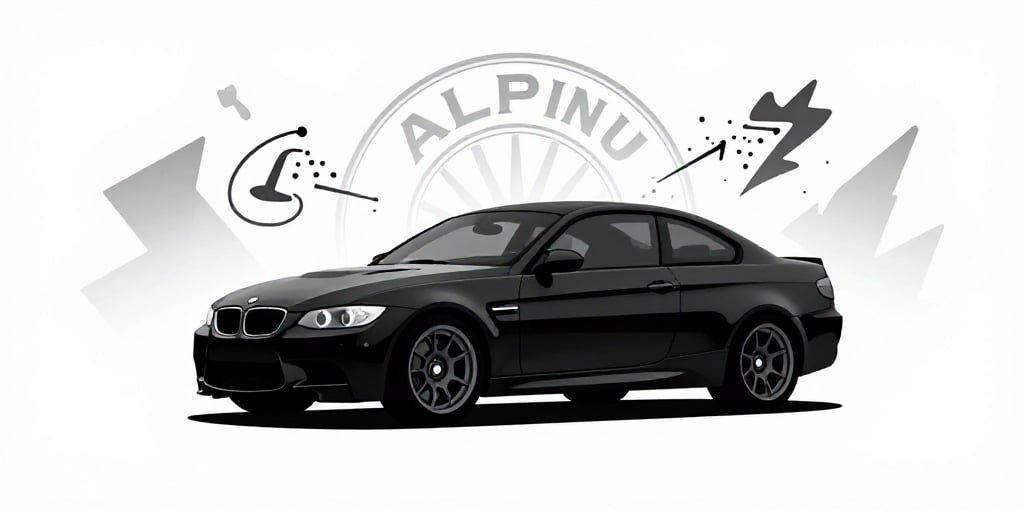
BMW AG – A Powerhouse Under Siege
Bayerische Motoren Werke AG, the German icon of automotive engineering, has once again found itself at the centre of a maelstrom that threatens to reshape its future. The company’s 2026‑04‑29 closing price of €77.92 sits comfortably between a 52‑week high of €97.92 and a low of €70.94, yet recent developments suggest a trajectory that could erode its valuation. With a market cap of roughly €47.3 billion and a price‑earnings ratio of 6.53, BMW appears undervalued to some, but its fundamentals cannot mask the mounting external pressures that loom large.
1. A Strategic Pivot to Electrification
On 2026‑05‑04, mobiflip.de reported that BMW plans to lure traditional internal‑combustion enthusiasts toward its electric lineup with the forthcoming M3 conversion. This signals a decisive shift in a company long celebrated for its combustion‑engine prowess. The M3’s evolution into an electric variant is not merely a cosmetic upgrade; it is a strategic gambit to retain a core customer base while aligning with the inexorable industry migration toward zero‑emission vehicles. This move, however, is fraught with risk: the engineering costs, supply‑chain disruptions, and potential dilution of brand heritage could erode profitability if not executed flawlessly.
2. Re‑imagining Luxury: The Alpina‑Maybach Duel
Manager‑Magazin.de highlighted BMW’s launch of Alpina, a luxury sub‑brand that directly challenges Mercedes’ Maybach line. By positioning Alpina as “the rebirth of a cult brand, with exquisite leather and a 300‑km‑h top speed,” BMW is attempting to carve out a niche in the high‑end market. The initiative underscores a broader trend: premium automakers are increasingly courting the same affluent clientele that once favoured Maybach. Yet this strategy places immense pressure on BMW’s supply chains and brand identity. If Alpina fails to differentiate itself, the company risks cannibalising its own core offerings while diluting its premium aura.
3. Trump’s Tariff Threat: A New Shockwave
The most ominous development arrives from Washington. On 2026‑05‑03, multiple outlets—including feingoldresearch.de, latribune.fr, and newsbeast.gr—report that President Donald Trump has announced a dramatic escalation of tariffs on EU‑derived vehicles, from the current 15 % to a staggering 25 %. The impact is not limited to BMW alone; Volkswagen, Mercedes, and even foreign entrants such as Stellantis face an imminent “tariff shock.” A 25 % levy on the export of cars and trucks could erode profit margins by roughly €15 billion for the German auto industry. BMW’s reliance on export sales, especially in North America, means that a sudden tariff spike would translate directly into a hit to top‑line revenue and cash flow.
The economic implications are chilling. An immediate 25 % tariff would force BMW to either absorb the cost—deteriorating its 6.53 P/E ratio—or increase prices, risking a sharp drop in demand. Either path could see the stock price slide below the 52‑week low of €70.94, a scenario that would alarm investors who have already seen the market cap fluctuate under pressure.
4. Operational and Safety Concerns
Local incidents, such as the 2026‑05‑03 traffic collision reported by derwesten.de, highlight safety concerns that could tarnish the brand’s reputation. While a single incident cannot define BMW, it underscores the importance of rigorous quality control—especially as the company pushes new models and electrified variants to market. Any perceived decline in safety standards could erode consumer confidence at a time when the brand’s luxury image is already under scrutiny.
5. International Market Dynamics and Product Launches
BMW is not idle on the international front. The launch of the M440i Convertible in India—reported by latestly.com on 2026‑05‑03—signals aggressive expansion into emerging markets. While India offers a large customer base for premium vehicles, the country’s import duties and competition from local manufacturers present a challenging environment. Moreover, the introduction of the M440i Convertible is a double‑edged sword: it demonstrates BMW’s commitment to diversified offerings but also risks over‑extension of resources amid the tariff threat.
Simultaneously, the company’s focus on the Z4 line, as highlighted by Stuttgarter‑Zeitung.de on 2026‑05‑02, and the Neue Klasse rollout, discussed by AlphaValue/Baader Europe in early May, reflects a broader attempt to refresh the product portfolio. However, these initiatives strain margins, especially when combined with the new tariffs that will inevitably inflate production costs.
6. Governance Shake‑Ups and Market Sentiment
The upcoming shareholder meeting on 2026‑05‑13, mentioned in boerse‑express.com, will feature three significant strategic decisions: a new CEO appointment, a restructuring of the management board, and the initiation of a new strategic roadmap. While a fresh leadership team can bring renewed vision, it also signals a period of transition that can unsettle investors. Market sentiment is already volatile, as reflected by the fluctuating closing price and the relatively low P/E ratio that suggests the market is wary of future earnings potential.
7. Conclusion: A Tightrope Walk for BMW
Bayerische Motoren Werke AG stands at a crossroads. The company’s attempt to electrify its flagship M3, launch the luxury Alpina sub‑brand, and penetrate new international markets demonstrates an ambition to maintain dominance. Yet, the looming 25 % tariff from the United States, combined with operational risks and a potential erosion of brand identity, creates a perfect storm that could jeopardise BMW’s profitability and shareholder value. Investors must weigh the company’s historical resilience against the severity of these external shocks. The next few weeks—particularly the outcome of the shareholder meeting and the exact implementation timeline of the new tariffs—will be pivotal in determining whether BMW can navigate this turbulent landscape or will find itself lagging behind its rivals.