
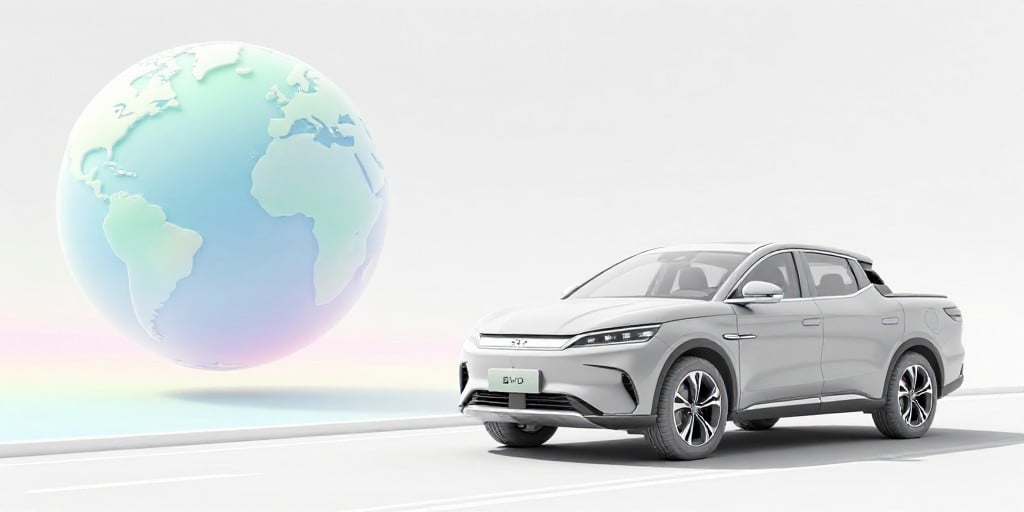
BYD’s Aggressive Expansion Meets Regulatory and Market Headwinds
The Chinese automotive titan BYD Co Ltd., listed on the Hong Kong Stock Exchange under ticker 01211.HK, is aggressively pushing its electric vehicle (EV) and battery technologies into new markets while facing a barrage of political, regulatory, and competitive pressures. Its latest moves reveal a company that is not content to rest on past successes but is actively seeking footholds across the globe, even as some analysts grow increasingly skeptical of its valuation and strategic choices.
1. A Strategic Push into North America
On July 9, 2026, kr‑asia.com reported that BYD is eyeing a North American market entry amid ongoing US‑Canada tariff discord. This maneuver underscores BYD’s intent to capitalize on tariff loopholes and position itself as a viable alternative to established U.S. and Canadian EV players. The company’s ambition is clear: leverage its battery‑making expertise and low production costs to outpace competitors in a region that is still grappling with supply‑chain bottlenecks and trade friction.
2. PHEV Pickup Launches in the U.K. but Stuck in the U.S.
The same day, insideevs.com announced that BYD’s plug‑in hybrid pickup has landed in the U.K., yet American consumers remain unable to purchase it. Electrek.co added that the UK model sells for $63,000 and boasts an EV range superior to the Ford Ranger. This disparity illustrates BYD’s uneven global rollout strategy: while European markets are receptive to its new vehicles, domestic U.S. sales are stalled, likely due to tariff complications and distribution challenges. The U.K. success, however, signals that BYD’s product line is competitive on both performance and price, potentially setting the stage for future U.S. entry.
3. Stock Performance Amid Analyst Divergence
In the wake of these developments, the Chinese auto sector’s second‑quarter outlook brightened, as noted by aastocks.com on July 8. Analysts flagged BYD and Geely as top picks, citing strong earnings prospects and robust export growth. Yet the same source reported that G Sachs had downgraded BYD’s shares to a “Sell” rating, slashing the target price to HKD 21 on July 7. This dichotomy reflects the market’s ambivalence: investors see growth potential, but valuation concerns and geopolitical risks temper enthusiasm.
4. Persistent Pursuit of European Partnerships
BYD’s attempts to secure a stake in Renault have resurfaced repeatedly, with reports from aastocks.com (July 7) detailing two separate proposals over the past two years. Although Renault has rebuffed both offers, BYD’s persistence indicates a clear strategy: gaining access to European manufacturing capabilities and leveraging Renault’s distribution network. The initiative also highlights BYD’s willingness to engage in high‑stakes collaborations, even when the outcome remains uncertain.
5. Record Sales and Market Leadership
Despite these strategic and regulatory hurdles, BYD continues to amass impressive sales figures:
- June 2026: UK sales nearly doubled to 37,795 vehicles (eletric‑vehicles.com).
- May 2026: BYD maintained a clear lead in Latin America (news.google.com), reinforcing its export dominance outside China.
- May 2026: A flagship electric sedan secured 65,000 locked‑in orders (electrek.co), evidencing robust demand for its premium models.
These numbers suggest that BYD’s product pipeline—spanning passenger cars, commercial vehicles, and batteries—remains highly competitive. Its latest Seal 08 model, unveiled by it‑times.de on July 6, promises a new premium segment with rapid‑charge guarantees for both BEV and PHEV configurations, potentially widening its appeal.
6. Outlook: Growth Versus Risk
BYD’s ambition to overtake Tesla in global battery‑electric vehicle sales (mexicobusiness.news July 6) is audacious but not unfounded. The company’s market cap of HKD 782.7 billion and a P/E ratio of 21.417 suggest that investors still value its growth trajectory. However, regulatory headwinds—particularly the tariff dispute in North America—combined with analyst downgrades signal that the path ahead is fraught with uncertainty.
In sum, BYD is pushing aggressively into new markets and product segments while courting both high rewards and significant risks. Its continued expansion into Europe and North America, coupled with record sales and a robust product lineup, positions it as a formidable competitor in the EV landscape. Whether the company can translate this momentum into sustained profitability amid geopolitical turbulence remains to be seen.