
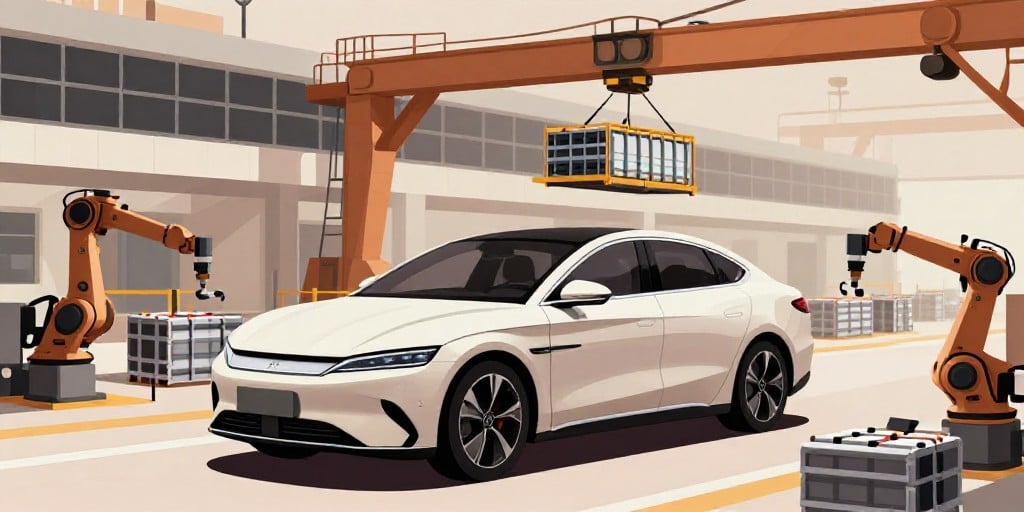
BYD Navigates a Complex Landscape Amid Operational Setbacks and Strategic Expansion
The Shenzhen‑based automotive powerhouse has once again found itself at the center of global attention. On 26 June 2026, a fatal accident at the company’s new electric‑vehicle plant in Szeged, Hungary, brought the site under intense scrutiny. The incident, marking the second worker death within months, has amplified concerns regarding labor practices and site safety, prompting calls for independent investigations and tighter regulatory oversight. While the company’s market‑capable shares dipped to a 52‑week low of HKD 74.2, the broader narrative is one of resilience and forward‑looking ambition.
Operational Challenges and Corporate Response
The Hungarian tragedy has exposed potential gaps in BYD’s safety protocols. Local authorities, alongside industry watchdogs, have demanded comprehensive reviews of working conditions. In response, BYD has pledged to enhance safety training, introduce stricter monitoring systems, and collaborate with independent auditors to ensure compliance with international standards. The firm’s CEO has reiterated that the company remains committed to protecting its workforce while maintaining production timelines.
Despite this setback, BYD’s overall operational tempo remains robust. The plant, which commenced production in April 2026, is pivotal to the company’s strategy to dominate the European EV market. The incident underscores the delicate balance between rapid expansion and operational excellence—a balance that BYD must navigate to preserve investor confidence.
Product Pipeline and Market Expansion
While labor controversies loom, BYD’s product slate is expanding with strategic launches that reinforce its position as a diversified mobility provider:
- Seal 08 Sedan (Launch July 2, 2026) – The new sedan fortifies the Ocean lineup, targeting premium segments with its advanced battery management and lightweight chassis.
- Linghui M9 Business MPV (Showroom Availability June 29, 2026) – A flagship hybrid van designed for corporate fleets, emphasizing fuel efficiency and a high‑density interior.
- Denza N8L (Launch June 24, 2026) – A premium SUV featuring breakthrough fast‑charging technology, signaling BYD’s ambition to capture the luxury electric‑vehicle niche.
- PHEV Expansion in Korea – BYD’s aggressive push into the Korean plug‑in hybrid market, alongside Toyota, capitalises on transitional demand, offering cost‑competitive models that blend traditional ICE with electric drivetrains.
These introductions are complemented by strategic partnerships in the energy‑storage sector. BYD is broadening its European energy‑storage portfolio, targeting residential and commercial applications. This diversification aligns with the company’s vision to become a holistic mobility and energy solutions provider.
Technological Innovation and Robotics
Beyond automotive hardware, BYD is forging new frontiers in robotics. Executive Vice President Stella Li has highlighted plans to integrate humanoid robots into car showrooms, a move that dovetails with the company’s broader strategy to blend mobility with service ecosystems. Li’s statements at the Cannes Lions International Festival of Creativity and subsequent interviews underline BYD’s ambition to embed robotics across its value chain, from manufacturing to after‑sales service.
Market Outlook
At a market cap of approximately HKD 102.78 billion and a price‑earnings ratio of 22.02, BYD’s valuation reflects investor optimism about its long‑term growth trajectory. The latest share price of HKD 76.05 on 24 June sits near a 52‑week low, yet the company’s diverse product pipeline and strategic expansion initiatives suggest a resilient upside. Analysts anticipate that BYD’s continued focus on electric and hybrid platforms, coupled with its energy‑storage and robotics ventures, will sustain its competitive edge in an increasingly electrified automotive ecosystem.
In summary, BYD is confronting immediate operational challenges while simultaneously advancing a multifaceted strategy that spans electric vehicles, plug‑in hybrids, energy storage, and robotics. The company’s capacity to reconcile these dynamics will determine its trajectory in the coming years.