Chainlink’s Expanding Role in Tokenised Finance Amid Market Turbulence
The Chainlink network has deepened its integration into tokenised finance infrastructure, securing new partnerships that underscore the growing demand for reliable on‑chain data feeds. At the same time, the cryptocurrency’s price remains under pressure amid broader market softness and regulatory uncertainty.
1. Chainlink Data Streams Adopted by Archax
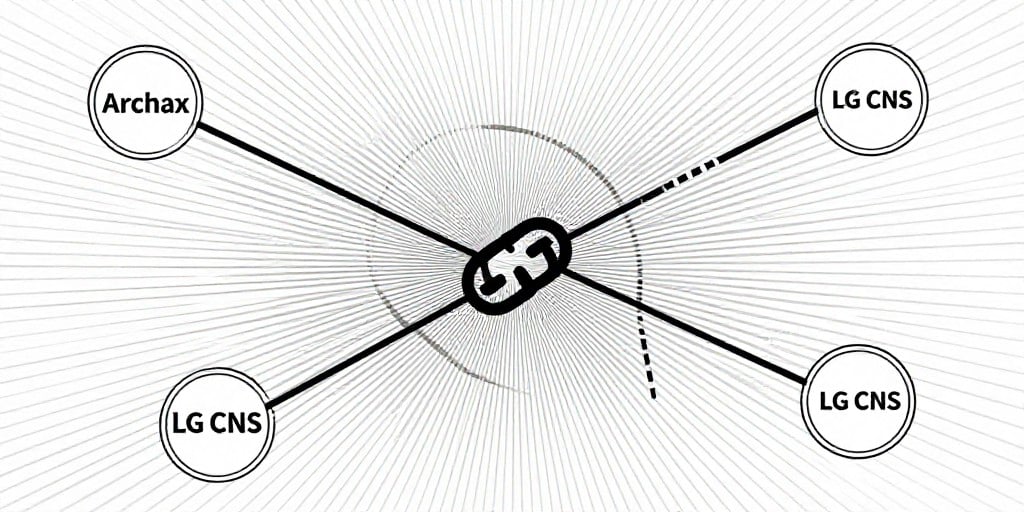
On 22 October 2026, Archax announced that it would use Chainlink Data Streams to supply pricing information for GOVY, its tokenised U.S. Treasury product. The move is part of Archax’s broader strategy to develop collateral for tokenised securities. By leveraging Chainlink’s real‑time oracle network, Archax can guarantee that GOVY’s market data remains accurate and tamper‑evident, a critical requirement for any tokenised treasury instrument. This partnership is the latest in a series of collaborations that position Chainlink as the preferred oracle provider for institutional‑grade financial products.
2. LG CNS Enlists Chainlink to Scale Korea’s Tokenised Finance
A further partnership, announced on the same day by LG CNS, a long‑standing player in blockchain‑based financial infrastructure, highlights Chainlink’s reach in East Asia. LG CNS is deploying Chainlink to support its KITL institutional digital‑asset platform, aiming to scale Korea’s tokenised finance and stable‑coin markets. By incorporating Chainlink’s on‑chain data feeds, LG CNS can deliver verifiable price information for a range of digital assets, thereby increasing trust for institutional participants.
3. Regulatory Context: Push for Clearer Crypto Rules
In a separate development on 21 October 2026, Chainlink Labs joined forces with Cardano and other blockchain groups to lobby the U.S. Securities and Exchange Commission (SEC) for clearer regulatory guidance. The six organizations urged the SEC to formally classify digital commodities as non‑securities, arguing that current ambiguity hampers market growth. While the request is still under public consultation, it demonstrates Chainlink’s willingness to engage in policy discussions that could shape the broader ecosystem.
4. Market Conditions and Price Performance
The Chainlink token (LINK) closed at $11.8143 on 22 October 2026, down from its 52‑week high of $19.0215 (recorded on 26 October 2025) and above its 52‑week low of $7.0224 (recorded on 25 June 2026). The market cap, at $8.84 billion, reflects a consolidation phase rather than an explosive rally.
Recent price action has been mixed. A report from CryptoNewsFlash on 23 October notes that LINK has failed to rally on the LG CNS deal, trading near $11.70 and remaining in a support zone that intersects a deep Fibonacci level. Technical analysis points to a death cross on the 4‑hour chart, indicating a short‑term bearish bias.
This price environment coincides with a broader sell‑off in the cryptocurrency market. Bitcoin fell from an all‑time high of $85,000 to $80,400 on 24 October, driven partly by geopolitical tensions and negative sentiment following U.S. President Trump’s comments on the Iran conflict. Altcoins mirrored the downturn, adding pressure on Chainlink’s valuation.
5. Strategic Implications for Chainlink
The dual trajectory of strategic partnership expansion and market volatility presents a nuanced landscape for Chainlink:
- Partnership Momentum – The Archax and LG CNS deals illustrate Chainlink’s growing acceptance among institutional fintechs and tokenised asset issuers. These relationships reinforce Chainlink’s position as the oracle backbone for regulated digital‑asset products.
- Regulatory Clarity Needed – The joint SEC lobby underscores the importance of a clear regulatory framework. A definitive classification of digital commodities as non‑securities would likely remove a barrier to broader institutional adoption.
- Price Sensitivity – Despite strong institutional uptake, LINK’s price remains sensitive to macro‑market swings. The current bearish technical signals suggest that short‑term price gains may be constrained until broader market conditions improve.
In sum, Chainlink continues to cement its role as a critical infrastructure layer for tokenised finance, even as it navigates an uncertain macro‑economic and regulatory environment. The network’s future trajectory will hinge on both its ability to secure high‑profile partnerships and on the evolution of regulatory clarity in the U.S. and globally.