
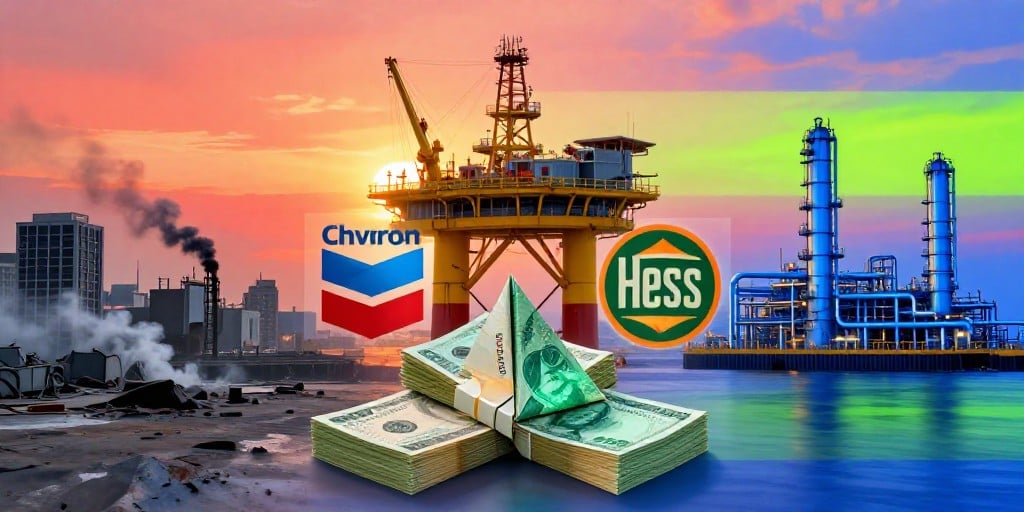
Chevron Corp. Capitalizes on War‑Driven Oil Prices and Strategic Asset Growth
Chevron’s second‑quarter 2026 results underscore the resilience of the U.S. oil giant in a market increasingly defined by geopolitical tension and robust supply constraints. The company posted net earnings of $12.1 billion—a 12% year‑over‑year increase that translates into $6.11 per diluted share—while gross production climbed 20% year over year, driven largely by the integration of Hess assets.
Earnings Momentum Reinforced by Market Conditions
The surge in crude, gasoline and diesel prices, a direct consequence of the escalating conflict in the Middle East, has provided Chevron with a dual advantage: higher input prices have lifted upstream margins, and the sustained price rally has bolstered downstream profitability. Chief Executive Officer Eimear Bonner noted that fuel‑making margins are expected to remain elevated as long as energy markets remain “under stress.” This outlook aligns with the firm’s own guidance that high margins will persist despite potential short‑term volatility in crude prices.
Strategic Focus on Debt Reduction
In line with a cautious capital allocation strategy, Chevron has earmarked the excess cash generated by this windfall for debt reduction rather than an aggressive share‑buyback program. This approach mirrors the broader trend among major oil companies, with ExxonMobil following suit, and positions Chevron to maintain financial flexibility in the face of uncertain refining margins and evolving regulatory landscapes.
Market Performance and Investor Sentiment
Following the earnings release, Chevron shares rose by 1.42%, reflecting investor confidence in the company’s operational performance and the strength of its downstream portfolio. The stock’s most recent close at $196.83 sits comfortably below the 52‑week high of $214.71, suggesting room for upside should the war‑driven price support for fuels continue.
Forward Outlook
Chevron’s management remains optimistic about sustaining high fuel margins as long as supply constraints persist. The company’s ongoing investments in refining capacity, coupled with a disciplined approach to capital allocation, should enable it to capture incremental value from continued geopolitical turbulence in the energy sector. Investors will likely keep a close eye on the company’s ability to translate higher upstream production into downstream profitability while maintaining a disciplined debt profile.
This analysis synthesizes the latest quarterly results and market commentary to provide a forward‑looking perspective on Chevron Corp.’s strategic positioning amid current global energy dynamics.