
China Jushi Co., Ltd. – A Calculated Leap into the Electronic‑Grade Glass Fiber Market
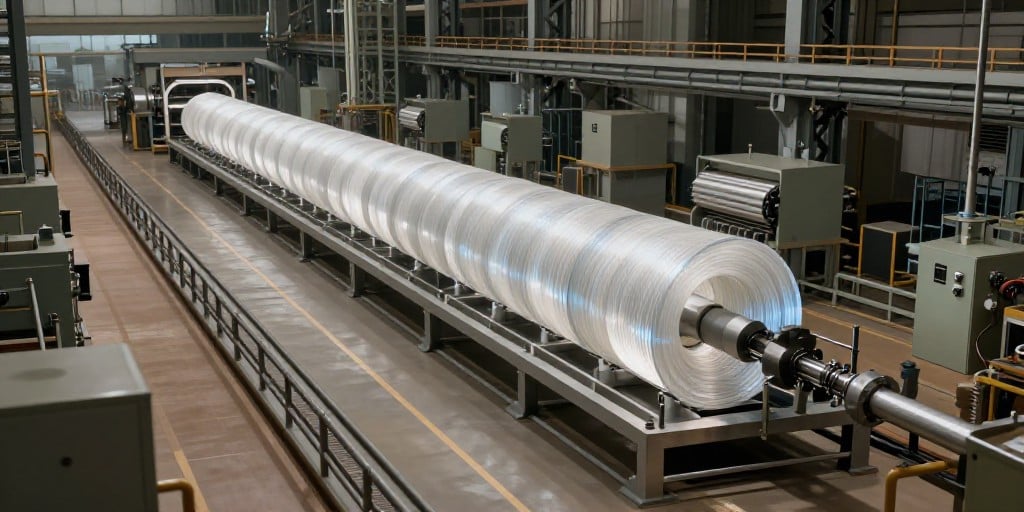
China Jushi’s announcement on 15 July 2026 that its wholly‑owned subsidiary, Jushi Group, will invest 2.405 billion yuan in a new 2.5‑billion‑meter‑per‑year electronic‑grade glass fiber (electronic cloth) production line represents a decisive pivot toward the high‑margin segment of the construction materials sector.
The move is not a mere diversification strategy; it is a calculated response to the accelerating consolidation in the global electronics supply chain. In recent weeks the PCB industry has experienced a pronounced rebound, with several leading firms—East China Precision, Huadiao, and Shengyi Technology—registering mid‑month price hikes of 10 %–15 % after supply constraints tightened. The upward pressure on raw‑material prices has spilled over into the upstream glass fiber market, where shortages of high‑grade fibers have forced producers to raise prices, creating a favorable pricing environment for new entrants.
Strategic Rationale
Alignment with the “15‑15” Plan The investment is explicitly tied to Jushi’s “十五五” (15‑year, 15‑plan) strategic framework. By expanding capacity in the electronic‑grade segment, the company seeks to accelerate product‑structure adjustments and reinforce its competitive edge in a market that demands precision and reliability.
Capital Allocation Efficiency With a market capitalization of 216 billion yuan and a price‑earnings ratio of 56.3, Jushi is operating in a high‑valuation environment that rewards growth initiatives. Deploying 2.405 billion yuan of its own and internally raised funds—rather than seeking external debt—signals confidence in the project’s return profile and mitigates balance‑sheet risk.
Supply‑Chain Positioning The new production line will be located in the Tongxiang Economic Development Zone, a logistics hub that offers proximity to key customers in the United States, Canada, and several European and Asian markets. By tightening control over production, Jushi can better respond to the rapid demand swings that have plagued the PCB and electronics sectors.
Market Context and Risk Assessment
- Positive Momentum: On 14 July, the PCB concept index surged over 9 %, with China Jushi among the stocks that hit the limit‑up band. The electronic‑fiber segment mirrored this trend, driving the company’s stock price from a 52‑week low of 12.19 CNY to a level that hovered near 70 CNY in the same week.
- Volatility in Raw‑Material Costs: While the current price premium for electronic glass fibers is attractive, it is subject to rapid fluctuation. A sudden easing of PCB orders or an influx of competitors could erode margins.
- Capital Expenditure Risk: The 2.405 billion‑yuan outlay represents a significant capital commitment. Project delays, cost overruns, or regulatory setbacks could impair the expected payback period.
- Competitive Landscape: Established players such as Honghe Technology and Shandong Glass Fibers have already secured long‑term contracts with major PCB manufacturers. Jushi must differentiate through quality, delivery reliability, and integrated supply‑chain solutions to capture market share.
Financial Implications
With a close price of 53 CNY on 14 July, the 2.405 billion‑yuan investment translates to a share‑price impact of approximately 4 %. Given the company’s high P/E ratio, investors may perceive the move as a necessary step to sustain future earnings growth rather than a dilution of value. The projected annual output of 2.5 billion meters positions Jushi to command a sizable share of the 8 billion‑meter global electronic‑grade market, potentially generating incremental revenues in the 5–7 billion CNY range over the next three years, assuming a conservative margin lift of 2–3 %.
Conclusion
China Jushi’s bold capital deployment into an electronic‑grade glass fiber production line is a strategic gambit that aligns with macro‑sector trends and the company’s long‑term vision. While the project carries inherent risks—particularly in a volatile supply‑chain environment—the potential upside in pricing power and market share is substantial. Investors will need to weigh the immediate valuation impact against the projected long‑term earnings enhancement that this expansion promises.