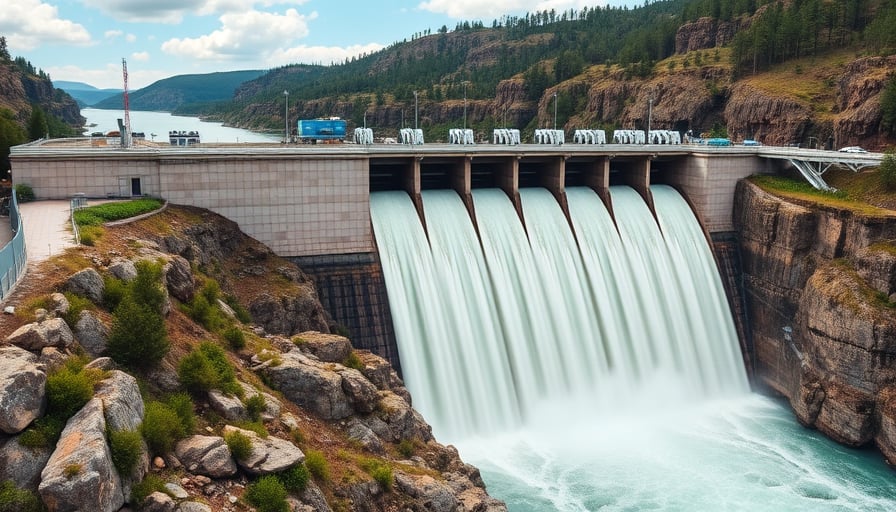
China Yangtze Power Co. Ltd: A Case Study in the Rising Green‑Power Imperative
Market Snapshot
- Listing: Shanghai Stock Exchange (Shanghai, China)
- Sector: Utilities – Independent Power and Renewable Electricity Producers
- Closing price (2026‑03‑31): ¥26.88
- 52‑week range: ¥25.38 – ¥31.19
- Market capitalisation: ¥657.7 billion
- Price‑to‑earnings ratio: 19.29
With a market cap that places it among the mid‑tier players in a heavily regulated utility landscape, China Yangtze Power operates across the spectrum of power generation: electricity, hydropower, and ancillary power products. The firm also offers investment, financing, and consulting services on a global scale.
1. Green‑Power Momentum: A Strategic Imperative
On 30 March 2026, Premier Li Qiang, during a visit to Sichuan, underlined the “continual expansion of green power supply” as a national priority. The state’s emphasis on new‑generation grids, AI‑driven optimisation, and high‑capacity green‑energy utilisation has immediate implications for China Yangtze Power:
| Policy Element | Relevance to Yangtze Power | Implication |
|---|---|---|
| Hydro‑wind‑solar integration | Core to Yangtze’s hydropower portfolio | Opportunity to secure long‑term contracts in integrated power hubs |
| Data‑center green‑electricity mandates | Demand for stable, low‑carbon supply | Potential for fixed‑price, long‑term supply agreements |
| AI‑powered grid optimisation | Requires real‑time data streams | Investment in digital infrastructure could unlock premium margins |
| “Green‑power–AI synergy” | AI utilisation of green‑energy assets | Opens a new revenue stream through consultancy and data analytics services |
The news article highlights that green‑electricity “has the dual defensiveness of stable cash flow (backed by state support) and high growth potential (AI‑driven demand)”. For a utility such as Yangtze Power, this means a clear path to both profit stability and future‑proofing—provided the company acts decisively to align its asset mix and service offering with these mandates.
2. The Fund Landscape: Capital Inflows and Strategic Focus
Public‑fund activity in 2025 saw over 13,600 funds, assets of CNY 37.71 trillion, and a total profit of CNY 2.60 trillion. Although China Yangtze Power was not among the top ten holdings, the overall fund enthusiasm for growth‑sector stocks (especially those linked to technology and energy transition) signals a potential shift in capital allocation toward players positioned for green‑power dominance.
- Key Takeaway: A surge in fund flows to tech‑heavy, energy‑transition companies hints that investors are re‑valuating utility portfolios.
- Strategic Response: Yangtze Power must demonstrate its green‑power trajectory—via asset expansion, digital upgrades, and clear communication—to attract the next wave of institutional capital.
3. Shanghai’s “New‑Momentum” Focus: The Utility Context
The Shanghai Stock Exchange’s 30 March 2026 “培育新动能” (Nurturing New Momentum) week spotlighted Longjiang Power among other utilities. While Yangtze Power was not explicitly mentioned, the thematic focus on technology innovation and structural optimization signals an implicit call for utilities to showcase their transformation plans.
- Implication for Yangtze Power: It must articulate its transformation strategy (e.g., hydropower integration with wind/solar, digital grid upgrades) to meet the heightened scrutiny from market participants and regulators alike.
4. Critical Analysis: Where Yangtze Power Stands
Strengths:
Established hydropower assets that fit neatly into the state‑driven green‑energy framework.
State‑backed utility status confers regulatory certainty and access to preferential financing.
Diversified service offering (investment, financing, consulting) can be leveraged in the AI‑driven power market.
Weaknesses:
Limited visibility in the current fund‑investment narrative; absence from the top holdings list suggests a missing narrative about the company’s green‑power evolution.
Digital and AI readiness remains unclear; the company must invest in smart grid capabilities to meet the AI‑driven demand highlighted by Premier Li.
Opportunity:
Positioning as a green‑power hub for data centers and AI operations could yield premium pricing and long‑term contracts.
Capitalising on the “green‑electricity–AI synergy” could open new revenue streams, especially in consultancy and data analytics services tied to power optimisation.
Threat:
Competitive pressure from newer entrants and larger utilities already advancing in AI‑integrated power solutions.
Policy volatility: while current policies favour green‑energy, any shift in subsidies or regulatory focus could alter the revenue landscape.
5. Forward Path: Recommendations for Stakeholders
- Accelerate Digital Transformation
- Deploy AI and IoT solutions for real‑time asset monitoring, predictive maintenance, and grid optimisation.
- Secure partnerships with technology firms to embed AI in the core business.
- Expand Renewable Portfolio
- Integrate solar and wind assets to complement existing hydropower, aligning with the “water‑wind‑solar” integration mandate.
- Target long‑term supply contracts with data centers and high‑tech firms demanding green‑electricity.
- Communicate a Clear Transformation Narrative
- Publish detailed roadmaps for green‑energy expansion and digital upgrades in annual reports and investor presentations.
- Engage with institutional investors to showcase potential upside, leveraging the fund‑market momentum.
- Leverage State Support Mechanisms
- Pursue preferential financing and policy incentives aimed at utilities supporting AI and high‑capacity green‑energy projects.
- Participate actively in national grid‑upgrade initiatives to secure priority status.
- Monitor Market Sentiment and Regulatory Shifts
- Stay ahead of policy changes regarding green‑electricity pricing, data‑center mandates, and AI integration standards.
- Adjust strategy promptly to maintain competitive advantage.
In Summary
China Yangtze Power stands at a pivotal crossroads. The national policy landscape is unmistakably steering toward green‑electricity and AI integration—domains where the company’s hydropower foundation and service diversification can deliver value. However, to capitalize on this momentum, Yangtze Power must transcend its status as a conventional utility and position itself as a proactive, technology‑savvy partner in the green‑power revolution. The coming months will test its agility; those who adapt swiftly will reap the rewards of a market that increasingly rewards sustainability, innovation, and long‑term resilience.