
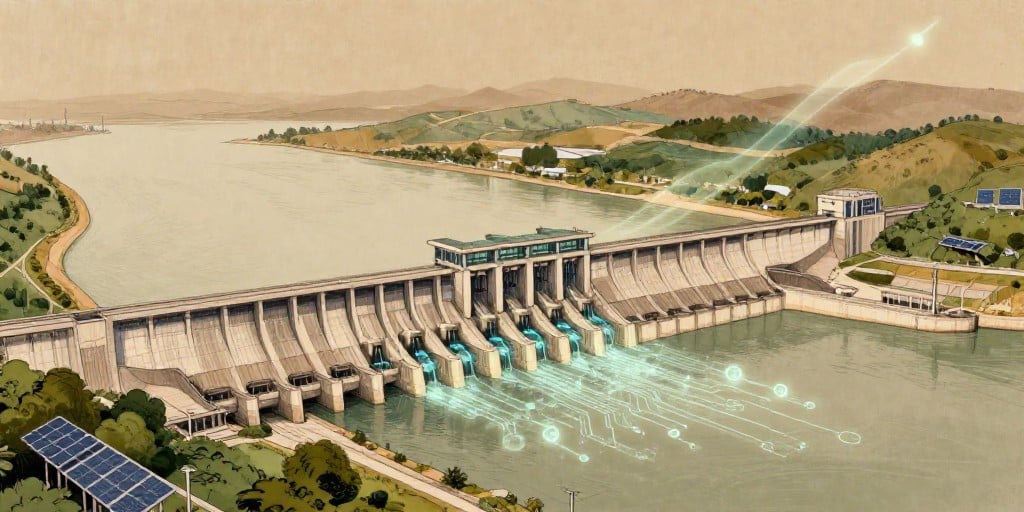
China Yangtze Power Co., Ltd.: Navigating a Transforming Utility Landscape
China Yangtze Power Co., Ltd. (NYSE: CHINA YANGTZE POWE‑REG S) has long positioned itself as a pivotal player within China’s power generation sector. The company, listed on the Shanghai Stock Exchange since 2003, generates electricity through a mix of hydropower and other renewable sources, while also providing investment, financing, and consulting services to a global customer base. With a market capitalization of roughly 98 billion CNH and a price‑to‑earnings ratio of 19.73, the firm remains a significant component of the utilities sector.
Recent Market Activity
As of the close on 22 July 2026, the stock traded at 28.94 CNH, a level comfortably within its 52‑week high (29.54 CNH) and 52‑week low (25.38 CNH). This range reflects the broader volatility observed across the power‑generation subsector, where firms such as 长江电力 (Longjiang Power) and 南网储能 (Shanghai Electric Power Storage) experienced modest declines of 0.17 % and 0.39 % respectively. In contrast, 立新能源 (Li New Energy) posted a remarkable seven‑day rally, underscoring investor enthusiasm for companies that are leveraging renewable assets and benefiting from supportive subsidy regimes.
Power‑Sector Dynamics
The recent performance of Li New Energy highlights a critical trend for the industry: the convergence of renewable generation with state‑backed incentives. The company’s forecasted 2026 first‑half net profit—projected to rise by 570 % to between 60 million and 80 million CNH—was largely driven by the commissioning of joint‑venture hydropower projects in Xinjiang and an uptick in subsidy repayments. This environment of improved profitability for renewables reverberates across the sector, including for China Yangtze Power.
At the same time, the green‑electricity market is experiencing a shift from mere consumption to direct integration with high‑energy‑intensity sectors such as data centers. Reports from 鹏华 ETFs indicate that water‑based generation (hydropower) has delivered strong mid‑term performance, benefiting from favorable water inflows and the growing demand for green power in AI data centers. Analysts note that this “electricity‑compute synergy” is emerging as a national strategic focus, encouraging utilities to secure long‑term contracts with data‑heavy consumers.
Implications for China Yangtze Power
China Yangtze Power’s diverse portfolio—comprising hydropower, other renewable projects, and ancillary services—positions it to capitalize on several of the aforementioned dynamics:
Subsidy Optimization – As the government refines renewable energy subsidies, the company’s emphasis on hydropower, which enjoys stable production and lower operating costs, may allow it to maintain a favorable revenue mix even as subsidy structures evolve.
Strategic Contracts – The rising energy demand of AI and data‑center operators presents opportunities for long‑term, high‑priced power supply agreements. China Yangtze Power’s existing infrastructure could be leveraged to secure such contracts, reinforcing revenue stability.
Financial Flexibility – With a robust market presence and a solid capital base, the firm can pursue further investment, financing, and consulting ventures. Its ability to generate cash flows from diversified sources provides resilience in a sector where operating margins can fluctuate due to regulatory and market cycles.
Risk Management – While the sector is buoyed by green initiatives, it remains susceptible to water‑inflow variability and policy shifts. The company’s focus on hydropower—subject to water‑resource constraints—necessitates vigilant risk assessment, especially in the context of changing climate patterns.
Market‑Wide Capital Flows
Recent fund‑flow data reveal that 长江电力—the same company that shares its industry with China Yangtze Power—experienced a cumulative net inflow of 9.14 billion CNH over five days. This trend, driven by active investors reallocating capital toward utility and renewable assets, suggests a growing confidence in the sector’s long‑term prospects. Moreover, the broader equity market has seen a pivot toward AI and high‑tech equities, with public funds moving away from traditional consumer and financial staples. This shift reflects a strategic realignment toward industries perceived as offering higher growth potential.
For China Yangtze Power, the combination of sectoral support and capital‑market enthusiasm provides a conducive backdrop for pursuing incremental growth and reinforcing its position as a leading utility.
Conclusion
China Yangtze Power remains a central figure in China’s power landscape, underpinned by a diversified generation mix, a solid financial foundation, and strategic alignment with national priorities such as renewable energy expansion and digital‑economy electrification. While the company faces the usual challenges of regulatory change and resource variability, the recent market conditions—marked by increased investor confidence, robust subsidy mechanisms, and the rise of green‑electricity contracts—offer a promising horizon. The firm’s capacity to navigate these dynamics will dictate its continued relevance and performance within the utilities sector.