
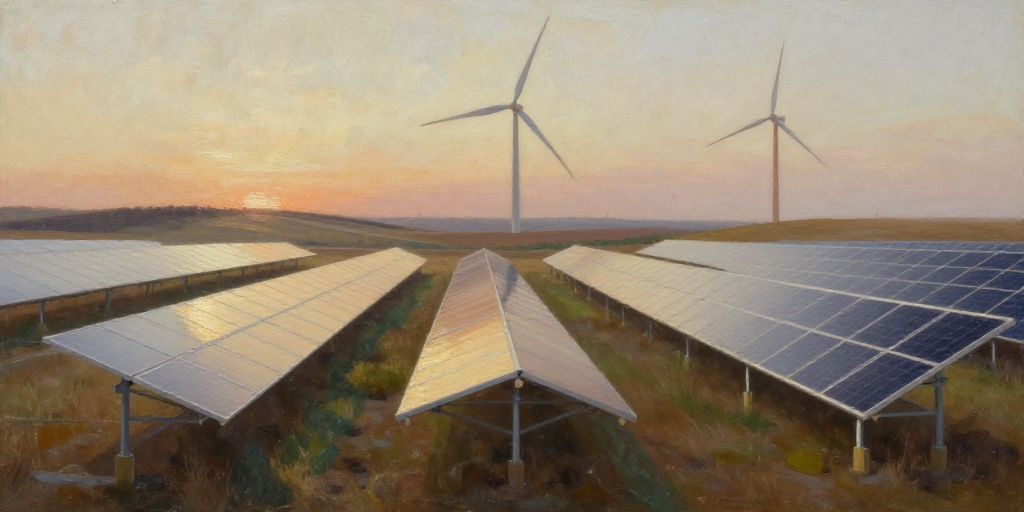
Clearvise AG consolidates its renewable portfolio
Clearvise AG, a German producer of renewable electricity listed on Xetra, announced on 23 April 2026 that it has sold a portfolio of 13 small‑scale photovoltaic (PV) plants with a combined nameplate capacity of approximately 8.6 MW. The transaction was executed with GSP GmbH, an investment company based in the Netherlands.
The divestiture marks a deliberate shift away from a segment that the company views as strategically non‑relevant. In a statement released from Frankfurt, Clearvise underscored that the sale aligns its asset mix more closely with its core focus on larger wind and solar parks across Germany, Ireland and France. The move is framed as a portfolio optimisation that capitalises on the current market environment, which has seen favourable conditions for the sale of smaller PV installations.
Implications for Clearvise’s business strategy
Clearvise’s primary business is the development and operation of wind energy plants, but the company also operates solar farms of larger scale. The divestment of the 8.6 MW PV portfolio is intended to streamline operations and free up capital that can be reinvested in high‑yield, large‑capacity projects. By concentrating on wind and solar parks that generate substantially higher annual outputs, Clearvise aims to improve economies of scale, reduce operational complexity, and potentially enhance its return on equity.
Given the company’s market cap of roughly €93 million and a price‑to‑earnings ratio of –129.135, the strategic realignment may also influence investor perception. A leaner portfolio could signal a more focused risk profile, which may be attractive to stakeholders seeking clarity on the company’s long‑term asset allocation.
Market reaction
At the close of 21 April 2026, Clearvise’s share price stood at €1.22, falling within its 52‑week range of €1.11 to €1.74. The announcement has not yet triggered a significant price swing, suggesting that market participants view the divestiture as a routine optimisation rather than a disruptive event. Analysts will likely monitor subsequent quarterly reports to assess whether the freed capital is deployed into new wind or solar assets, and whether that translates into higher generation volumes and improved profitability.
Conclusion
Clearvise AG’s sale of its small‑scale PV portfolio reflects a broader industry trend of consolidating renewable assets around larger, more efficient projects. By shedding a peripheral segment and reallocating resources toward wind and solar parks, the company positions itself to capture greater market share in Germany and beyond. Stakeholders will be attentive to how this strategic pivot unfolds in upcoming financial statements and project pipelines.