
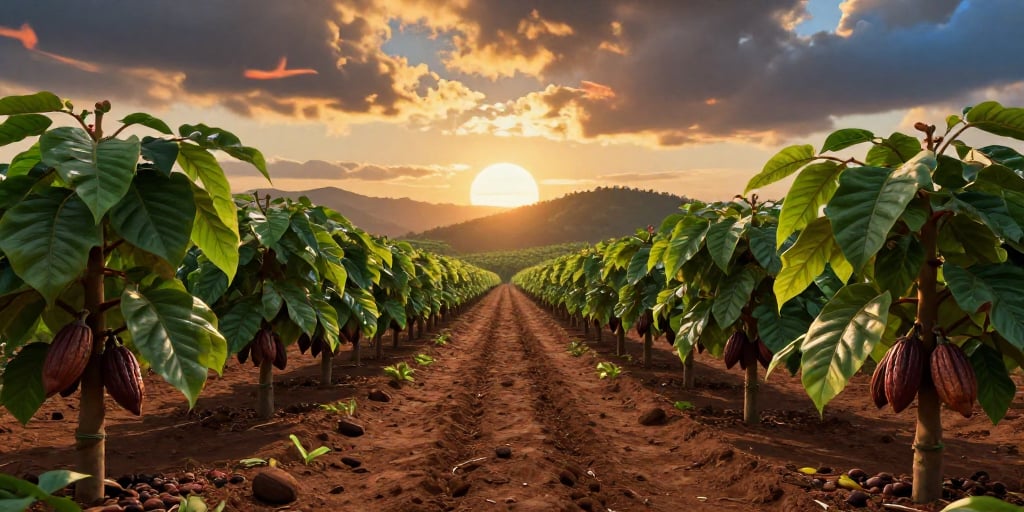
Cocoa Prices Surge to Three‑Month Highs Amid Crop‑and‑Climate Concerns
The July 2026 contracts on the Intercontinental Exchange—ICE New York (CCN26) and ICE London (CAN26)—closed at record‑breaking levels, reflecting a sharp 12‑percent rally that has already eclipsed the 3‑month high reached on 19 April 2025. On Monday, 11 May 2026, CCN26 spiked +527 points (12.60 %) to 4,326 USD/metric ton, while CAN26 climbed +370 points (11.88 %) to 4,326 USD/mt. These moves have catapulted cocoa to its highest price in more than three months, underscoring a growing anxiety in the market.
Why the Surge?
Two main factors are propelling the rally:
Crop Fear Several reports warn that the 2026 cocoa harvest in West Africa—particularly in Côte d’Ivoire and Ghana, the world’s largest producers—could be severely hampered by a combination of late‑season rains and a higher prevalence of white cocoa disease. The news from the Nasdaq sources highlights that “concerns that the formation of an El Niño…could exacerbate these conditions” are feeding the price surge. As a commodity that relies on a narrow window of optimal weather, any hint of adverse conditions triggers a panic‑driven rush for inventory.
Climate Uncertainty The nascent El Niño event, identified by climate monitoring agencies, is expected to bring drier conditions across the cocoa belt. In a market where weather is the single most potent risk factor, the mere possibility of a drier, hotter season pushes traders to bid up futures in anticipation of supply shortages. This sentiment is reflected in the dramatic 12‑plus‑percentage move seen on both NY and London exchanges.
Market Reaction and Liquidity
The surge has also attracted significant volume, with open interest in CCN26 and CAN26 climbing sharply. This influx of capital is not merely speculative; institutional players are positioning for an expected squeeze as the growing season approaches. The volatility, however, remains high, and the price has yet to settle into a sustainable trend, making it a precarious opportunity for both hedgers and speculators.
Local Price Dynamics
While global futures have escalated, local markets have begun to mirror the upward trajectory. In Cameroon, cocoa prices have rebounded to nearly $3 per kilogram as the harvest season nears its conclusion, according to the EcoFinance Agency. The local uptick aligns with the global rally, suggesting that supply concerns are not confined to the U.S. or London exchanges but are a worldwide phenomenon.
Conclusion
The confluence of crop fears and a looming El Niño is creating a perfect storm for cocoa. The 12‑percentage surge in the July futures contracts is not an isolated anomaly but a manifestation of a broader, climate‑driven narrative that could reshape supply expectations for months to come. Investors, traders, and producers alike must brace for a period of heightened volatility and consider hedging strategies that account for the underlying weather risks that are now at the forefront of the cocoa market.