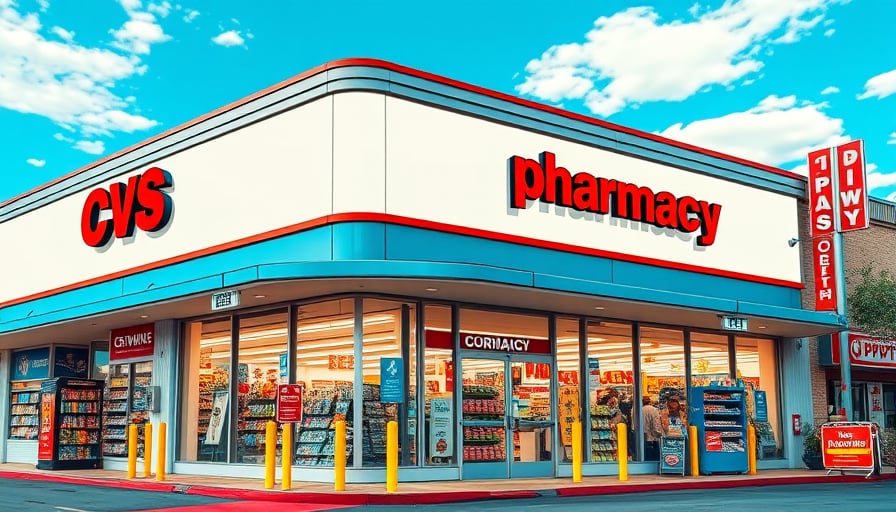
CVS Health Corp. Navigates a Turbulent Quarter Amid Strategic Store Rollout and Leadership Transition
The New York Stock Exchange-listed health‑care provider, CVS Health Corp. (CVS), has seen a sharp decline in share value over the past week, falling from a 52‑week high of $85.15 to a close of $70.08 on March 26, 2026. The dip coincides with a series of high‑profile investor actions and corporate developments that underscore a period of intense scrutiny and strategic recalibration.
Institutional Selling Sparks Volatility
On March 28, three major investment advisers executed sizable sell orders:
- Sanctuary Advisors, LLC divested 199,301 shares.
- Verdence Capital Advisors LLC shed 139 shares.
- COURIER CAPITAL LLC and ST GERMAIN D J CO INC sold 1,084 and 248 shares respectively.
These transactions, disclosed through feeds.feedburner.com, signal a growing wariness among institutional stakeholders about CVS’s short‑term prospects. The cumulative outflow of more than 200,000 shares in a single day, occurring during a period of market uncertainty, amplified bearish sentiment and contributed to the stock’s slide.
CEO Retirement Adds Uncertainty
The company’s leadership transition further destabilised investor confidence. Reports from Reuters and Investing.com confirmed that Richard Fairman, CEO of CVS Group, announced his retirement after seven years at the helm. The decision, driven by personal reasons, came at a time when the firm was already grappling with operational shifts. The news of a leadership vacuum has left investors questioning the continuity of strategic initiatives, particularly those related to the company’s pharmacy‑only store strategy.
Expansion of Pharmacy‑Only Stores Amid Store Contraction
Contrary to the prevailing perception that CVS is shrinking its footprint, Bloomberg and BusinessDay highlight a decisive pivot. The company announced plans to open approximately 60 new stores in 2026, including nearly 20 small, dedicated pharmacy‑only sites. This initiative, described as the culmination of a four‑year contraction, aims to enhance community access to pharmacy care and counteract the challenges posed by rising health‑care costs.
Key milestones include:
- Opening of the first pharmacy‑only location in Chicago’s Brighton Park (CBS News, March 30). This store represents the company’s commitment to “meet consumers where they are” and to provide more convenient access to prescription and health‑care products.
- Announcement of a small pharmacy‑only site in Chicago (PRNewswire, March 30), reinforcing CVS’s strategy to embed its services in underserved neighborhoods.
- Expansion into drugstore retail via a partnership with Cleanlogic (PRNewswire, March 30), demonstrating the firm’s willingness to diversify its in‑store offerings beyond traditional pharmacy services.
Despite these expansions, CVS remains under pressure to manage the balance between opening new stores and closing underperforming locations, a tension highlighted in the company’s recent retail turnaround strategy.
Market Valuation and Financial Metrics
- Market Cap: $90.47 billion (USD), positioning CVS among the largest healthcare providers in the United States.
- Price‑to‑Earnings Ratio: 52.05, reflecting high investor expectations for future growth amidst current volatility.
- 52‑week range: $58.35 – $85.15, illustrating significant price swings over the past year.
The company’s high PE ratio suggests that investors are still willing to pay a premium for the potential upside of its strategic initiatives, yet the recent sell‑off indicates that this optimism is fragile.
Conclusion
CVS Health Corp. is at a crossroads. While the company’s aggressive rollout of pharmacy‑only stores and strategic retail partnerships signal a bold attempt to redefine its role in community health, the simultaneous wave of institutional selling, a CEO retirement, and a steep decline in share price cast doubt on the sustainability of these moves. Investors will likely monitor how effectively CVS can translate its expansion strategy into tangible revenue growth, and whether the leadership transition can be managed without eroding stakeholder confidence.