
Datang International Power Generation Co. Ltd: A Critical Reckoning
Datang International Power Generation Co. Ltd (ticker 601991), listed on the Shanghai Stock Exchange and traded on Hong Kong under the ticker DTPOWER, has once again found itself at the center of a volatile market drama. With a market capitalization of ≈ 55.7 billion HKD and a price‑to‑earnings ratio of 8.26, the company’s shares closed at HKD 2.94 on 17 May 2026, a modest decline from the 52‑week high of HKD 3.61 and a significant climb above the 52‑week low of HKD 1.84. Yet these figures mask a deeper turbulence that has been exacerbated by recent institutional actions and a bold but risky strategic pivot toward renewable energy.
1. Institutional Exodus and Market Sentiment
On 19 May, the 龙虎榜 (institutional trading leaderboard) reported a massive net outflow from Datang’s shares, amounting to HKD 4.4 billion. This outflow places Datang among the top three sellers of the day, alongside RuiJing Biotech and YouXun Shares. The sheer magnitude of the sell‑off indicates a loss of confidence among institutional investors, who traditionally act as the custodians of long‑term value. Their departure is not an isolated event; the same day, A‑share markets experienced a flurry of activity, with power‑sector ETFs like 华能蒙电 and 上海电力 recording unprecedented volume and price spikes. Despite these sector‑wide rallying points, the institutional exodus suggests that Datang’s fundamentals—particularly its heavy reliance on coal‑powered generation—are no longer reassuring.
2. The “Anomalous” Announcement and the Renewable Gamble
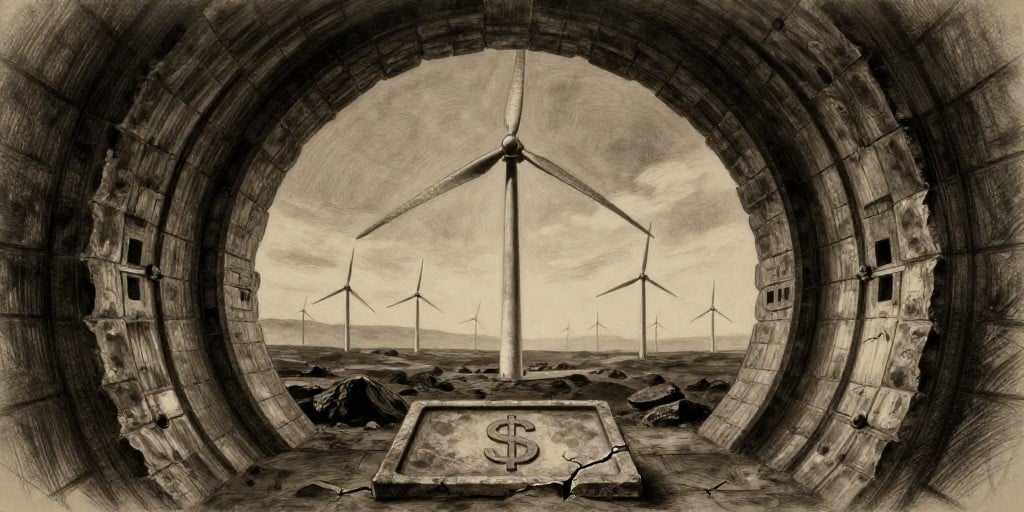
In the same early‑morning window, the company issued a press release announcing that it has joined forces with a state‑owned entity to establish a 10‑billion‑yuan renewable energy subsidiary. While this move is framed as a strategic diversification into green power, the timing and nature of the announcement raise several red flags:
- Liquidity Concerns – The creation of a new subsidiary, especially one backed by a state entity, typically requires substantial capital outlay. Investors are left to question whether this will strain Datang’s already modest cash reserves and whether it will dilute shareholder value.
- Execution Risk – The renewable sector is capital‑intensive and highly competitive. A joint venture of this scale demands expertise that Datang’s current management may lack, especially given its historical focus on coal chemistry and transport logistics.
- Regulatory Scrutiny – State‑owned partnerships are subject to intense governmental oversight. The rapid expansion into renewables could attract regulatory delays or additional compliance costs, further eroding profitability.
The market’s reaction was swift. The Green Power ETF (华夏 562550) surged 3.62 % following the announcement, a reaction that suggests a short‑term speculative rally rather than a durable shift in value perception. ETFs often act as barometers of investor sentiment; their surge indicates that traders are chasing the narrative of a green transformation rather than scrutinizing the underlying fundamentals.
3. Earnings, Valuation, and the Price‑to‑Earnings Paradox
Datang’s price‑to‑earnings ratio of 8.26 sits comfortably below the industry average for independent power producers, which typically ranges between 10 and 12. However, a low P/E in a high‑growth sector can be a double‑edged sword. It may signal undervaluation, but it can also reflect market skepticism regarding growth prospects. The company’s close price of HKD 2.94 on 17 May, while near the lower end of the 52‑week range, indicates a market that is unwilling to pay a premium for its current dividend yield of ≈ 3.5 % (derived from its net profit margin and P/E). The recent sell‑off intensifies the perception that the company’s earnings are not being fully rewarded by the market.
4. Strategic Implications and Risk Assessment
The announcement of a 10‑billion‑yuan renewable energy subsidiary represents a strategic pivot that could redefine Datang’s business model. Yet, the company’s core operations—coal generation, coal chemistry, and related logistics—remain heavily exposed to regulatory changes and market volatility. The timing of this pivot, amidst a backdrop of institutional sell‑offs and a sector-wide speculative rally, suggests that the move may be more of a marketing ploy than a substantive transformation.
Moreover, the company’s market cap of 55.7 billion HKD is modest relative to the capital requirements of a green energy transition. A single large-scale renewable project could consume a significant portion of the enterprise value, leaving little room for error or overruns. Without a clear path to monetization—such as long‑term power purchase agreements (PPAs) or a robust renewable asset portfolio—investors are left with a high‑risk bet that may not materialize into tangible returns.
5. Conclusion: A Wake‑Up Call for Investors
Datang International Power Generation Co. Ltd is at a crossroads. Institutional investors are retreating, the market is reacting to a potentially overstated renewable narrative, and the company’s valuation remains a question mark. For seasoned investors, the current environment underscores the importance of critical scrutiny over short‑term hype. The next few weeks will be telling: will the joint venture deliver measurable green generation, or will it become a drain on the company’s resources? Until clear, quantifiable evidence emerges, the prudent stance is to view Datang’s shares with cautious skepticism.