
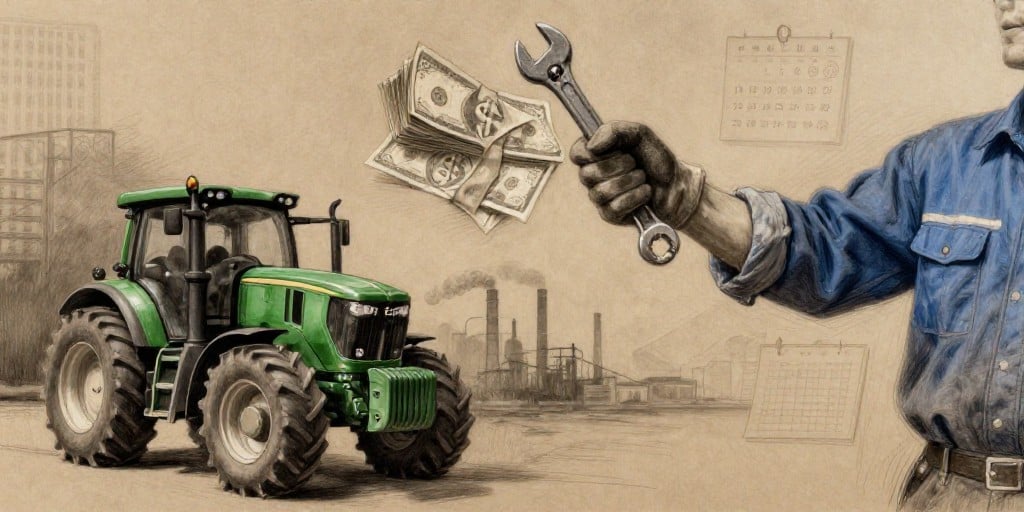
Deere & Co. and Labor Negotiations
John Deere announced on 31 July 2026 that it rejected the United Auto Workers’ (UAW) counter‑proposal to extend its collective‑wage agreement. The company’s offer is a two‑year extension of the current contract, while the UAW’s counter‑proposal exceeds Deere’s proposal by roughly $500 million. Deere stated that a vote on its offer is scheduled for 23 August 2026. The dispute centers on wages and benefits for the company’s UAW‑represented workforce, which works across its global manufacturing and service operations.
Impact on Deere’s Share Price
Following the announcement, Deere shares fell 1.88 % to $599.47 at 23:59 UTC on 31 July 2026, trading near the lower end of the 52‑week range ($433 to $674.19). The decline reflects market concerns about potential labor cost increases and the uncertainty of the upcoming vote. Analysts noted that while the company’s price‑to‑earnings ratio of 33.99 remains elevated, the immediate impact on earnings projections is limited, given Deere’s diversified product portfolio and global presence.
Context from the Market
- Cathie Wood’s ARK Invest divested 15,320 shares of Deere, reducing its exposure to the heavy‑equipment sector. This sale followed a broader shift away from the sector, which also included a 1.88 % decline in Deere’s stock.
- Market performance: While the broader market improved on 30 July 2026, Deere’s share price declined, indicating a sector‑specific reaction to the labor dispute.
- Company fundamentals: Deere’s market cap stands at $161.82 billion, and the firm continues to generate significant revenue through its machinery, parts, and financing services worldwide.
Summary
Deere’s rejection of the UAW’s counter‑proposal has led to a modest decline in its share price, underscoring investor sensitivity to labor negotiations. The company’s two‑year extension offer remains in play, with a vote pending in August. The broader market and institutional investors are closely monitoring the outcome, as it may influence future cost structures and profitability.