
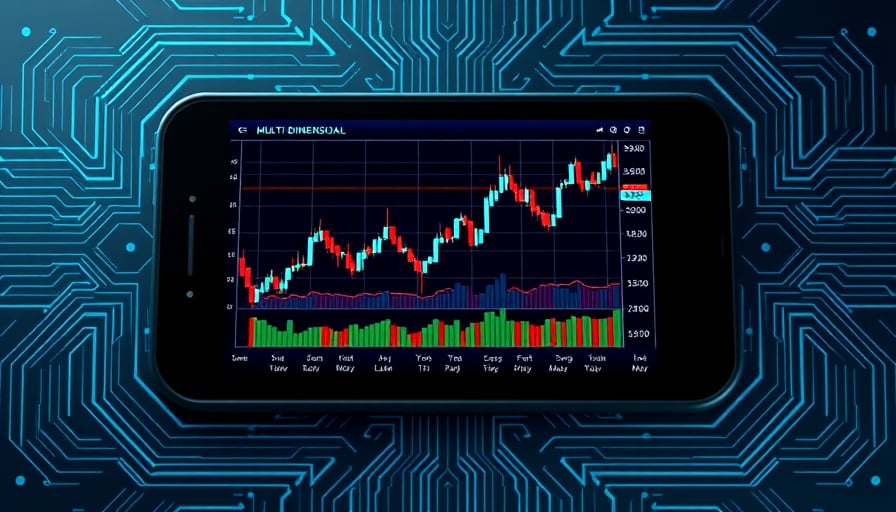
In the ever-evolving landscape of digital assets, the concept of “digital gold” has emerged as a focal point of discussion among investors and financial analysts alike. As of November 29, 2025, the close price of this crypto-currency asset stands at a mere $3 \times 10^{-14}$ USD, a stark contrast to its 52-week high of $8.4 \times 10^{-13}$ USD recorded on September 2, 2025. This dramatic fluctuation underscores the volatile nature of digital assets and raises critical questions about their stability and reliability as a store of value.
The term “digital gold” is often used to describe cryptocurrencies that are perceived as a hedge against inflation and economic instability, akin to the traditional role of gold. However, the recent performance of this asset challenges the very notion of it being a “safe haven.” The 52-week low, recorded on November 28, 2025, at $1 \times 10^{-14}$ USD, highlights the extreme volatility and the potential risks associated with investing in such assets. This volatility not only undermines the confidence of investors but also calls into question the asset’s ability to serve as a reliable store of value.
Critics argue that the inherent instability of digital currencies, exemplified by the drastic price swings of digital gold, makes them unsuitable for long-term investment strategies. The lack of intrinsic value, coupled with regulatory uncertainties and the potential for market manipulation, further exacerbates the risks. These factors contribute to a growing skepticism about the viability of digital currencies as a modern-day equivalent of gold.
Moreover, the comparison between digital gold and traditional gold becomes increasingly tenuous when considering the fundamental differences in their nature and market dynamics. Gold has a centuries-old history as a store of value, backed by its physical properties and limited supply. In contrast, digital currencies are intangible, with their value largely driven by market sentiment and speculative trading. This distinction raises important questions about the sustainability of digital gold’s valuation and its long-term prospects as a digital asset.
In conclusion, while the allure of digital gold as a modern investment vehicle is undeniable, the recent price volatility and the underlying challenges it faces cannot be ignored. Investors and analysts must approach digital currencies with caution, recognizing the potential risks and the need for a more stable and regulated framework to ensure their viability as a store of value. As the digital currency market continues to evolve, the debate over the true nature and value of digital gold is likely to intensify, prompting a reevaluation of its role in the broader financial ecosystem.