
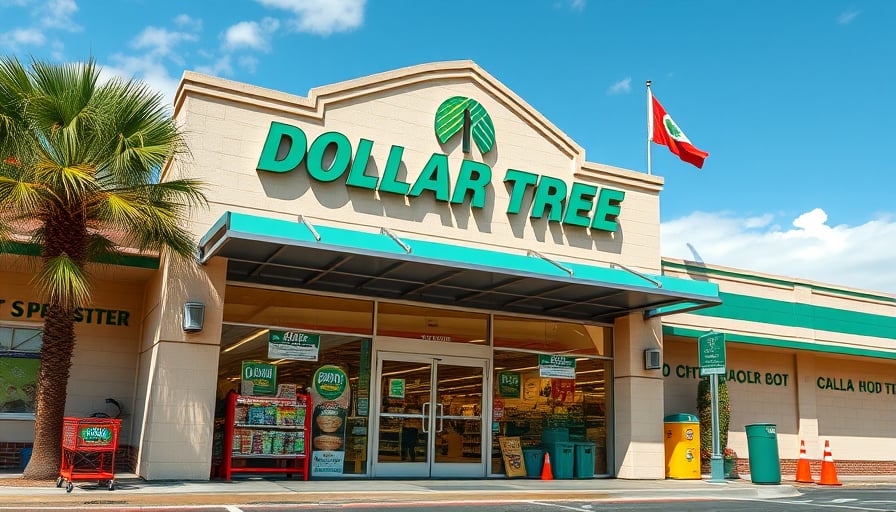
Dollar Tree Inc. Navigates Investor Activity Amid a Volatile Market
The discount retailer, which operates a network of more than 15,000 stores across the United States, has recently attracted a mix of institutional interest and divestment activity, all while the broader Nasdaq‑100 index posted a modest decline on February 12, 2026.
Institutional Moves
On February 12, FMR LLC disclosed a sizable purchase of Dollar Tree shares, signaling confidence from a major asset manager in the company’s long‑term prospects. This acquisition followed a report that Goldman Sachs’ MarketBeta U.S. 1000 Equity ETF had sold 184 shares earlier in the day. The contrast between a large single‑institution buy and a modest ETF sale illustrates the divergent strategies that can coexist within a single sector. While the ETF’s divestment was relatively small, it may reflect a tactical shift within its holdings rather than a wholesale view on Dollar Tree.
Store Expansion into Affluent Markets
Dollar Tree’s recent 9,000th store opened in Plano, Texas, a suburb of Dallas that has seen an influx of luxury retail and automotive dealerships. The new location sits within a few miles of a high‑end department store, a steakhouse serving $525 Wagyu, and a lineup of premium car brands such as Audi, Porsche, and Ferrari. This expansion demonstrates the retailer’s intent to capture shoppers who, while not necessarily looking for bargains, still appreciate the convenience and low price points Dollar Tree offers. The store’s success is highlighted by the presence of high‑end vehicles parked outside on opening day, a symbolic juxtaposition of luxury and discount retail.
Market Context and Share Performance
Dollar Tree’s stock closed at $128.43 on February 11, well below its 52‑week high of $142.40 but comfortably above its 52‑week low of $61.80. The share price’s recent volatility aligns with the broader Nasdaq‑100’s decline of 2.04 % that day, a drop that mirrored a 1.07 % weekly loss for the index. Dollar Tree’s price‑earnings ratio of 23.63 places it in line with peers in the consumer staples and broadline retail segments.
Historical performance data indicate that an investment of $1,000 made three years prior would have yielded a 16.23 % loss if held until the close on February 9, 2026, when the share price was $123.17. This underscores the importance of timing in a market that has experienced both rapid appreciation and decline in Dollar Tree’s stock over short periods.
Outlook
Dollar Tree’s recent store openings in affluent districts, coupled with the mixed institutional activity, suggest that the company is maintaining its core discount strategy while exploring new growth avenues. The juxtaposition of luxury surroundings and low‑price retail may appeal to a broader demographic, potentially stabilizing revenue streams in an increasingly competitive market. Investors watching Dollar Tree should note the interplay between large‑institution purchases and minor ETF sales, which together paint a complex picture of confidence and caution in the company’s future trajectory.