DoorDash’s Strategic Foray Into Autonomous Delivery
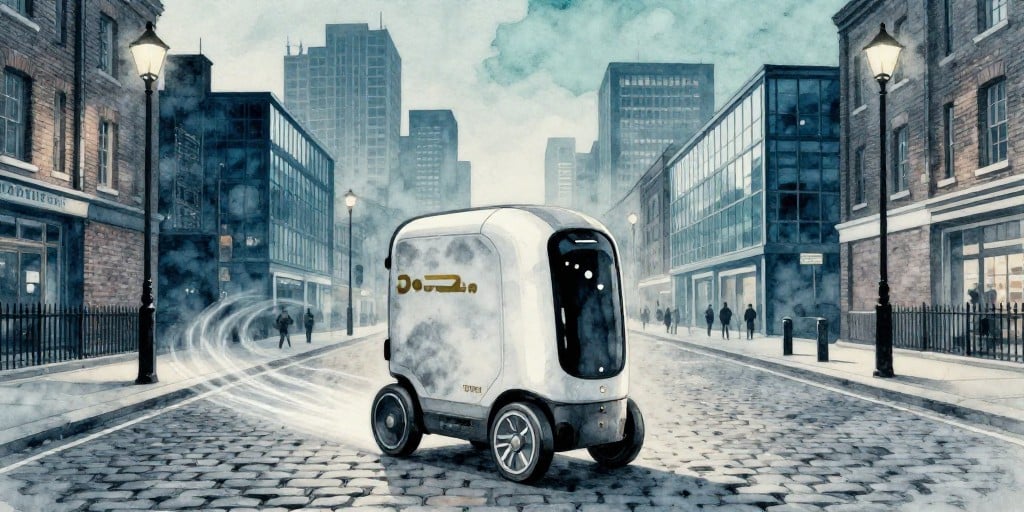
DoorDash, the U.S.‑based food‑delivery platform, has announced a pivotal partnership with Deliveroo and the robotics firm Coco Robotics, setting the stage for the first rollout of autonomous robot deliveries in the United Kingdom. The deal, disclosed on 5 October 2026, positions DoorDash’s subsidiary Deliveroo at the forefront of a disruptive shift from human couriers to robotic agents.
Executive Summary
- Partnership: Deliveroo (a DoorDash unit) and Coco Robotics will launch exclusive, robot‑based deliveries across the UK.
- Scope: Initial deployment in London, with a rapid expansion plan across major UK cities.
- Strategic Rationale: Automating last‑mile logistics aims to cut delivery costs, reduce labor volatility, and accelerate service speed—key levers for sustaining DoorDash’s high‑margin model.
- Market Context: The partnership follows a wave of tech‑led logistics innovations, including Uber’s recent acquisition of catering platform ezCater, indicating a broader industry pivot toward automation and platform consolidation.
Why This Move Matters
Cost Efficiency Deliveries remain the most expensive component of DoorDash’s value chain. Robotic couriers eliminate wage expenses, insurance liabilities, and turnover costs, potentially driving a 20‑30 % reduction in per‑delivery overheads.
Scalability Human drivers face regulatory constraints, traffic congestion, and unpredictable availability. Robots, operating on fixed routes and schedules, can scale without the bottlenecks that plague conventional fleets.
Customer Experience Faster, more reliable deliveries increase customer satisfaction and repeat usage—a critical metric for DoorDash’s growth trajectory, especially in competitive markets like New York and Los Angeles.
Competitive Edge With rivals such as Uber and Amazon expanding their delivery ecosystems, DoorDash’s autonomous initiative signals an aggressive commitment to innovation, potentially reshaping the competitive landscape.
Potential Risks and Challenges
Regulatory Hurdles Autonomous delivery robots must navigate complex local regulations concerning road use, safety, and data privacy. Delays or legal setbacks could stall deployment timelines.
Operational Reliability Early‑stage robotics often struggle with unpredictable urban environments—weather, obstacles, and human interference—raising concerns over delivery accuracy and customer trust.
Capital Outlay The initial investment in hardware, software, and maintenance could strain DoorDash’s cash flow, particularly given the company’s high price‑earnings ratio (121.77) and market volatility.
Labor Backlash A shift to automation may provoke backlash from gig‑worker advocates and local communities, potentially affecting DoorDash’s brand perception and regulatory relationships.
Market Reaction
Wells Fargo recently revised its price target for DoorDash downward, citing margin pressures that the autonomous strategy hopes to alleviate. The revised outlook reflects a cautious stance: while the initiative promises long‑term profitability, the short‑term impact on earnings remains uncertain.
Simultaneously, the broader consumer‑discretionary sector is witnessing consolidation, evidenced by Uber’s $2.3 billion cash purchase of ezCater. DoorDash’s autonomous partnership can be seen as an effort to maintain market relevance in an era where logistics technology is rapidly evolving.
Conclusion
DoorDash’s alliance with Deliveroo and Coco Robotics represents a decisive leap toward a fully automated delivery model. If executed effectively, this strategy could redefine DoorDash’s cost structure, scale capability, and competitive positioning. However, the venture carries significant regulatory, operational, and financial risks that must be managed with precision. Stakeholders will be watching closely to see whether the UK rollout proves a viable template for global expansion and whether the projected margin gains materialize in a market increasingly dominated by technology‑driven logistics solutions.