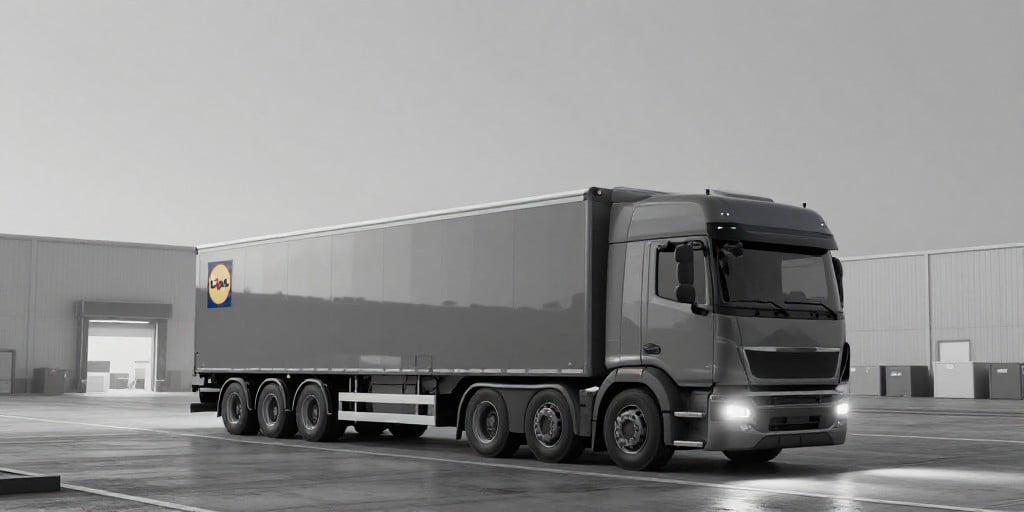
Einride AB and Lidl’s First Cab‑Less Autonomous Truck in Germany: A Milestone for the Autonomous Logistics Sector
On 15 September 2026, a landmark event unfolded in the German logistics landscape when Einride AB and the supermarket chain Lidl rolled out the world’s first cab‑less, SAE Level 4 autonomous truck onto public roads. The vehicle, operating between a Lidl distribution center and a retail store in Edermünde (Hesse), is the first to receive an official permit from the German Federal Motor Transport Authority (KBA). This approval represents the first instance of a Level‑4 autonomous vehicle authorized for regular service on German public roads, setting a precedent for future autonomous freight operations.
Technical and Operational Highlights
- Vehicle Design: The truck is a cab‑less electric unit that incorporates Einride’s autonomous driving stack, the Einride Driver, engineered for commercial transport and defense applications.
- Autonomy Level: Classified as SAE Level 4, the truck can operate without a human driver in predefined operating environments, under the KBA’s “first‑of‑its‑kind” permit.
- Deployment Context: The vehicle performs daily deliveries for Lidl between its distribution center and a retail store, thereby integrating autonomous logistics into a real‑world retail supply chain.
Strategic Implications for Einride AB
Proof of Concept for Freight‑Capacity‑as‑a‑Service The deployment validates Einride’s core proposition of delivering turn‑key electric and autonomous freight solutions. By demonstrating that the technology can operate safely and reliably under an official regulatory framework, Einride strengthens its position as a leader in the autonomous freight market.
Expansion into New Geographic Markets With operations now confirmed in Germany—a key logistics hub—Einride signals its intent to broaden its footprint beyond Sweden, the United States, and Germany. The success in Germany may unlock opportunities in other EU markets where regulatory bodies are increasingly open to autonomous freight.
Capitalizing on Market Momentum The event comes at a time when investors and institutional partners are keenly observing the electrification and automation trajectory of the freight sector. The recent buy rating upgrade from Canaccord further underscores confidence in Einride’s growth prospects amid the electrification push.
Forward‑Looking Perspective
Regulatory Trajectory: The KBA’s approval is likely a catalyst for further regulatory bodies to consider similar authorizations, particularly in regions with mature logistics infrastructure. Einride’s close collaboration with regulatory authorities positions the company advantageously to influence and adapt to evolving standards.
Operational Scaling: While the current deployment is limited to a single route, the framework established—vehicle design, software stack, safety protocols—provides a scalable template for expanding into additional corridors and partners, potentially including other major retailers and freight operators.
Ecosystem Integration: Einride’s suite of solutions, from vessel‑agnostic SaaS platforms to the Saga freight platform, complements the autonomous truck deployment. Seamless integration of fleet management, charging, and logistics planning will enhance operational efficiency and reduce total cost of ownership for customers.
Market Context
Price and Valuation: As of the close on 14 September 2026, Einride’s share price stood at $3.75, a steep decline from the 52‑week high of $34 on 9 June 2026. Despite volatility, the company’s market cap of $520 million reflects a valuation that acknowledges both its technological promise and the current challenges of commercializing autonomous freight.
Competitive Landscape: The autonomous freight arena is increasingly crowded, yet Einride’s focus on electric, cab‑less vehicles coupled with a comprehensive SaaS ecosystem differentiates it from competitors that offer only partial solutions.
Conclusion
Einride AB’s partnership with Lidl to deploy the first cab‑less autonomous truck on German public roads marks a decisive step forward for autonomous freight logistics. It validates key technological components, demonstrates regulatory feasibility, and opens a pathway for broader commercial adoption. Stakeholders should monitor how Einride leverages this milestone to accelerate deployment, secure additional regulatory approvals, and expand its service portfolio across Europe and beyond.