
LUKOIL PJSC Faces Continuing Sanction‑Related Challenges Amidst Operational Adjustments
EU sanctions extended for an additional twelve months
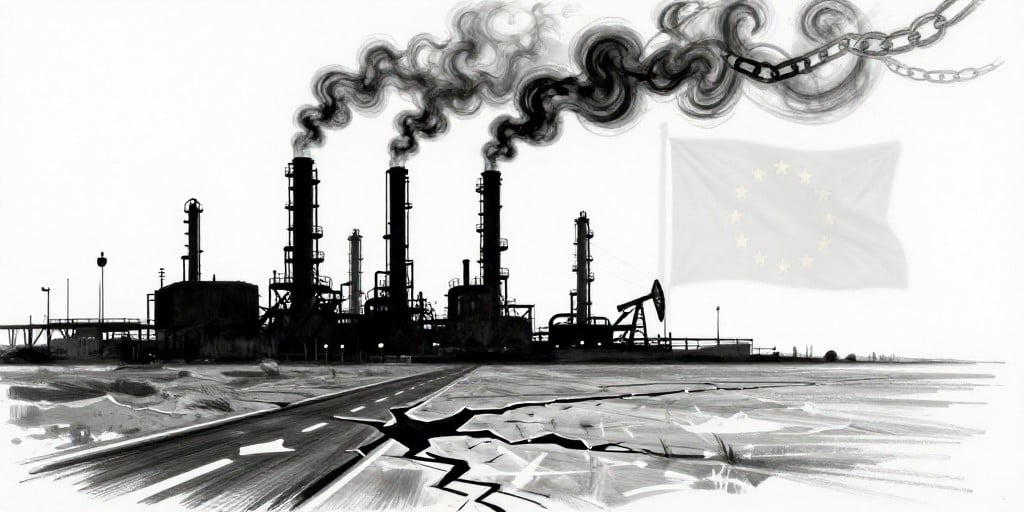
On 19 June 2026, the European Union extended its economic sanctions against Russia for a full twelve‑month period. The decision was reached at the June summit of EU heads of state and government in Brussels and marks the first time the sanctions have been prolonged beyond the previous six‑month cycle. The extension applies to all sanctions categories, including financial restrictions, trade limits, and asset freezes that target key Russian companies such as LUKOIL PJSC. Consequently, LUKOIL’s access to EU‑based banking systems, insurance, and export‑controlled technology remains restricted, potentially affecting its European downstream operations.
UK eases payment restrictions on LUKOIL’s Austrian subsidiary
Shortly after the EU announcement, the United Kingdom’s Office of Financial Sanctions Implementation (OFSI) amended a temporary licence that had previously required payments to LUKOIL International GmbH (an Austrian subsidiary of LUKOIL) to be routed through frozen accounts. The licence change, released on 19 June 2026, removed that specific condition, allowing UK companies to process payments directly to LUKOIL International accounts that are not frozen. The OFSI did not provide a reason for the alteration and clarified that the change does not broaden the scope of sanctions. This development may ease some liquidity constraints for LUKOIL’s operations in the United Kingdom, but the company remains subject to the broader EU and UK sanction regimes.
Local fuel‑sales restrictions in St. Petersburg
In Russia, a new local regulation was introduced on 16 June 2026 in St. Petersburg, limiting the amount of gasoline and diesel that can be sold to a single vehicle. Fuel stations, including those operated by Tatneft, are required to cap sales per vehicle between 20 and 100 litres, with certain outlets enforcing a 20‑litre limit. The restriction is intended to prevent fuel hoarding amid rising international prices and supply uncertainties. While the Moscow Stock Exchange-listed LUKOIL operates refineries and gasoline filling stations across Russia and the United States, the company’s domestic retail operations are subject to these regional directives. The measures have reportedly led to long queues at some stations but have not been accompanied by reports of significant supply shortages.
Implications for LUKOIL PJSC
- Financial operations: The EU’s twelve‑month extension reinforces the constraints on LUKOIL’s access to EU financial markets and technology suppliers. The UK licence amendment offers limited relief for payments to the Austrian subsidiary but does not alter the overarching sanction landscape.
- Supply chain: Domestic fuel‑sale limits may affect LUKOIL’s retail distribution network in Russia, potentially reducing immediate revenue from gasoline stations. However, the company’s upstream activities—exploration, production, and transport—are less directly impacted by the local sales caps.
- Market valuation: At the close on 14 June 2026, LUKOIL’s share price stood at 4 776,5 RUB, reflecting a market capitalisation of 2,840 billion RUB and a price‑earnings ratio of 28,84. The recent developments are likely to continue influencing investor sentiment and the company’s valuation in the short term.
In summary, LUKOIL PJSC is navigating a complex regulatory environment shaped by extended EU sanctions, altered UK payment restrictions, and domestic fuel‑sale limits. The company’s continued operations will depend on its ability to adapt to these constraints while maintaining its core energy production and refining activities.