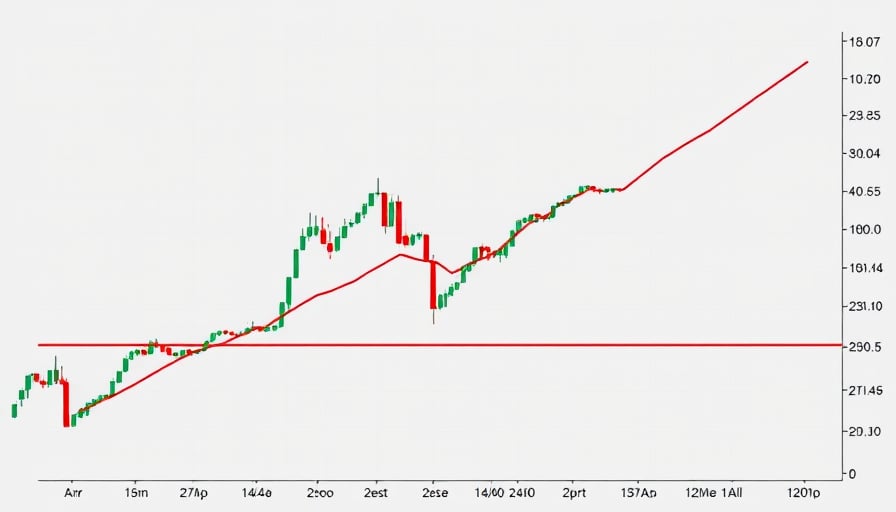
Euro/Japanese Yen: A Quiet Stability Amid Geopolitical and Economic Uncertainty
The Euro‑Japanese Yen (EUR/JPY) pair settled near 183.93 on 23 March 2026, only modestly below its 52‑week high of 186.856 recorded on 22 January. The pair’s recent trading range has been narrow, reflecting a broader theme of equilibrium that has emerged across global financial markets in the wake of a complex mix of geopolitical tensions and evolving economic data.
Geopolitical Catalysts
The most pronounced driver of recent market sentiment has been the evolving situation in the Middle East, particularly the prospects for an end to the conflict involving Iran. Multiple news sources (Finanznachrichten and FXStreet) highlighted that the possibility of a cease‑fire has buoyed Asian equity markets, with the Japanese currency holding firm despite the uncertainty. The United States’ President Donald Trump’s stance on the Iran conflict—initially tightening pressure and then signaling a potential de‑escalation—has added a layer of complexity. The resulting “hopeful rally” in U.S. equities and the subsequent decline in oil prices to below $100 per barrel (Brent) have contributed to a sense of market calm, which has, in turn, helped keep the EUR/JPY close to its recent trading levels.
Economic Indicators and Sentiment
Eurozone Activity
In Europe, the composite and services Purchasing Managers’ Indexes (PMIs) have slipped to multi‑month lows. This contraction in business activity has nudged the Euro toward the lower end of its recent range. However, the Euro’s resilience in the face of softer Eurozone data suggests that traders are looking beyond immediate manufacturing sentiment to longer‑term structural factors, such as the European Central Bank’s policy trajectory and fiscal dynamics across member states.
Japanese Inflation
Conversely, Japanese consumer price data have shown a cooling trend. Both headline and core CPI readings have eased, signaling a potential slowdown in domestic inflationary pressures. While a weaker inflation outlook could argue for a softer Yen, market participants appear to be balancing this against the Bank of Japan’s forward‑looking stance and the risk‑off appetite that persists amid global uncertainty.
Market Interplay and Technical Context
The EUR/JPY pair’s positioning near 184.00 aligns with the “neutral” stance reported by FXStreet. Technical resistance levels—particularly around 186.8, the recent 52‑week peak—remain unbreached, suggesting a potential short‑term consolidation zone. Traders have noted that the Yen’s steadiness is partly due to the BoJ’s cautious approach and the perceived risks of market intervention. Meanwhile, the Euro’s steadiness amid softer Eurozone data implies a cautious market outlook rather than a decisive directional bias.
Broader Market Dynamics
Across the global scene, equity markets have demonstrated mixed movements. Asian equities have benefited from the hope of de‑escalation in the Middle East, while U.S. indices have experienced a “hopeful rally” followed by a degree of volatility, particularly in technology sectors sensitive to AI concerns. European equities have held their gains despite rising oil prices, as the market absorbs ongoing speculation about mergers in the beauty industry. These dynamics underline a broader narrative: market participants are reacting to a blend of geopolitical developments, commodity price swings, and domestic economic indicators, all of which feed into currency valuations.
Outlook
In the near term, the EUR/JPY pair is likely to remain within a tight trading band as both the Euro and Yen absorb ongoing geopolitical news and economic data. Key watchpoints include:
- Middle East Developments: Any concrete progress or reversal in the Iran conflict could tilt market sentiment, either lifting the Euro by easing risk‑off flows or strengthening the Yen if geopolitical risk re‑escalates.
- Eurozone PMI Trends: Further deterioration could weigh on the Euro, while a rebound might lift it.
- Japanese CPI and BoJ Policy: Continued CPI easing might support a weaker Yen, but the BoJ’s policy stance and potential interventions could counteract this effect.
Until more decisive catalysts emerge, market participants appear to be maintaining a cautious, “hold‑steady” stance, with the EUR/JPY pair poised for modest movements around its current levels.