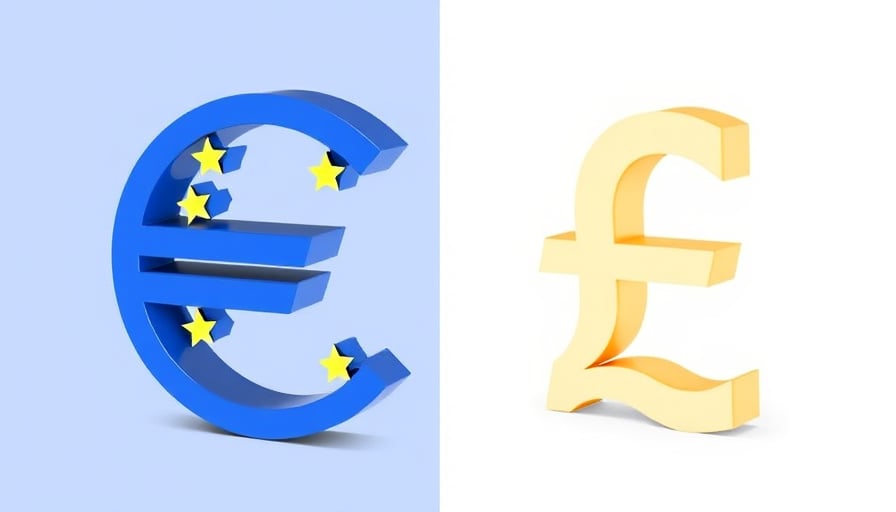
Forex Update – Euro versus British Pound
Exchange and recent performance The Euro/British Pound pair is traded on the IDEAL PRO platform. As of 23 February 2026 the pair closed at 0.87378 GBP per Euro. Over the past 52 weeks the currency has traded between a low of 0.82348 (26 February 2025) and a high of 0.88653 (13 November 2025).
Market backdrop During the week beginning 1 March 2026, geopolitical developments in the Middle East dominated headlines. A series of attacks by the United States and Israel against the Islamic Republic of Iran intensified concerns over regional stability. The escalation prompted a sell‑off in Asian equity markets and a spike in crude oil prices, according to reports from Finanzen net and Markets Business Insider.
The heightened risk sentiment also weighed on U.S. and European equities, as noted in multiple Finanzen net articles dated 27 February 2026. The reports highlighted that the fear of a wider conflict and accompanying inflationary pressures exerted downward pressure on U.S. stocks, while European markets experienced modest declines.
Implications for the Euro/British Pound pair The Euro generally tracks the strength of the European economy and the European Central Bank’s monetary policy stance, while the pound reflects the Bank of England’s policy and the UK’s fiscal outlook. In a global environment where oil prices are rising, the pound, which is a commodity‑linked currency, may benefit from higher oil revenues, whereas the Euro could be more sensitive to broader risk‑off sentiment that reduces demand for European equities and assets.
Given the recent market movements, traders might expect the pair to continue oscillating within the 52‑week range established in late 2025. The 52‑week low of 0.82348 and high of 0.88653 serve as reference points for potential support and resistance levels.
Key Takeaway The Euro/British Pound pair remains influenced by geopolitical risk, commodity price dynamics, and central bank policy signals. Market participants should monitor developments in the U.S.–Iran conflict and global oil price trends, as these factors have recently contributed to volatility in both the euro and the pound.