EVgo Inc. Accelerates Charge‑Market Penetration While Stock Remains Inconspicuous
The electric‑vehicle charging infrastructure landscape is growing at a blistering pace, yet EVgo Inc. (NASDAQ: EVGO) continues to hover near a one‑dollar floor on the secondary market. The company’s latest corporate actions underscore a strategy that is aggressive on the ground but slow to translate into shareholder value.
1. A Sudden Surge in Physical Footprint
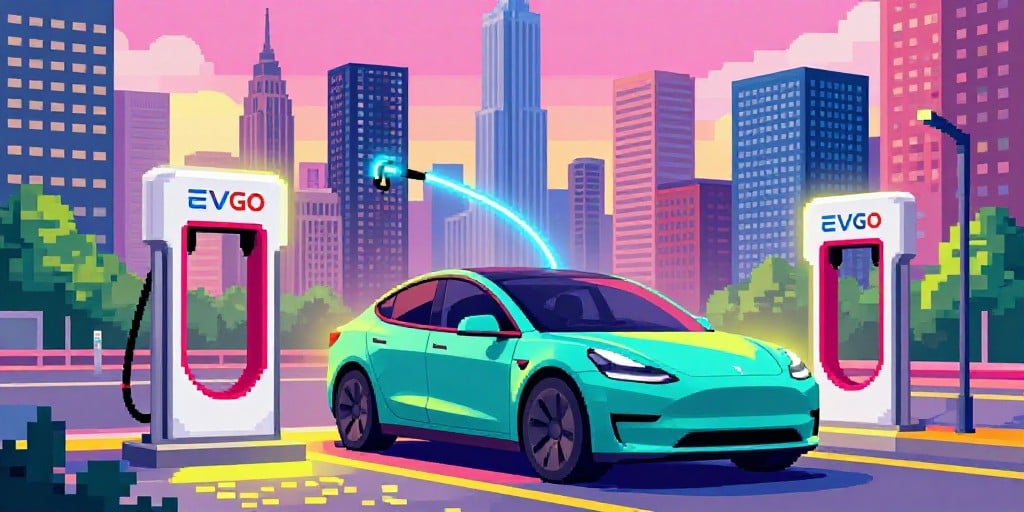
On 5 November 2026, EVgo opened its first Tesla Supercharger station in downtown Chicago, a move that was reported by electrek.co. The deployment is significant for three reasons:
- Strategic Alignment – Tesla’s Supercharger network is the gold standard in high‑power fast charging. By integrating its own network with Tesla’s, EVgo gains instant credibility and an influx of high‑frequency users.
- Scalable Infrastructure – The Chicago station is the first of “hundreds more planned,” implying a rapid expansion that could outpace competitors such as Electrify America or ChargePoint.
- Cross‑Platform Synergy – The partnership allows EVgo to offer a seamless charging experience to a wider battery‑electric‑vehicle (BEV) fleet, increasing station utilization and, ultimately, revenue per connector.
The launch was announced in a short press release that highlighted the station’s proximity to major transit hubs, reinforcing EVgo’s focus on urban penetration. While the company’s 52‑week low of $0.98 (as of 22 October 2026) demonstrates price volatility, the physical expansion suggests a belief that demand will outstrip supply.
2. Market Sentiment and Earnings Outlook
A day after the Chicago launch, seekingalpha.com published an earnings preview titled “EVgo Q3 2026 Earnings Preview.” The analysis warns that the company’s Price‑Earnings ratio of –4.43 indicates negative earnings, a red flag for investors. Nonetheless, the preview anticipates a “moderate earnings rebound” driven by:
- Higher charging fees on Supercharger-enabled stations.
- Increased station density in high‑traffic corridors.
- Potential subsidies from state and federal EV infrastructure grants.
The preview’s tone is cautiously optimistic, but the negative P/E ratio and the fact that the market cap sits at $559 million illustrate that investors are still demanding a clearer path to profitability.
3. Capitalizing on Consumer Discretionary Momentum
EVgo operates within the Consumer Discretionary sector, a category that is highly sensitive to discretionary spending shifts and macroeconomic trends. The company’s closing price of $1.83 on 5 November 2026 sits well below its 52‑week high of $3.68 (9 November 2025), highlighting a decline in investor confidence despite recent operational milestones.
While the company has successfully built a nationwide charging network, the stock’s continued underperformance indicates that:
- Profitability remains elusive—the negative P/E ratio underscores that revenue growth has yet to translate into earnings.
- Competitive pressure is mounting, with rivals investing heavily in fast‑charging stations and battery‑swap technology.
- Regulatory uncertainty could impact grant structures and fee schedules that EVgo relies upon for revenue.
4. A Call for Strategic Clarity
The recent announcements demonstrate that EVgo is taking decisive action on the ground. However, the company must deliver a robust financial narrative to justify its expansion. Investors should scrutinize:
- Revenue per connector: Is the pricing model sustainable, or will it require further discounting to attract customers?
- Cost structure: How will EVgo manage the capital intensity of installing Supercharger stations across urban centers?
- Partnership leverage: Will Tesla’s brand drive sufficient traffic to offset the high upfront costs of each station?
Until the company can convincingly demonstrate a clear path to positive earnings and a scalable business model, the stock is likely to remain a risky proposition for the risk‑averse.
Bottom line: EVgo is making bold moves on the charging infrastructure front—first Tesla Superchargers, plans for hundreds more—but the market has not yet rewarded these initiatives. A critical investor must weigh the operational gains against the persistent financial headwinds.