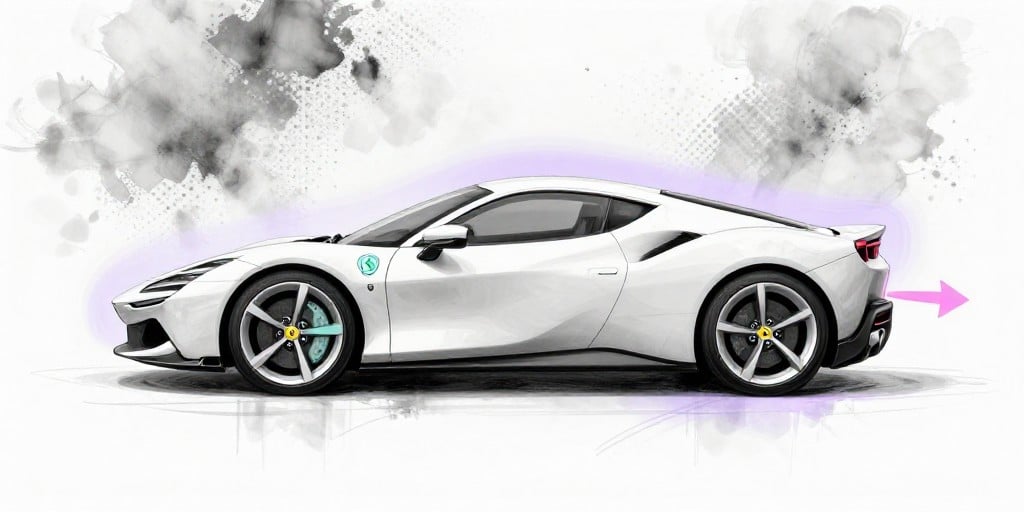
Ferrari NV, a titan in the consumer discretionary sector, has once again captured the attention of the financial world with its latest financial disclosures. As a global leader in the design and manufacture of sports cars, Ferrari NV continues to drive the industry forward, not only through its iconic vehicles but also through a diverse range of luxury accessories, including watches, apparel, and more. However, the recent announcement from Ferrari NV’s board, while adhering to regulatory standards, leaves much to be desired in terms of strategic transparency.
The company’s financial results for the quarter and half-year ending in September have been released, yet the details remain shrouded in the typical corporate veil. The un-audited standalone and consolidated statements, while compliant with listing requirements, offer little in the way of forward-looking insights or strategic direction. This lack of detailed disclosure raises questions about Ferrari NV’s future trajectory and its ability to maintain its market position amidst increasing competition and economic uncertainties.
Financially, Ferrari NV’s performance is a mixed bag. The close price of 371.8 EUR on November 12, 2026, reflects a significant recovery from the 52-week low of 269 EUR in March 2026. However, the company’s price-to-earnings ratio of 40.71 suggests that investors are pricing in substantial future growth, a sentiment that may be overly optimistic given the current lack of strategic clarity. With a market capitalization of 65.15 billion EUR, Ferrari NV remains a heavyweight in the automobile industry, but sustaining this valuation will require more than just historical performance.
The company’s asset base, primarily focused on the design and manufacture of sports cars, is a double-edged sword. While Ferrari NV’s brand is synonymous with luxury and performance, the reliance on a niche market segment poses inherent risks. The broader consumer discretionary sector is highly sensitive to economic cycles, and any downturn could disproportionately affect Ferrari NV’s sales and profitability. Moreover, the company’s expansion into accessories, while diversifying revenue streams, may not be sufficient to offset potential declines in vehicle sales.
In conclusion, while Ferrari NV’s recent financial disclosures comply with regulatory standards, they fall short of providing the strategic insights necessary for investors to make informed decisions. The company’s high valuation and market position are commendable, but without a clear strategic roadmap, the future remains uncertain. As Ferrari NV navigates the challenges of the consumer discretionary sector, transparency and strategic clarity will be crucial in maintaining investor confidence and sustaining long-term growth.