Ferrari NV: Earnings Surge, Demand Explodes, and a Luxury Boom
Ferrari NV has once again proven that the name “Ferrari” commands a premium in the automotive and luxury markets. The Italian icon posted a third‑quarter profit that eclipsed analyst expectations, prompting a modest lift in its full‑year forecast. Meanwhile, the brand’s latest model, the Luce EV, is already sold out for 2027, underscoring the relentless appetite of the ultra‑wealthy for exclusivity.
Earnings and Forecasts
Ferrari’s Q3 results were a striking blend of revenue growth and profitability. Net revenues climbed to €1,896 million, up 7 % year‑over‑year and 10 % at constant currency, while operating profit (EBIT) reached €563 million. The company’s bottom line—€430 million or €2.44 per share—surpassed the market consensus. The momentum was strong enough for management to nudge up its full‑year guidance, a move that signals confidence in sustained demand.
This revision is not merely a cosmetic adjustment. It reflects a strategic positioning that leverages Ferrari’s entrenched brand equity. In a market where luxury is measured in scarcity, Ferrari’s ability to raise expectations while still delivering strong results is a testament to its resilient business model.
The Luce EV Phenomenon
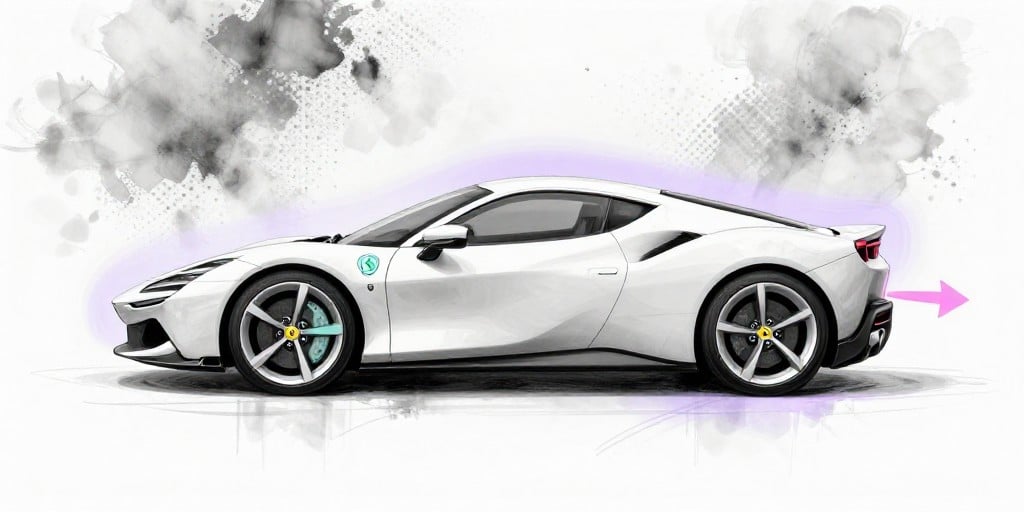
Ferrari’s electric‑vehicle division has shattered expectations. Orders for the Luce EV already cover every unit slated for 2027, with the model declared sold out ahead of the fiscal year’s end. This pre‑emptive sell‑out indicates that the company’s move toward electrification is not diluting its core proposition; instead, it is enhancing it. The electric variant retains the brand’s signature performance pedigree while appealing to a new cohort of environmentally conscious super‑wealthy customers.
Market Dynamics and Luxury Demand
The luxury‑car segment is witnessing a boom fueled by a surge in net wealth among the very affluent. Ferrari’s profit explosion is a direct consequence of this trend. The company’s ability to maintain high price points—evidenced by a P/E ratio of 40.32—illustrates that investors still see the brand as a safe haven for capital appreciation.
Despite a modest decline in deliveries, revenue continues to climb. This paradox can be explained by a combination of higher unit prices, increased sales of high‑margin accessories (watches, apparel, earphones), and the growing popularity of the Luce EV, which carries a premium price tag.
Auction and Brand Visibility
Ferrari’s presence in high‑profile auctions further cements its status as a cultural icon. The Broad Arrow Las Vegas auction, which fetched $92.8 million, showcased Ferrari supercars as centerpiece assets. Such events not only generate media buzz but also reinforce the scarcity narrative that underpins Ferrari’s pricing power.
Conclusion
Ferrari NV is not merely weathering the volatility that plagues the automotive sector; it is actively shaping the luxury automotive narrative. By combining robust earnings, aggressive forecasting, and a strategic push into electrification—without compromising its exclusivity—Ferrari demonstrates that high‑end automotive brands can thrive in a rapidly changing market. The company’s trajectory suggests that, for now, Ferrari’s roar will echo louder than any external pressure.