
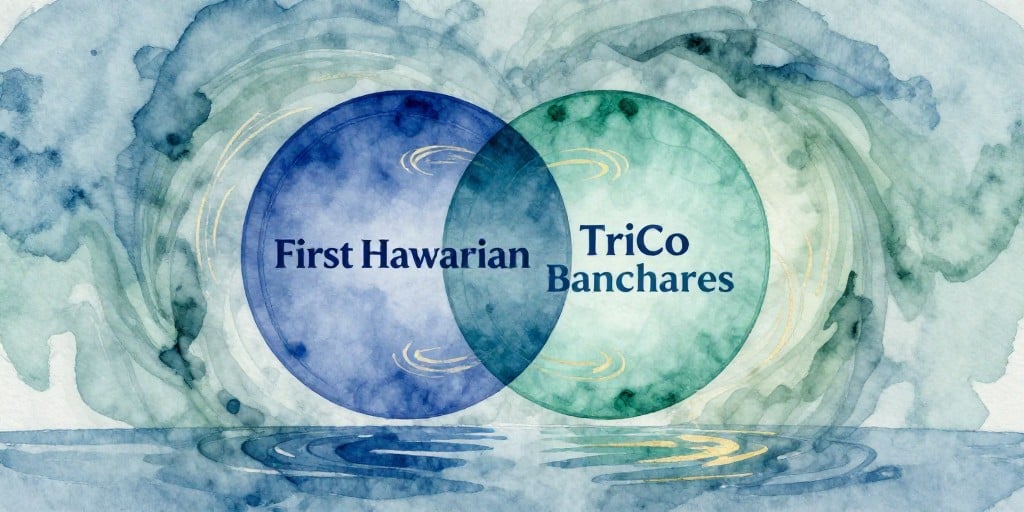
The $2 billion Take‑over of TriCo Bancshares by First Hawaiian: A Strategic Gamble
On Monday, 13 July 2026, the market erupted as First Hawaiian Inc. announced an all‑stock acquisition of TriCo Bancshares for approximately $2 billion. The deal, described by Barrons as a move to “expand in the mainland U.S.”, has immediately re‑oriented the competitive landscape of regional banking.
Immediate Market Reaction
Within hours, TriCo’s share price surged, reflecting a sharp reassessment of the company’s valuation. The stock, which closed at $53.64 on 9 July and has ranged from $39.69 to $55.32 over the past year, jumped to a new high on the news. Meanwhile, First Hawaiian’s stock dipped 4 percent—an oddity given the bullish sentiment surrounding the deal—suggesting investors are weighing the dilution of their own equity against the potential upside of a mainland expansion.
Deal Mechanics and Value Proposition
The transaction is structured as a purely equity‑based exchange, meaning TriCo shareholders will receive First Hawaiian shares in lieu of cash. This structure preserves liquidity for First Hawaiian and signals confidence in the combined entity’s future cash flows. The $2 billion valuation places TriCo at a price‑to‑earnings ratio of 13.51, comfortably below the broader banking sector average, hinting that First Hawaiian believes it can unlock significant value through cost synergies and geographic diversification.
TriCo’s portfolio—spanning loans, lines of credit, savings accounts, and mutual funds—has been primarily focused on the California market, with a strong presence in the Tri‑Counties area. By adding TriCo, First Hawaiian gains instant access to a diversified customer base and a foothold in the lucrative mainland U.S. market, which has proven resistant to the recent consolidation wave in the Pacific region.
Strategic Rationale
- Geographic Diversification – First Hawaiian, historically concentrated on Hawaii and the Pacific Islands, now enters the mainland banking arena. This reduces concentration risk and positions the bank to tap into a larger, more dynamic customer base.
- Cost Synergies – The two institutions share overlapping operational platforms. The merger is expected to cut redundant branch footprints, streamline back‑office functions, and enhance technology integration, driving down operating expenses.
- Revenue Synergies – TriCo’s strong loan portfolio and mutual fund products complement First Hawaiian’s existing offerings, opening cross‑selling opportunities that can accelerate revenue growth.
Critical Concerns
- Regulatory Scrutiny – Mergers of this magnitude, especially when involving regional banks, attract rigorous oversight from both federal and state regulators. Any delays or conditions imposed could erode projected synergies.
- Integration Risks – Merging distinct corporate cultures, IT systems, and risk management frameworks is notoriously challenging. The speed at which First Hawaiian can achieve seamless integration will determine whether the anticipated upside materializes.
- Valuation Risk – TriCo’s current P/E of 13.51 suggests a modest valuation premium. If First Hawaiian overpays relative to the incremental earnings potential, shareholder value could be compromised.
Outlook
The deal, reported by multiple outlets—including RTTNews, Pulse2, SeekingAlpha, and GlobeNewswire—has already set the tone for a bullish stance on regional banking consolidation. Yet, the market’s mixed reaction underscores that investors remain cautious about the practical realities of such a transaction.
In the short term, expect heightened volatility as First Hawaiian releases preliminary Q2 earnings, a key barometer for the deal’s financial impact. Over the longer horizon, the successful integration of TriCo could redefine First Hawaiian’s competitive positioning, but only if the bank navigates regulatory hurdles and internal integration challenges with deft precision.