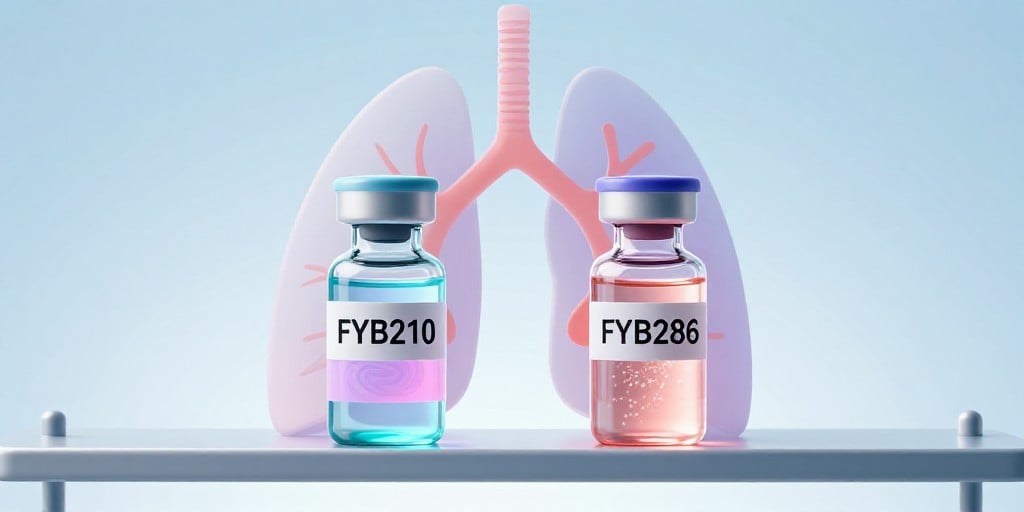
Formycon AG Positions Two New Biosimilar Candidates for Asthma and Hemophilia
Formycon AG, the German biopharmaceutical specialist listed on Xetra, announced that its pipeline now includes two additional biosimilar candidates—FYB210 and FYB286—targeting the reference products Tezspire® (tezepelumab) and Hemlibra® (emicizumab), respectively. The move expands the company’s “smart portfolio” to encompass two blockbuster references (Keytruda® and Dupixent®) and two niche‑busters, underscoring a dual‑track strategy that balances high‑volume and high‑margin opportunities.
Strategic Rationale
FYB210 is a biosimilar candidate to tezepelumab, the anti‑TSLP monoclonal antibody that powers Tezspire® and has recently experienced a 50 % sales growth to US $1.9 billion in 2025. FYB286 targets emicizumab, the bispecific antibody that underpins Hemlibra®, a product that currently enjoys no approved biosimilars in the United States or Europe. By focusing on these niche indications, Formycon aims to capture a market segment that has historically lagged behind larger blockbuster therapies, while leveraging its expertise in biologic similarity to achieve cost efficiencies.
Pipeline Expansion and Market Outlook
The company’s four reference drugs now span sales between US $1.9 billion and US $31.7 billion, with FYB210 and FYB286 positioned as niche‑busters that can generate mid‑single‑digit annual revenues globally. The addition of these candidates aligns with Formycon’s recent financial trajectory: the firm reported a doubling of revenue while shrinking losses, signalling a transition toward sustained profitability. Market analysts expect that the dual focus on blockbuster and niche markets will buffer Formycon against competitive pressures, particularly in the increasingly crowded biosimilar arena.
Forward‑Looking Perspective
With FYB210 and FYB286 in the advanced pre‑clinical or early clinical phases, Formycon is poised to capitalize on upcoming patent expirations for Tezspire® and Hemlibra®. Given the company’s track record of over twelve years in product development and its strong contract‑service arm, it is well‑positioned to navigate regulatory approvals and commercial rollout. Investors should monitor the company’s ability to convert these candidates into commercially viable products, as successful entry into these high‑potential markets could substantially elevate Formycon’s valuation beyond its current market cap of €270 million.
In summary, Formycon’s strategic expansion into the asthma and hemophilia biosimilar segments reflects a calculated effort to diversify revenue streams while leveraging its core competencies. The company’s recent financial strengthening and well‑defined portfolio suggest a clear path toward the next growth phase, with FYB210 and FYB286 serving as key catalysts for future upside.