
Fraport AG’s Recent Developments and Market Dynamics
Operational Highlights
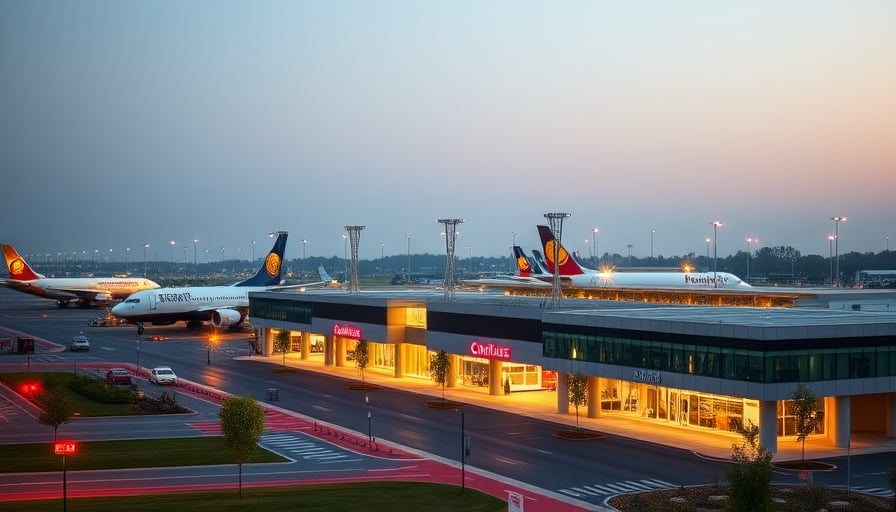
The Frankfurt Airport’s newly constructed Passenger Terminal 3 has entered the testing phase, with more than 200 volunteers participating in a series of pilot runs on Tuesday. Test stations covered key passenger flows such as immigration, check‑in, and passport control. The initiative demonstrates Fraport’s commitment to ensuring a seamless experience for travelers before the terminal’s official opening.
Parallel to passenger operations, the cargo division has undergone a notable transition. Roland Weil, a long‑time Fraport executive who served as Vice President Sales Cargo, will step down after 20 years at the company. His departure coincides with his appointment as Vice President Business Development at Worldwide Flight Services (WFS). WFS, headquartered in Frankfurt, plans to expand its freight and e‑commerce capabilities, leveraging a large logistics hub in Cargo City Süd. This leadership shift could influence Fraport’s cargo strategy, especially as the company seeks to optimize terminal and ground services across its three primary airports in Frankfurt‑Main, Lima, and Antalya.
Weather‑Induced Disruptions
Heavy snowfall across Hessen on Monday triggered widespread traffic delays, including on the A3 and A5 corridors. At Frankfurt Airport, 79 of 1,035 scheduled take‑offs and landings were cancelled, underscoring the sensitivity of air transport operations to severe weather. While the immediate operational impact was significant, Fraport’s robust infrastructure and contingency protocols are expected to mitigate long‑term disruptions.
Investor Sentiment and Analyst Coverage
JPMorgan has placed Fraport on a “Positive Catalyst Watch” list, reflecting a cautious yet optimistic view of the company’s prospects. The bank’s assessment coincides with a modest 0.20 % uptick in the stock price, which closed at €76.05 on January 26. Analyst sentiment appears mixed; while some experts have advised selling shares amid a wave of market caution, others point to the firm’s solid performance in a recovering aviation market as a source of upside potential.
The stock has also benefited from broader market movements. The DAX finished the week with a slight increase, while gold and silver prices rose, indicating a mix of risk‑taking and risk‑aversion among investors. Fraport’s 52‑week high of €81.35 (achieved on November 10, 2025) and a 52‑week low of €51.20 (on April 6, 2025) illustrate the volatility investors have faced. Despite this, the company’s price‑to‑earnings ratio of 14.94 remains within a reasonable range for a firm in the transportation infrastructure sector.
Financial Performance and Shareholder Returns
Looking back over the past year, Fraport shareholders have realized a gain of approximately 170 % on an initial investment of €10,000. The company’s market capitalization of €6.98 billion and a closing price of €76.3 as of January 25, 2026, signal robust valuation metrics. These figures underscore the firm’s resilience and its capacity to generate shareholder value even amidst operational challenges.
Strategic Outlook
Fraport’s focus on enhancing terminal efficiency, expanding cargo services, and managing weather‑related disruptions positions it to capitalize on a recovering global travel market. The leadership changes in the cargo division, coupled with JPMorgan’s positive stance, suggest that investors may view the company as a potentially attractive long‑term holding, provided it continues to execute on its operational and strategic plans.