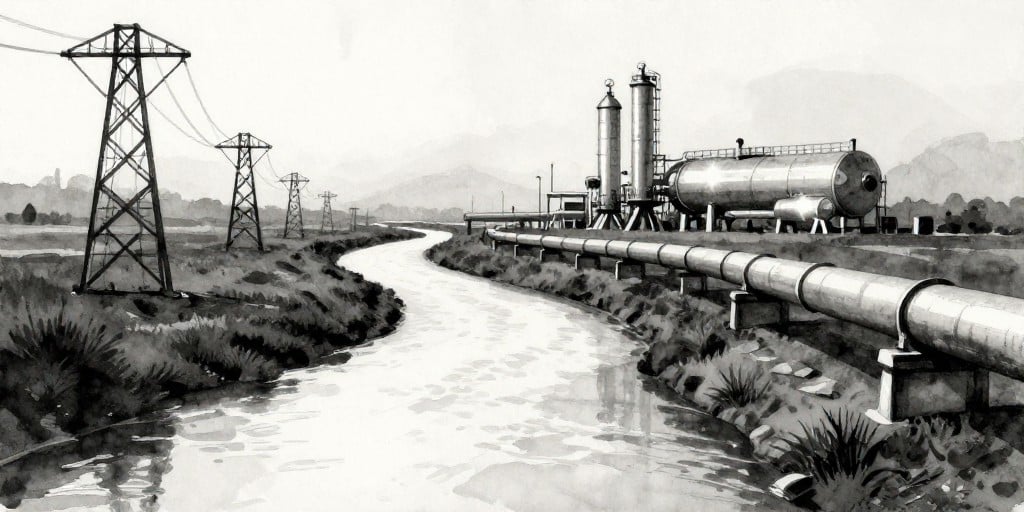
The energy sector is currently witnessing a volatile period of transition, and at the center of this turbulence stands the Friedrich Vorwerk Group SE. While the company positions itself as a critical architect of Europe’s energy future, its recent market performance raises urgent questions about whether its infrastructure ambitions are matched by its fiscal stability.
Operating out of Tostedt, Germany, the group has staked its reputation on the provision of energy transportation and transformation infrastructure. By targeting the gas, electricity, and hydrogen markets, Friedrich Vorwerk Group SE is attempting to control the very arteries of the European energy landscape. However, for a company claiming to underpin the continent’s energy security, its stock performance tells a story of significant instability.
The numbers do not lie. After reaching a 52-week high of 103 EUR in January 2026, the company’s valuation has suffered a staggering descent, plummeting to a 52-week low of 55.1 EUR in June. Even the most recent closing price of 73.7 EUR (as of November 12, 2026) reveals a company struggling to reclaim its former heights. Investors must ask: is this a temporary correction, or is the market correctly pricing in the immense risks associated with the massive capital expenditures required for hydrogen and electricity infrastructure?
With a market capitalization of 1.47 billion EUR and a Price-to-Earnings (P/E) ratio of 13.8, the company sits at a precarious crossroads. While a P/E of 13.8 might suggest a reasonable valuation to some, it fails to account for the sheer scale of the industrial transformation the group is attempting to lead. The volatility seen over the past twelve months suggests that the market is deeply skeptical of the group’s ability to navigate the complex transition from traditional gas to the burgeoning hydrogen economy.
Friedrich Vorwerk Group SE is no longer just an energy provider; it is a high-stakes bet on the future of European infrastructure. Whether the company can stabilize its share price and fulfill its promise as a cornerstone of the energy market remains to be seen. For now, the volatility serves as a stark reminder that in the race for energy transformation, infrastructure is only as strong as the capital that sustains it.