
General Electric Co. Expands Aviation and Power Footprint Amid Market‑Shaping Deals
General Electric (GE) has leveraged its dual‑pronged expertise in propulsion and gas‑turbine technology to secure two high‑profile contracts that reinforce its standing as a pivotal supplier to the aerospace and power industries. The announcements, issued on 16 February 2026, signal a strategic pivot toward high‑efficiency, high‑volume engineering while simultaneously demonstrating resilience in the face of sectoral volatility.
1. United Airlines’ 300‑Unit GEnx Order: A Quantitative Leap for GE Aerospace
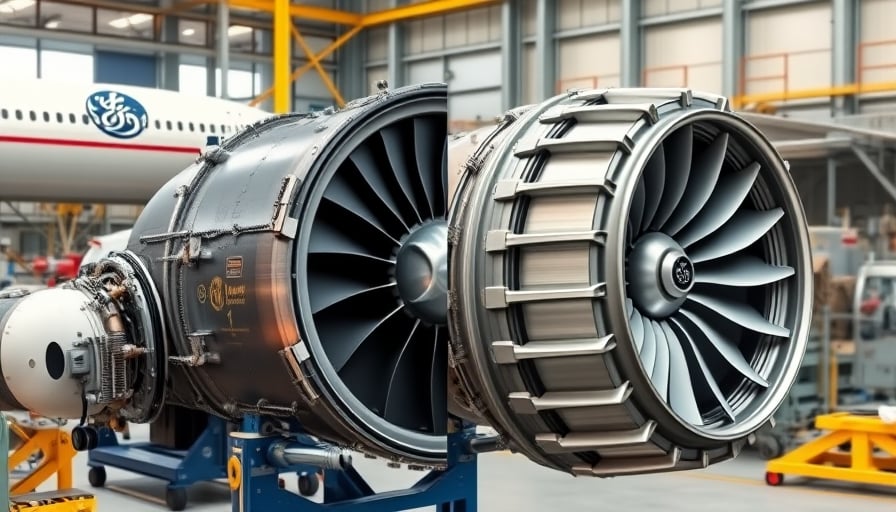
United Airlines (UAL), the United States’ largest domestic carrier, has selected 300 GE Aerospace GEnx engines to power its fleet of Boeing 787 Dreamliners. The order, announced by GE Aerospace via multiple press releases and corroborated by market‑watching platforms such as TipRanks and CNET, marks United’s most substantial commitment to the GEnx family in a single transaction. The deal includes not only the engines for new aircraft but also a substantial inventory of spare engines, thereby deepening the partnership and creating a recurring revenue stream for GE.
Implications for GE:
Scale and Market Share: United’s selection cements GE’s position as the leading supplier of the GEnx, thereby consolidating its dominance in the high‑efficiency jet‑engine segment. The scale of the order underscores the confidence that a major airline places in GE’s engineering and after‑sales support.
Revenue Forecasting: The inclusion of spare engines suggests an extended service contract, which is likely to generate sustained maintenance and repair revenue over the lifecycle of the 787 fleet. For investors, this signals a more predictable cash‑flow trajectory amid fluctuating aircraft orders.
Competitive Edge: By securing a deal of this magnitude, GE effectively sidelines rivals such as Pratt & Whitney and Rolls‑Royce in the UAL market, limiting the competitive pressure on pricing and service terms.
2. GE Vernova’s 100 MW Gas Turbine Packages for the Terry Bundy Generating Station
GE Vernova (GEV), the electric power arm of GE, has been awarded a contract to supply two LM6000VELOX aeroderivative gas turbine packages to the Terry Bundy Generating Station in Lincoln, Nebraska. Announced through a press release on 16 February 2026, the deal involves a total capacity of 100 MW, a significant contribution to the region’s power mix.
Strategic Significance:
Diversification of Revenue Streams: By delivering large‑scale gas turbines to a utility‑grade plant, GE Vernova expands beyond the aviation and industrial markets into the traditional power generation sector, mitigating sector‑specific risks.
Technological Showcase: The LM6000VELOX platform exemplifies GE’s commitment to high‑efficiency, low‑emission turbines, aligning with global decarbonisation targets. The contract thus serves as a real‑world proving ground for GE’s advanced gas‑turbine technology.
Future Growth Potential: The partnership with Lincoln Electric System opens avenues for additional contracts in the Midwest, positioning GE Vernova to capture a share of the region’s renewable‑plus‑thermal power expansion.
3. Broader Context and Forward‑Looking Assessment
The dual contracts illustrate GE’s strategic emphasis on high‑efficiency propulsion and power solutions. In an era where airlines are prioritising fuel economy and emissions reductions, the GEnx’s proven record of lower fuel consumption gives GE a competitive moat. Simultaneously, the gas‑turbine deal underscores GE Vernova’s capacity to supply scalable, efficient power solutions to utilities navigating the transition to cleaner energy sources.
However, the company’s reliance on large, infrequent orders highlights a potential vulnerability: any downturn in airline fleet expansion or utility capital projects could disproportionately affect cash flows. Moreover, the competitive landscape in both aviation and power is intensifying, with competitors investing heavily in alternative propulsion technologies (e.g., hybrid‑electric and hydrogen engines) that could erode GE’s market share over the next decade.
Despite these risks, the recent contracts suggest that GE’s engineering prowess and global supply chain remain compelling to major industrial players. The company’s ability to secure sizeable, multi‑year agreements indicates that, at least in the short term, GE retains the critical mass necessary to sustain its position as a leading technology and financial services conglomerate across diverse sectors.