
GE Vernova’s Legal Stand‑Off with Vineyard Wind Highlights Market‑Making Challenges
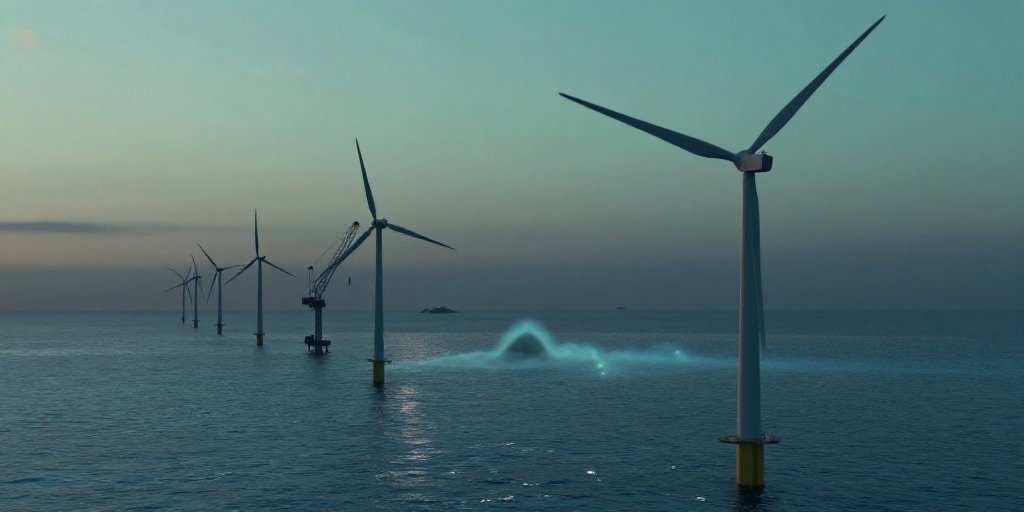
A Massachusetts court has mandated that GE Vernova Inc. (NYSE: GEV) persist in its contractual obligations toward the Vineyard Wind offshore wind farm, a decision that underscores the legal and financial complexities of large‑scale renewable‑energy projects.
The case centers on a dispute between GE Vernova and Vineyard Wind, the developer of New England’s largest offshore wind project. Vineyard Wind has refused to remit more than $300 million to the turbine supplier—an amount that GE Vernova claims is due under the terms of a $4.5 billion project agreement. A Suffolk County Superior Court judge, Peter Krupp, ruled on Friday that GE Vernova must continue its work on the farm rather than abandon the project. The ruling, which cites the supplier’s contractual rights and the risk of default, imposes a significant operational and financial burden on GE Vernova, a company that has historically diversified across industrial sectors.
Market Implications
The court’s decision is likely to influence investor sentiment. GE Vernova’s stock, trading at $978.32 as of 15 April 2026, sits near its 52‑week high of $1,007.38 and well above its 52‑week low of $306.21. With a market capitalization of $265 billion and a price‑earnings ratio of 56.03, the company is viewed as a high‑growth, high‑valuation play. The injunction may dampen short‑term enthusiasm, particularly given the potential for cost overruns and delayed project timelines.
Conversely, the injunction may also signal the robustness of GE Vernova’s contractual framework, potentially reassuring stakeholders that the company is committed to its renewable‑energy commitments. In a sector where supply‑chain disputes are increasingly common, a court‑mandated continuation of work could reinforce confidence in GE Vernova’s ability to honor long‑term contracts.
Analyst Outlook
Oppenheimer, a prominent research house, has recently raised its price target for GE Vernova to $1,139. The upward revision reflects expectations of long‑term revenue growth from GE Vernova’s diversified portfolio, which spans wind turbine manufacturing, power generation, and industrial solutions. The analyst team highlighted the company’s substantial asset base, citing its position as a leading player in the industrial sector and its strategic alignment with global decarbonization trends.
Despite the legal setback, the analysts’ bullish stance suggests that the broader market remains confident in GE Vernova’s capacity to navigate project‑level disputes while maintaining momentum in its core businesses.
Forward‑Looking Perspective
The Vineyard Wind episode is a reminder that large infrastructure projects in the renewable‑energy sector are often accompanied by complex financing structures and inter‑party disputes. For GE Vernova, the immediate challenge is to manage the operational and financial implications of the injunction while preserving its reputation as a reliable supplier.
In the medium term, GE Vernova’s exposure to offshore wind projects aligns with global policy shifts favoring renewable energy, which should translate into incremental revenue streams. The company’s high valuation and strong market cap provide a buffer that could absorb short‑term turbulence.
For investors, the key indicators to watch will be:
| Indicator | Current Value | Significance |
|---|---|---|
| Stock Price | $978.32 (15 Apr 2026) | Near 52‑week high; reflects market confidence |
| Market Cap | $265 billion | Demonstrates scale and liquidity |
| P/E Ratio | 56.03 | Indicates high growth expectations |
| Oppenheimer Target | $1,139 | Signals upward potential |
| Legal Status | Court‑mandated continuation | Adds short‑term cost pressure but reinforces contract integrity |
GE Vernova’s ability to balance the demands of ongoing litigation with its broader growth strategy will likely dictate its trajectory in the coming quarters. While the injunction presents a temporary hurdle, the company’s diversified business model and the supportive analyst outlook suggest that it remains well‑positioned to capitalize on the expanding offshore wind market.