
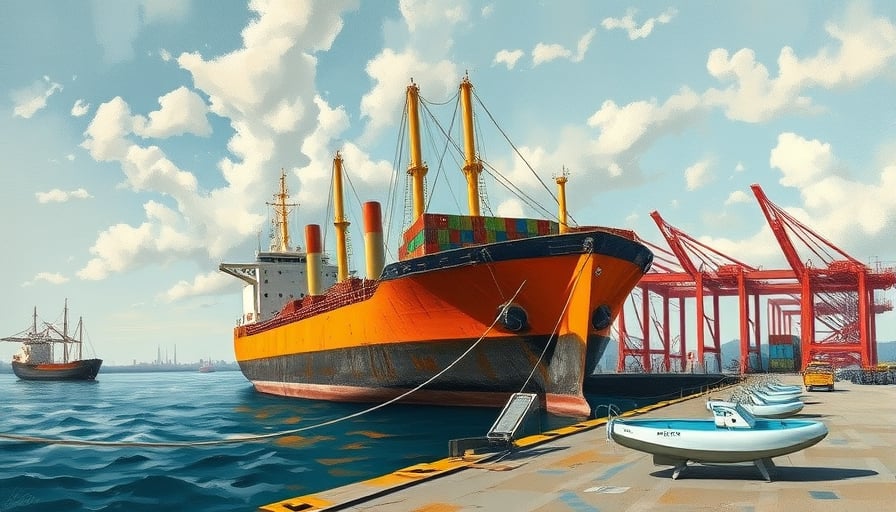
Genco Shipping & Trading Ltd., a prominent player in the marine transportation sector, has recently come under scrutiny due to its financial performance and market positioning. As a U.S.-based company headquartered in New York, Genco operates within the industrials segment, specializing in marine shipping services. The company primarily utilizes drybulk carrier ships to transport a diverse range of commodities, including iron ore, coal, grain, steel, and other products, on a global scale.
Despite its extensive operations, Genco’s financial metrics paint a concerning picture. As of April 9, 2026, the company’s close price stood at $23.3, a significant drop from its 52-week high of $24.81 on March 1, 2026. This decline is even more stark when compared to its 52-week low of $12.11 on April 21, 2025. Such volatility raises questions about the company’s stability and investor confidence.
One of the most alarming indicators is Genco’s price-to-earnings (P/E) ratio, which is currently at -223.62. This negative P/E ratio suggests that the company is not generating profits, a critical issue for any business aiming for long-term sustainability. The negative earnings highlight underlying operational inefficiencies or market challenges that Genco must address to regain profitability.
With a market capitalization of approximately $1.01 billion, Genco’s valuation reflects the market’s skepticism about its future prospects. Investors are likely wary of the company’s ability to navigate the complexities of the global shipping industry, which is fraught with fluctuating commodity prices, geopolitical tensions, and environmental regulations.
Genco’s reliance on drybulk shipping, while a strategic choice given the demand for raw materials, also exposes it to significant risks. The cyclical nature of commodity markets can lead to unpredictable revenue streams, making it challenging for the company to maintain consistent financial performance. Additionally, the increasing focus on environmental sustainability and the transition to greener shipping practices may require substantial investments in new technologies and fleet upgrades, further straining Genco’s financial resources.
In conclusion, Genco Shipping & Trading Ltd. finds itself at a critical juncture. The company must address its financial challenges, improve operational efficiency, and adapt to the evolving demands of the marine transportation industry. Failure to do so could result in further declines in market value and investor confidence, jeopardizing its position in the competitive shipping sector.