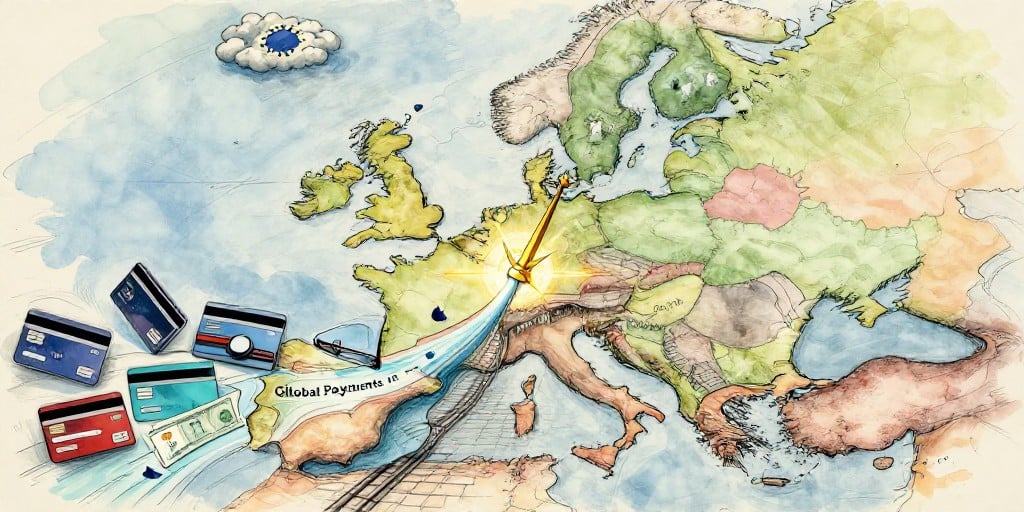
Global Payments Inc., a prominent financial technology firm specializing in electronic transaction processing and information systems, is currently navigating a complex regulatory and competitive landscape as it pursues strategic expansion across Europe. While the company has successfully established a significant presence among European consumers through its Chinese e-commerce platforms, recent reports indicate that the highly fragmented nature of the European payment ecosystem presents substantial operational challenges.
The primary obstacle to seamless growth lies in the dominance of localized payment methods. In key markets such as France, Sweden, and the Netherlands, domestic solutions—specifically Cartes Bancaires, Swish, and iDEAL—account for the vast majority of consumer transactions. This regional preference has limited the role of international card schemes, creating a barrier to higher conversion rates for global providers.
In response to these market dynamics, Global Payments Inc. is actively working to bridge the gap between international merchants and local consumer preferences. The company is developing a centralized integration strategy designed to provide merchants with a single access point for these diverse local payment options. By consolidating these fragmented methods, the firm aims to reduce transaction friction and optimize conversion rates, particularly during high-volume periods such as Black Friday.
Beyond payment integration, the company is proactively adapting to shifting regulatory environments within the European Union. Specifically, new EU tariff rules affecting low-value shipments are being closely monitored, as these changes are expected to influence the company’s logistics and pricing strategies in the near term. To further strengthen its regional footprint, Global Payments Inc. is also exploring strategic collaborations with regional payment networks.
Listed on the New York Stock Exchange, Global Payments Inc. continues to serve a diverse global clientele spanning the financial, corporate, and government sectors. As the company maneuvers through these regional complexities, its ability to integrate localized financial technologies will be a critical factor in its ongoing efforts to streamline global commerce.