GlobalFoundries Advances European Semiconductor Production with $2 B TSMC Deal and New FDX Fusion Platform
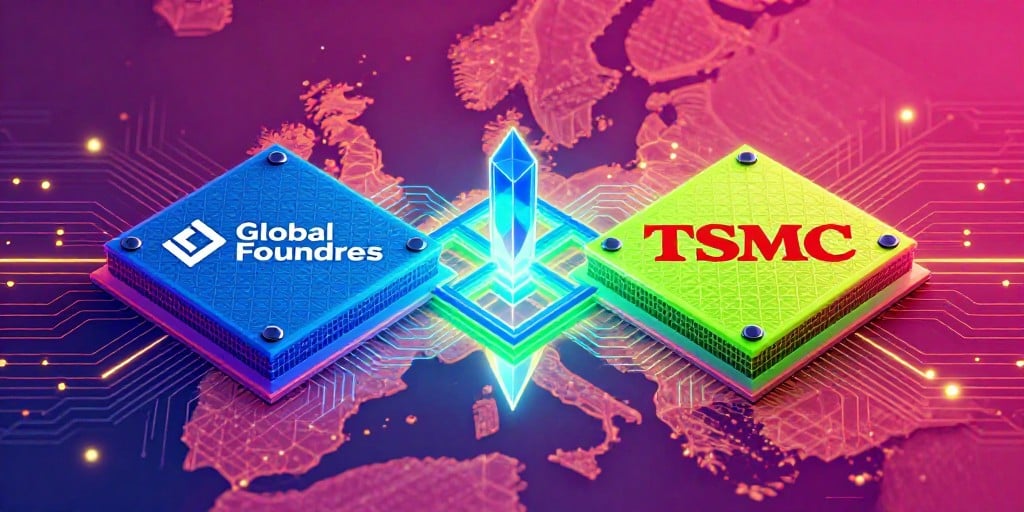
GlobalFoundries Inc. (NASDAQ: GFS) has taken a decisive step toward securing its position as a leading contract manufacturer for high‑performance and AI‑centric chips. In a series of announcements made between October 9 and 10, 2026, the company revealed a $2 billion partnership with Taiwan Semiconductor Manufacturing Company (TSMC) to produce silicon interposers in the United States and unveiled the FDX Fusion platform—an advanced FD‑SOI process that will be built at its Dresden facility in Germany.
A Strategic Partnership with TSMC
On October 9, GlobalFoundries announced that it would supply TSMC with silicon interposers for use in the U.S. market. The agreement, valued at $2 billion, positions GlobalFoundries as a key domestic supplier for high‑density, high‑bandwidth interconnects that are essential for next‑generation CPUs, GPUs, and AI accelerators. The partnership was welcomed by market observers, prompting a rally in GlobalFoundries’ shares shortly after the news.
The interposer contract reflects the U.S. government’s push to reduce dependence on foreign foundry capacity for critical semiconductor components. By securing a foothold in this niche, GlobalFoundries can diversify its revenue streams and strengthen its relationships with leading fabless firms that require reliable, high‑quality interconnect technology.
FDX Fusion: A 7‑nm FD‑SOI Platform for Physical AI
In parallel, the company celebrated the topping‑out of its SPRINT expansion project in Dresden, a €1.1 billion investment that will increase the site’s annual capacity to more than one million 300 mm wafers by 2028. The expansion is part of a broader strategy to make Dresden the largest foundry site in Europe.
Central to this expansion is the FDX Fusion platform—a next‑generation FD‑SOI process that will bring 7‑nm class manufacturing to Europe. The platform is tailored for highly integrated, energy‑efficient chips that meet the stringent requirements of Physical AI applications. By combining the low‑power benefits of FD‑SOI with a cutting‑edge 7‑nm node, GlobalFoundries aims to attract customers in automotive, aerospace, industrial IoT, defense, and consumer IoT markets.
The announcement outlined several key benefits of FDX Fusion:
- Energy Efficiency – The FD‑SOI architecture delivers lower leakage currents and reduced dynamic power, critical for battery‑powered and edge devices.
- High Integration – The process supports complex system‑on‑chip designs, enabling manufacturers to embed AI accelerators, sensors, and communication interfaces on a single wafer.
- Scalable Production – With the new Dresden facility, GlobalFoundries plans to produce more than one million wafers annually, ensuring sufficient capacity for large‑scale AI workloads.
The company’s Chief Executive, Tim Breen, emphasized that the new platform would “enable us to meet the growing demand for AI chips while maintaining the high reliability standards required by our industrial and defense customers.”
Market Implications
The dual announcements signal a shift in GlobalFoundries’ business model from a traditional foundry focused on mature nodes to a more diversified portfolio that includes cutting‑edge processes and strategic supply‑chain partnerships. This evolution is timely, given the current scarcity of advanced semiconductor fabs and the increasing pressure from governments to secure domestic production capabilities.
From an investor perspective, the company’s market capitalization of approximately $27 billion and a price‑to‑earnings ratio of 37.35 suggest that the stock is trading at a premium, reflecting expectations of future growth. The recent partnership and expansion may justify this valuation if the company successfully captures a larger share of the AI and automotive chip markets.
Outlook
GlobalFoundries’ expansion in Dresden and the introduction of FDX Fusion position it well to capitalize on the rising demand for AI‑centric and low‑power chips. The company’s ability to deliver high‑quality interposers to TSMC and to manufacture advanced FD‑SOI wafers in Europe could become a differentiator in a market where supply chain resilience is increasingly valued.
As the company moves forward, its performance will depend on the successful ramp‑up of the Dresden facility, the commercial adoption of the FDX Fusion platform, and the continued expansion of its partnership portfolio. Should these initiatives deliver on their promises, GlobalFoundries could solidify its role as a critical partner for the next wave of semiconductor innovation.