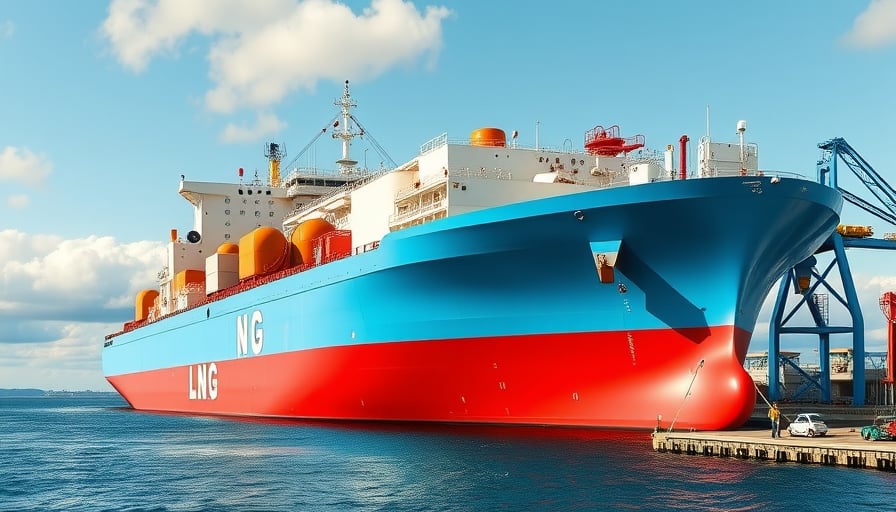
Golar LNG Ltd., an integrated midstream LNG services provider, has recently announced a revision to its financial reporting, reflecting significant developments in its financial and operational landscape for the year ended December 2025. The company, which operates as an independent owner and operator of liquefied natural gas (LNG) infrastructure, including carriers, floating storage and regasification units (FSRUs), and floating liquefaction (FLNG) vessels, has reported a notable improvement in its liquidity position. This improvement is attributed to an increase in available revolving credit and a higher cash balance at year-end.
The company’s financial restructuring efforts have led to a reduction in debt levels, a move that analysts have positively received as a strategic adjustment to Golar’s capital structure. This reduction in debt is seen as a step towards enhancing the company’s financial stability and flexibility, allowing it to better navigate the volatile energy market.
In addition to its financial restructuring, Golar LNG Ltd. has entered into new vessel charter agreements. These agreements are expected to significantly enhance the company’s transportation capacity in the coming year, positioning Golar to capitalize on the steady demand environment within the LNG market. The company’s core revenue stream remains closely tied to this market, and the recent developments suggest a gradual stabilization of charter rates, which is crucial for the company’s revenue predictability and growth.
Despite the absence of specific financial figures in the announcement, the overall tone of Golar’s financial update suggests a strengthening of the company’s financial footing. The company’s market capitalization stands at approximately $5.41 billion, with a close price of $54.51 as of March 23, 2026. The price-to-earnings ratio is reported at 82.18, indicating the market’s valuation of the company’s earnings potential.
Golar LNG Ltd.’s strategic initiatives, including its financial restructuring and expansion of its transportation capacity through new charter agreements, reflect a cautious yet optimistic outlook for the sector. The company’s efforts to improve its liquidity position and reduce debt levels, coupled with its focus on enhancing transportation capacity, underscore its commitment to maintaining a strong presence in the oil, gas, and consumable fuels industry. As the company navigates the challenges and opportunities within the LNG market, its strategic adjustments and operational enhancements are likely to play a pivotal role in its future performance and growth trajectory.