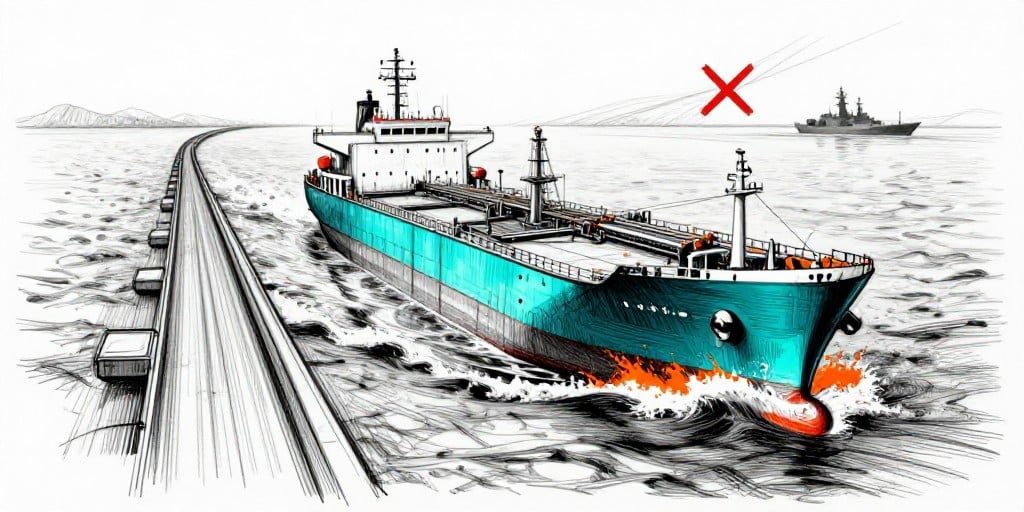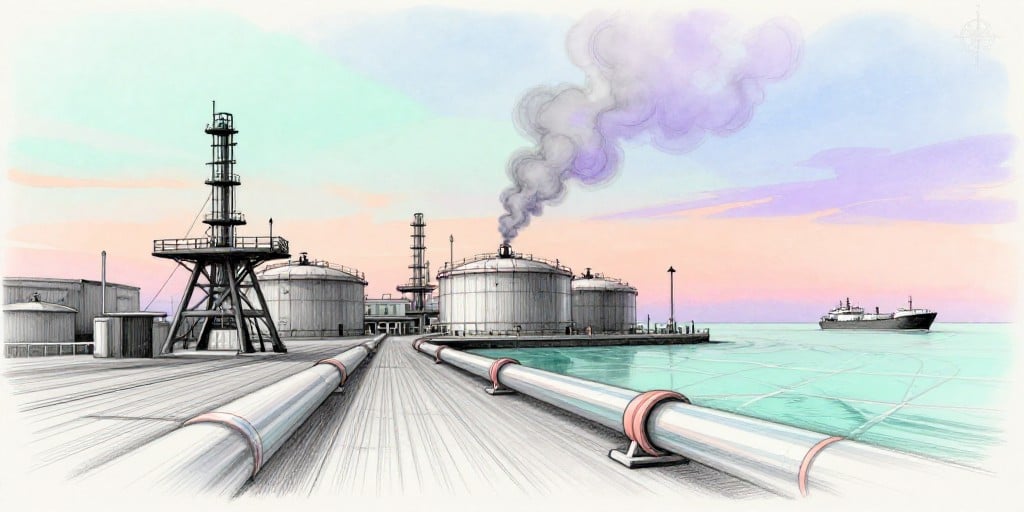
Golar LNG Ltd., a prominent player in the energy sector, has recently been under scrutiny due to its financial performance and strategic positioning within the oil, gas, and consumable fuels industry. As an integrated midstream LNG services provider, Golar operates independently, owning and managing a diverse array of liquefied natural gas (LNG) infrastructure. This includes carriers, floating storage and regasification units (FSRUs), and floating liquefaction (FLNG) vessels. These assets position Golar as a critical facilitator for resource holders, gas producers, and consumers alike.
Despite its strategic assets, Golar LNG Ltd. faces significant challenges. The company’s stock, traded on the Nasdaq, closed at $51.94 on September 8, 2026, reflecting a decline from its 52-week high of $57.79 on May 11, 2026. This downward trajectory raises questions about the company’s ability to capitalize on its infrastructure amidst fluctuating market conditions. The 52-week low of $35.02, recorded on November 23, 2025, further underscores the volatility and investor skepticism surrounding Golar’s financial health.
With a market capitalization of $5.25 billion, Golar LNG Ltd. commands a substantial presence in the industry. However, its price-to-earnings ratio of 35.58 suggests that investors may be wary of its growth prospects. This high ratio indicates that the market is pricing in significant future earnings growth, yet the company must deliver on these expectations to justify its valuation.
Golar’s role as an independent operator of LNG infrastructure is both a strength and a vulnerability. While it provides essential services to the industry, the company must navigate the complexities of global energy markets, regulatory environments, and technological advancements. The demand for LNG is influenced by geopolitical tensions, environmental policies, and shifts in energy consumption patterns, all of which pose risks to Golar’s operational stability and profitability.
Moreover, Golar’s strategic focus on floating LNG solutions, including FSRUs and FLNG vessels, positions it at the forefront of innovation in the LNG sector. These technologies offer flexibility and efficiency, particularly in regions with limited onshore infrastructure. However, the capital-intensive nature of these projects requires substantial investment and long-term commitment, which may strain Golar’s financial resources if not managed prudently.
In conclusion, Golar LNG Ltd. stands at a critical juncture. Its extensive LNG infrastructure and strategic positioning offer significant opportunities, but the company must address investor concerns and market volatility to secure its future. As the energy landscape continues to evolve, Golar’s ability to adapt and innovate will be paramount in maintaining its competitive edge and achieving sustainable growth.