The financial performance of Greenland Resources Inc. presents a stark reality that investors can no longer afford to ignore. Despite a four-decade history in the mining sector, the company’s current market position raises urgent questions regarding its ability to translate long-standing expertise into shareholder value.
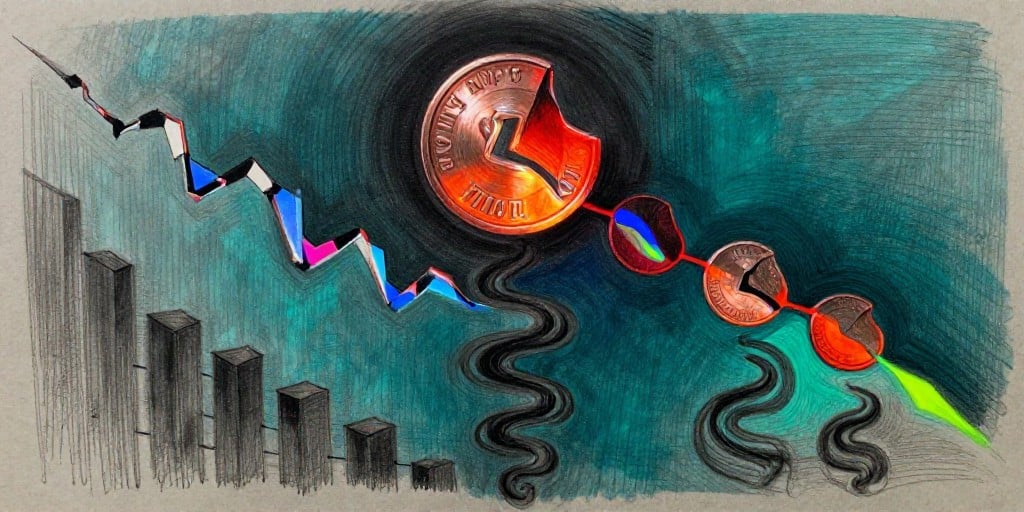
Trading on the Toronto Stock Exchange, the company’s stock has undergone a devastating erosion of value over the past year. After reaching a 52-week high of 2.29 CAD in January 2026, the price has plummeted to a closing price of 1.32 CAD as of November 12, 2026. This downward trajectory is not merely a fluctuation; it is a signal of profound instability, leaving the stock precariously close to its 52-week low of 1.1 CAD.
The most damning indictment of the company’s current fiscal health is its Price-to-Earnings (P/E) ratio, which stands at a staggering -23.37. This negative figure is a definitive indicator of ongoing losses, suggesting that Greenland Resources Inc. is currently consuming capital rather than generating it. For a company specializing in the extraction and processing of gold and silver—assets traditionally viewed as hedges against economic volatility—the inability to achieve profitability is a significant failure of operational execution.
While the company attempts to bolster its corporate narrative by highlighting its commitment to sustainable practices, such as the reclamation and recycling of mining waste, these environmental initiatives do little to offset the deteriorating financial fundamentals. While the exploration, development, and production of precious metals remain its core focus, the market is clearly not being swayed by promises of sustainability or historical longevity.
With a market capitalization of 178,490,176 CAD, Greenland Resources Inc. finds itself at a critical crossroads. The discrepancy between its decades of industry experience and its current negative earnings profile demands scrutiny. Investors must ask: is this a company in a temporary slump, or is it a relic of a bygone era, unable to adapt to the economic realities of the modern materials sector? The numbers provide a grim answer.