HAIGE COMMUNICATIONS: A Case Study in Volatile Momentum and Over‑Optimistic Expectations
1. Immediate Market Response
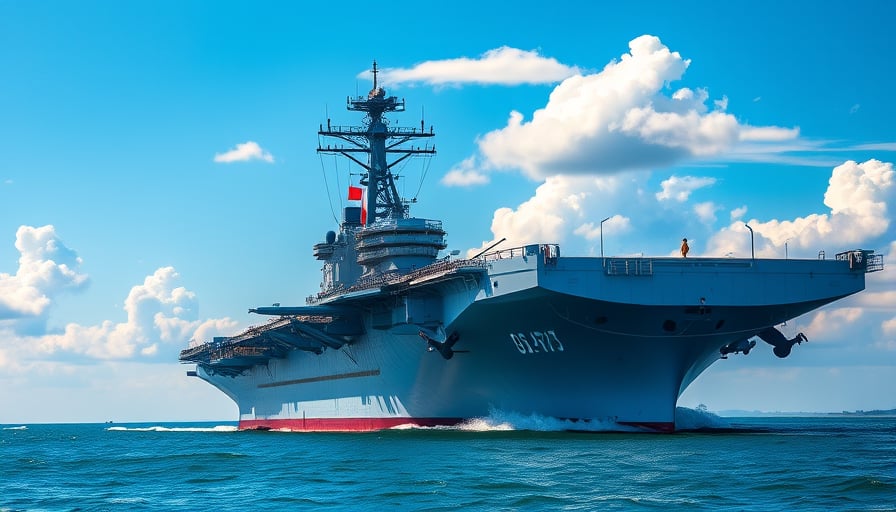
On 12 March 2026, the Shenzhen Stock Exchange witnessed a sharp decline in the 国产航母 (domestic aircraft carrier) concept sector. HAIGE COMMUNICATIONS (code 002465) was one of the 13 stocks that experienced a net outflow of over RMB 1 billion from institutional money, with a negative flow of RMB 2 338 907 thousand on that trading day. The sell‑pressure on Haige was not isolated; it was part of a broader RMB 36.47 billion net outflow from the entire concept group. The sector’s overall decline of 2.67 % underscores a loss of confidence among large‑cap players and a widening skepticism about the strategic alignment of companies like Haige with the high‑profile “aircraft‑carrier” narrative.
2. Sector‑Wide Sentiment and Its Implications
The 国产航母 concept has become a magnet for speculative inflows during periods of patriotic enthusiasm. However, the heavy sell‑off on 12 March signals that institutional investors are now reassessing the risk‑return profile of constituent companies. HAIGE, despite its robust portfolio of digital communication systems, internet communication systems, and GPS receivers, has not demonstrated a clear advantage in the aircraft‑carrier supply chain. This misalignment likely contributed to the sharp outflow.
Moreover, the outflow coincided with a positive momentum in the broader commercial‑space and defense hardware segments. Stocks such as 航天电器 and 广联航空 surged, reflecting a shift of capital toward more directly involved players in aerospace and satellite technologies. HAIGE, primarily a communications equipment manufacturer, remains a peripheral participant in the aircraft‑carrier supply ecosystem, a fact that institutional traders are increasingly penalizing.
3. Fundamental Snapshot
- Market Capitalization: 42.66 billion CNH, a mid‑size player in China’s vast communications‑equipment sector.
- Price‑to‑Earnings Ratio: –140.46, indicating that the company is currently operating at a loss. The negative P/E suggests that the market has not yet assigned a profitable future value to Haige’s operations.
- Stock Performance: Closing at 17.38 CNH on 10 March, the share price remains far below its 52‑week high of 26.62 CNH, yet it is also above the 52‑week low of 9.65 CNH. This volatility reflects the company’s inability to maintain a steady trajectory amid industry pressures.
- Operational Focus: Production of digital communication systems, internet communication systems, and GPS navigation receivers, primarily distributed within China.
Despite its technological capabilities, HAIGE has not capitalized on the booming aerospace or satellite‑communication markets in a way that would justify its valuation. The company’s historical performance and lack of clear differentiation are starkly evident when juxtaposed with the sector’s most actively traded stocks.
4. Strategic Concerns
- Supply‑Chain Relevance: HAIGE’s product lines—digital communication and GPS receivers—are valuable, yet the company’s integration into the aircraft‑carrier supply chain is tenuous. The industry’s shift toward advanced avionics and integrated communication suites means that companies must demonstrate direct technological contributions to defense contracts. Haige’s current offerings lack the depth and specificity required for high‑stakes defense procurement.
- Financial Health: A negative P/E coupled with significant outflows from institutional investors paints a picture of a company that is not yet profitable and is viewed as a riskier asset. The market’s willingness to tolerate such a valuation is limited, especially in a climate of increasing scrutiny over defense‑related enterprises.
- Competitive Landscape: The 国产航母 concept includes a wide range of players, from heavy industry stalwarts (航发动力) to niche technology providers (北斗星通). Haige faces competition not only in technology but also in pricing and contract negotiations. Without a unique selling proposition—such as cutting‑edge antenna technology or low‑power GPS solutions tailored for aircraft carriers—Haige risks being marginalized.
5. Broader Context: Commercial Space and Defense Dynamics
The commercial‑space sector’s recent vigor, highlighted by the 长征八号甲遥八 launch preparations, has benefited a select group of companies that are directly involved in rocket manufacturing, satellite payloads, or high‑performance materials. The news sources emphasize that material manufacturers like Haige may enjoy secondary exposure, but without a strategic pivot toward aerospace‑grade components, the company will likely remain on the periphery of the high‑growth space market.
Similarly, the brain‑computer interface boom, while technologically intriguing, remains largely disconnected from Haige’s current product focus. The sector’s rapid ascent to a policy‑backed “future industry” status signals that funding and attention are shifting toward more speculative, interdisciplinary technologies that blend neuroscience, AI, and hardware. Haige’s traditional communications equipment, although essential, does not align with this new paradigm.
6. Conclusion: The Need for Strategic Realignment
The 12 March outflow illustrates a broader market trend: institutional investors are reallocating capital away from companies perceived as peripheral to high‑profile defense projects. For HAIGE COMMUNICATIONS, the path forward requires a decisive shift:
- Re‑define its value proposition to align more closely with defense‑grade communication systems, perhaps through R&D investment in low‑power, high‑bandwidth avionics.
- Strengthen relationships with key defense contractors, securing long‑term contracts that embed Haige’s solutions into critical supply chains.
- Improve financial fundamentals by reducing losses and enhancing profitability, thereby moving the P/E ratio toward a more market‑acceptable range.
Until Haige takes bold steps to reposition itself at the intersection of advanced communications and defense technology, it will continue to experience the volatility and capital outflows that are emblematic of its current standing within the 国产航母 concept sector.