
Hanwha Aerospace Co., Ltd., a prominent player in the aerospace and defense industry, is currently navigating a challenging landscape marked by labor disputes and market uncertainties. As a company operating within the Industrials sector, Hanwha Aerospace specializes in manufacturing aircraft parts, including gas turbine engine products, aircraft compressors, and low-pressure turbines. These products are marketed globally, with the company listed on the Korea Exchange Stock Market.
As of July 23, 2026, Hanwha Aerospace’s stock closed at 979,000 KRW, reflecting a significant fluctuation over the past year, with a 52-week high of 1,655,000 KRW on March 3, 2026, and a low of 791,000 KRW on December 1, 2025. The company’s market capitalization stands at 50,370,000,000,000 KRW, with a price-to-earnings ratio of 35.51.
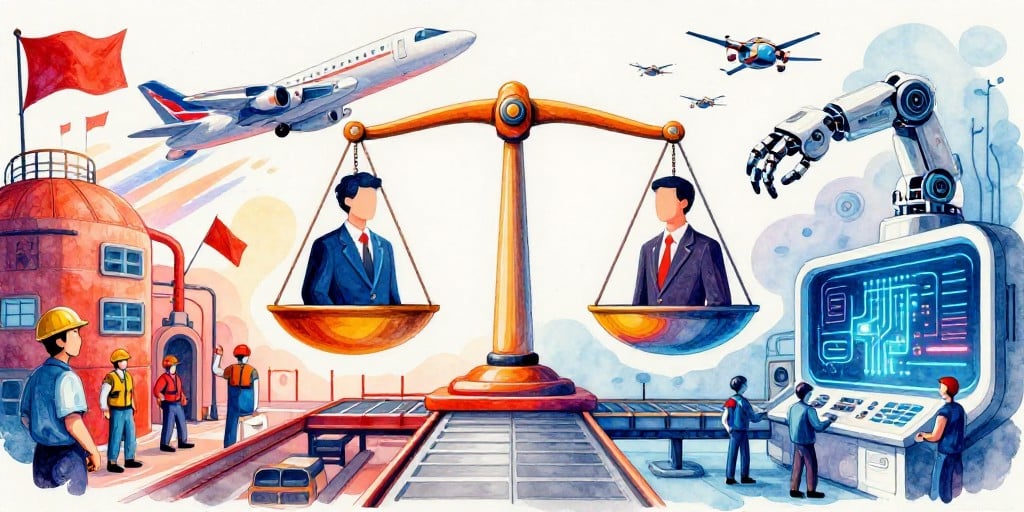
The current industrial climate in South Korea is characterized by intensified demands from labor unions for higher profit-share bonuses. This movement has led to strikes and negotiations extending beyond traditional sectors like semiconductors and automotive, now impacting aerospace companies such as Hanwha Aerospace. Workers at Hanwha Aerospace are advocating for the removal of bonus caps, aligning with similar demands at Hyundai Motor and other firms.
These labor disputes are fueled by concerns over the implications of artificial intelligence and automation on employment. Workers are calling for job guarantees to mitigate the potential displacement caused by new technologies. The broader debate focuses on the distribution of corporate windfalls, with critics arguing that existing bonus structures disproportionately benefit senior management, leaving frontline workers at a disadvantage.
The ongoing labor unrest introduces a layer of uncertainty for investors, as prolonged industrial action could impact company performance and influence market perceptions. As Hanwha Aerospace navigates these challenges, the outcome of these negotiations will be crucial in shaping the company’s future trajectory in the aerospace and defense industry.