
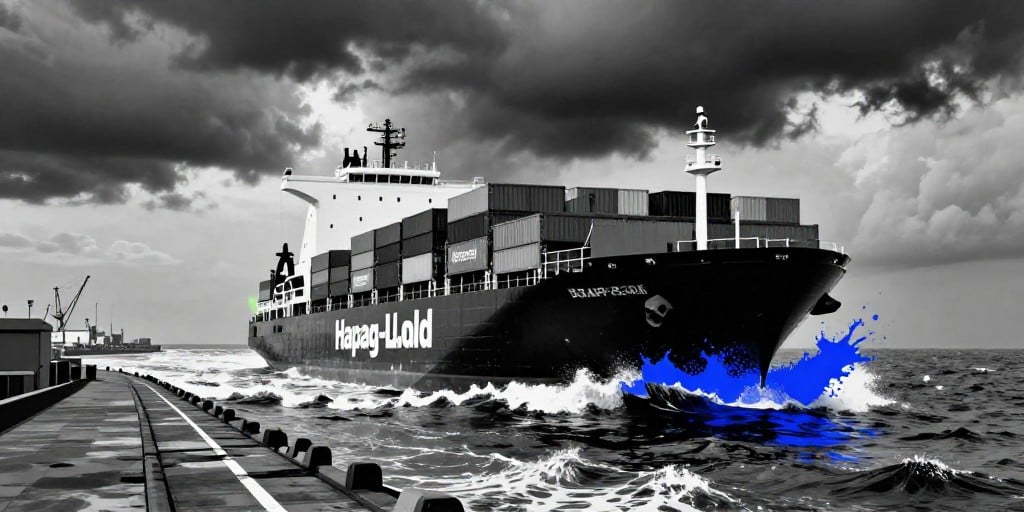
Hapag‑Lloyd AG: Navigating Storms, Partnerships, and Market Sentiment
1. Operational Setback in China
The recent typhoon Saudel has grounded Chinese ports in Ningbo, compelling Hapag‑Lloyd to warn that vessels destined for Shanghai may face an eleven‑day delay. The incident underscores the persistent vulnerability of global supply chains to extreme weather. While the company’s diversified routing network—spanning sea, road, rail, and inland waterways—provides some buffer, the event highlights how a single geographic chokepoint can cascade into significant logistical bottlenecks.
2. Analyst Sentiment Remains Bearish
Barclays has raised its target price for Hapag‑Lloyd to €100 (from €89) yet continues to issue an under‑weight recommendation. The revision reflects a modest optimism about the company’s capacity to leverage rising freight rates but is tempered by concerns over high leverage, thin profit margins, and the volatility of container shipping rates. The firm’s price‑earnings ratio of 403.83 starkly signals that the market still demands a substantial upside to justify the current valuation, even in a bullish rate environment.
3. Strategic Growth via Terminal Expansion
In a bid to capture higher margins, Hapag‑Lloyd has partnered with APM Terminals to develop the Maasvlakte II terminal. This joint venture positions the carrier to benefit from deeper berths, larger container handling capacity, and improved hinterland connectivity. By controlling terminal assets, Hapag‑Lloyd can reduce port charges and mitigate congestion risks—an essential strategy when freight rates are surging.
4. Technology‑Driven Supply‑Chain Visibility
Hapag‑Lloyd’s implementation of SAP‑powered container tracking signals a decisive move toward end‑to‑end supply‑chain visibility. The system promises real‑time data on cargo movements, enabling proactive decision‑making and tighter coordination with shippers. In an industry where delays translate into lost revenue, such digital transformation is not a luxury but a necessity for operational resilience.
5. Market Perception in the Context of Global Shipping Dynamics
Bloomberg reports that Chinese container liners are poised for an earnings windfall as freight rates climb to two‑year highs. Hapag‑Lloyd, as a mid‑size carrier, stands to benefit from this rate surge but must contend with stiff competition from larger fleets and newer entrants that can capitalize on economies of scale. Meanwhile, the broader industry narrative—highlighted by discussions of the Northern Sea Route and India’s fleet expansion—illustrates a sector in flux, with geopolitical tensions, climate change, and policy shifts reshaping traditional routes.
6. Investor Outlook and Risk Profile
Despite the company’s robust market capitalisation (€23.38 bn) and a strong presence in the global maritime corridor, its current share price (€133) sits well below the 52‑week high (€159.3) but above the 52‑week low (€108.7). The valuation gap, combined with an elevated P/E ratio, indicates that investors are pricing in a cautious stance. Potential risks include:
- Weather‑related disruptions (as seen with Saudel), which can delay cargo and inflate demurrage charges.
- Competitive pressure from larger shipping lines and emerging digital platforms.
- Regulatory changes in emissions, ballast water, and port access, which may increase operational costs.
Conversely, opportunities lie in:
- Terminal expansion that can lock in higher margins.
- Digitalization that enhances customer trust and operational efficiency.
- Rising freight rates that can improve revenue per container.
7. Conclusion
Hapag‑Lloyd AG is at a crossroads where operational challenges, strategic initiatives, and market sentiment intersect. While the carrier demonstrates a proactive stance—through terminal partnerships and technology adoption—it must navigate a high‑stakes environment characterised by volatile rates, intense competition, and climate‑induced disruptions. Investors should weigh the company’s growth prospects against its sensitivity to external shocks, recognising that the maritime sector’s fortunes are as unpredictable as the seas it traverses.