Market Context and Sector Dynamics
In the most recent trading session on March 17, 2026, the combined trading volume of the Shanghai and Shenzhen exchanges totaled 2.21 trillion CNY, a decline of roughly 117.5 billion CNY from the prior day. The Shenzhen market, where HDGF is listed, registered 1.26 trillion CNY in turnover. The market’s overall directional bias was mixed: the Shanghai Composite fell 0.26 %, the Shenzhen Component rose 0.19 %, and the ChiNext (创业板) index advanced 1.41 %. The ChiNext movement was underpinned by a surge in storage‑chip stocks, while the broader market saw a rotation toward electronics‑related themes, including printed circuit board (PCB) and copper‑foil concepts.
Within this backdrop, several PCB‑related names—including 沪电股份, 胜宏科技, and 超颖电子—recorded significant intraday gains or even reached the daily limit. The upward pressure on PCB stocks reflects heightened investor interest in the electronic manufacturing services (EMS) and component supply chain, a trend that dovetails with HDGF’s core business as a manufacturer of double‑sided and multilayered circuit boards, as well as connectors for electrical equipment.
HDGF’s Position in the Electronic Equipment Landscape
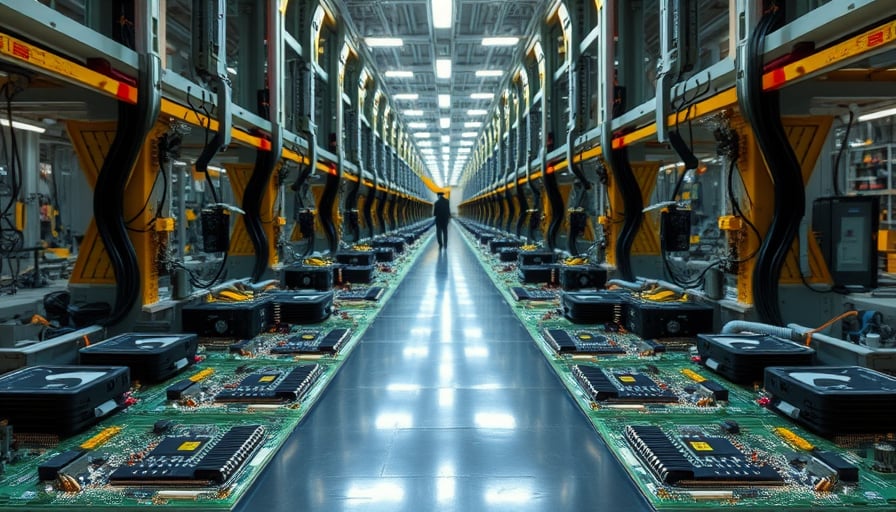
HDGF (WUS Printed Circuit Kunshan Co Ltd) is a Chinese company headquartered in Kunshan, operating within the electronic equipment, instruments, and components sector. The firm specializes in the design, production, and sale of high‑quality printed circuit boards and related electrical components. According to its own disclosures, HDGF’s product line includes:
- Double‑sided circuit boards
- Multilayered (multi‑layer) circuit boards
- Connectors for electrical equipment
These products cater to a broad range of end markets, from consumer electronics to industrial automation, positioning HDGF as a critical link in the supply chain for many high‑tech firms.
With a market capitalization of approximately 146.9 billion CNY and a price‑to‑earnings ratio of 44.043, HDGF trades well above the average for its sector, suggesting that investors are willing to pay a premium for the company’s perceived growth prospects and market standing. The stock’s recent close of 83.95 CNY on March 15, 2026, sits comfortably below the 52‑week high of 85.80 CNY (achieved on February 26, 2026) and well above the 52‑week low of 23.58 CNY (set on April 8, 2025). This range indicates a healthy upward trajectory and a relatively low level of volatility for the current period.
Implications of Sector‑Wide Movements for HDGF
The bullish sentiment that lifted PCB names on March 16–17 has a direct corollary for HDGF. Investors in the ChiNext index were actively allocating capital toward companies that could benefit from the growing demand for advanced PCB solutions, especially those integrated with emerging technologies such as optical communication modules and AI‑accelerated computing platforms.
The broader electronics and semiconductor clusters, which include companies such as 兆易创新 (made a notable limit‑up on March 16) and 光库科技, were also receiving attention following the announcement of the 2026 OFC (Optical Fiber Communication) conference. Although HDGF is not listed among the major light‑weight “high‑growth” names, its product portfolio is essential to the supply chains that underlie those companies. Consequently, any uptick in the valuation or trading volume of PCB‑related securities can have a spill‑over effect on HDGF’s own liquidity and investor perception.
Moreover, the significant turnover in the Shenzhen market—particularly the high activity of 新易盛 (a leading player in the integrated circuit manufacturing space)—indicates that institutional and retail participants are actively repositioning their exposure to technology themes. HDGF, with its established manufacturing footprint and a track record of delivering multi‑layered boards, is well positioned to capture a share of this reallocation, especially as global demand for advanced PCB substrates continues to rise in the context of AI, 5G, and autonomous systems.
Strategic Outlook and Potential Risks
HDGF’s inclusion in the 52‑week high range suggests that the company’s stock is still considered attractive relative to its historical performance. However, the high price‑to‑earnings multiple implies that future earnings growth must be robust to justify the current valuation. The company’s exposure to the cyclical nature of the electronics manufacturing sector—particularly in segments that are sensitive to global supply‑chain disruptions—remains a risk factor.
Conversely, HDGF’s diversified product line and its experience with both single‑ and multi‑layer PCBs provide a degree of resilience. Should demand for complex boards rise—driven by the expansion of high‑performance computing and automotive electronics—HDGF could benefit from an upsurge in orders and potentially improved margins.
In addition, the company’s long-standing relationships with OEMs and its presence in the Chinese domestic market may offer a competitive edge, especially given the strategic emphasis on technology self‑reliance in China’s policy environment. Nonetheless, the firm must continue to invest in process innovation and quality control to maintain its standing among leading PCB suppliers.
Bottom Line
The recent market activity across the Shanghai and Shenzhen exchanges reflects a nuanced landscape, with certain segments—particularly PCB and storage‑chip stocks—experiencing pronounced gains. For HDGF, this environment presents both opportunities and challenges: a favorable sectoral tilt toward its core products, coupled with the need to sustain growth in a valuation context that currently demands high earnings performance.
By monitoring sector momentum, maintaining a robust product development pipeline, and navigating the inherent cyclical risks, HDGF can potentially capitalize on the evolving demands of the broader electronic equipment ecosystem while preserving investor confidence in its long‑term value proposition.