HENGRUI PHARMA’S STRATEGIC TURN INTO THE NEXT FRONTIER OF ONCOLOGY
The Shanghai‑listed Jiangsu Hengrui Pharmaceuticals Co., Ltd. (01276.HK) has just announced a landmark licence agreement with Novartis for its lead anti‑cancer candidate HRS‑1596. This deal, disclosed on September 29, 2026, signals a decisive pivot toward high‑margin, precision‑oncology therapeutics—a shift that could recalibrate the company’s valuation and market position.
1. A licence that spells growth
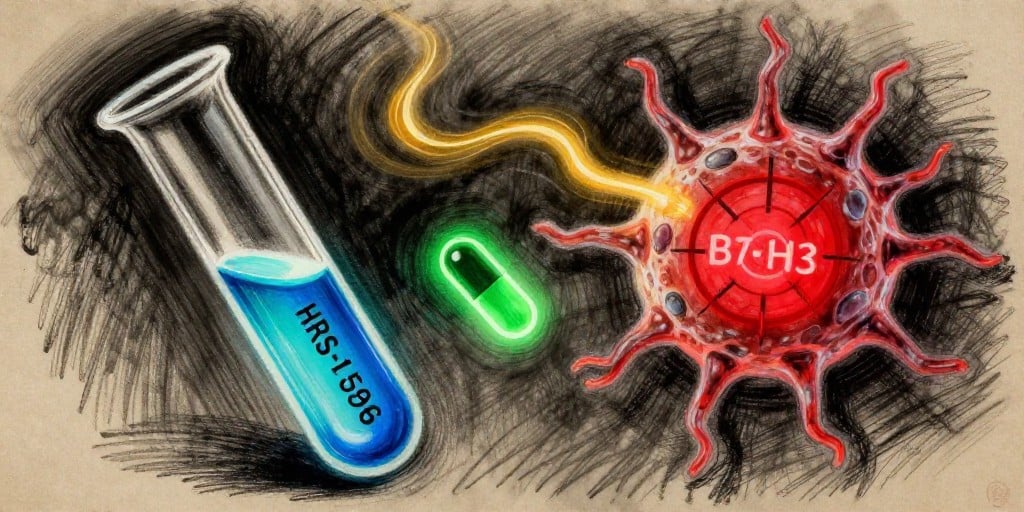
HRS‑1596 is a novel small‑molecule inhibitor that targets a critical signalling axis in solid tumours. By ceding exclusive rights to Novartis, Hengrui gains immediate access to a global R&D powerhouse, marketing network, and advanced clinical expertise. The agreement is not merely a licensing transaction; it is a strategic partnership that unlocks a revenue stream that previously resided in a niche, low‑margin segment of the company’s portfolio.
Novartis will contribute to late‑stage clinical development, while Hengrui retains the manufacturing and distribution rights in China and selected Asian markets. The dual‑road map ensures that Hengrui can capitalize on Novartis’ global pipeline while maintaining control over its core manufacturing assets—an arrangement that preserves cash‑flow stability and mitigates the risk of full absorption.
2. Riding the B7‑H3 wave
The broader oncology landscape is shifting. According to DelveInsight’s 2026‑2036 forecast, the B7‑H3 (CD276) therapeutic market is poised for robust expansion. B7‑H3 is over‑expressed in a wide spectrum of cancers—lung, prostate, breast, head and neck, and others—yet remains largely absent from healthy tissues. This differential expression makes it an attractive precision‑oncology target, and a growing pipeline of antibodies and antibody‑drug conjugates (e.g., Ifinatamab deruxtecan, MGC018) underscores the commercial potential.
Hengrui’s HRS‑1596 sits squarely within this emerging therapeutic niche. By aligning with Novartis, the company can accelerate the drug’s clinical development, potentially reaching first‑in‑class status in a market that is expected to grow at a compound annual growth rate (CAGR) exceeding 15 % through 2036. This timing is critical; early entry into a rapidly expanding segment can translate into substantial market share and pricing power.
3. Market context and investor sentiment
September 2026 witnessed a pan‑sector rally in the Chinese pharmaceutical market. A surge in policy support—highlighted by a joint decree from ten ministries outlining a “15‑5” development plan for biomedicine—coupled with a gradual easing of U.S. restrictions, has re‑energised investors. The Hang Seng Healthcare Index rose 3.2 %, while the innovation‑pharma sub‑segment climbed 4.6 %. Hengrui’s inclusion among the “industry leaders” that mirrored this upside underscores the market’s confidence in its growth trajectory.
Yet the company’s 52‑week low of 43.02 HKD and a close of 44.76 HKD on September 27 illustrate that the market is still cautious. The valuation, however, remains well below its 2025‑10‑01 high of 95.20 HKD, hinting at a potential upside if Hengrui can deliver on its new strategic focus.
4. Risks and counter‑arguments
Critics may argue that ceding exclusive rights to a global competitor could dilute Hengrui’s brand and long‑term revenue. They could also point to the inherent uncertainties of late‑stage oncology trials—adverse safety profiles, regulatory setbacks, or market entry barriers. Moreover, the partnership’s success hinges on Novartis’ willingness to invest in the China market, where intellectual property and regulatory frameworks differ markedly from the U.S.
Nonetheless, the partnership offers tangible mitigants. The licence agreement provides immediate access to capital, expertise, and an established distribution network—all of which reduce the typical costs and timelines associated with drug development. The structured retention of manufacturing rights ensures that Hengrui preserves a critical revenue stream regardless of the partnership’s ultimate commercial outcomes.
5. Conclusion
Hengrui Pharma’s licensing of HRS‑1596 to Novartis is more than a corporate transaction; it is a strategic recalibration that positions the company at the forefront of a high‑growth oncology segment. Coupled with an environment of supportive policy, a robust B7‑H3 market forecast, and a bullish sectoral sentiment, the deal offers a compelling upside to investors who can look beyond the short‑term price volatility. The next chapter of Hengrui’s evolution hinges on the successful translation of this partnership into market‑defining therapeutics—and the company has now armed itself with the tools to make that happen.